
Inventory management tool
The warehouse is shrunk to a healthy size
Elsinghorst, a specialist in steel and industrial supplies, has introduced the intelligent warehouse management system Vendor Managed Inventory from SKF. This has enabled the company to reduce its overall stock levels while improving inventory turnover and availability.
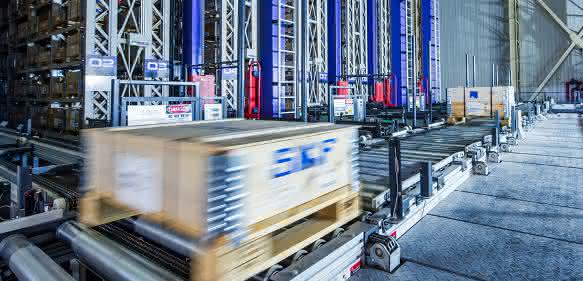
Every consumer is happy when a desired product is immediately available from their trusted retailer. A well-stocked warehouse is therefore a powerful customer loyalty tool for any retailer. However, warehousing is also a considerable cost factor: for example, the constant flow of goods requires a permanent reconciliation of sales, stock and reorders. This causes both administrative and personnel costs. In addition, stockpiled products sometimes tie up an unnecessary amount of capital, which is easiest to understand in the case of so-called slow-moving items.
"If you want to make your warehouse more efficient, there are two key points to start with," says Dennis Seeger from Purchasing at Elsinghorst: "Firstly, the management of stock and orders should be largely automated. Secondly, the total inventory must not simply be minimized, but above all adjusted in such a way that the desired availability is maintained." It is therefore very important to adapt the product portfolio and the individual product stocks precisely to the respective customer requirements.
Monitoring the inventory
With this goal in mind, Elsinghorst had already created its own warehouse management systems, including calculation options, but wanted to break new ground, according to Sebastian Brinks, data expert at Elsinghorst. "In view of the advances in information technology, we envisioned a more efficient solution that would monitor stock levels almost automatically, trigger the necessary orders automatically and also analyze the flow of goods."
This is exactly where SKF and the Vendor Managed Inventory came into play. The system, called VMI for short, is a digital inventory management tool that automates planning on the basis of jointly defined product range and service specifications. "It dynamically adapts inventory planning to the customer's ordering behaviour, thereby optimizing stock turnover and availability," explains Jürgen Schäfer from Distribution Development at the German SKF. "The VMI also reduces the dealer's administrative workload by, among other things, automatically initiating the necessary product reorders from SKF."
To install the VMI, Elsinghorst entered uncharted technological territory, as did the German SKF: there were no reference cases or experts in this country. "That was quite a challenge for a medium-sized company like us," recalls Seeger, "because we suddenly had to deal with IT specialists in Warsaw and logistics specialists from SKF's European distribution center in Tongeren, Belgium."
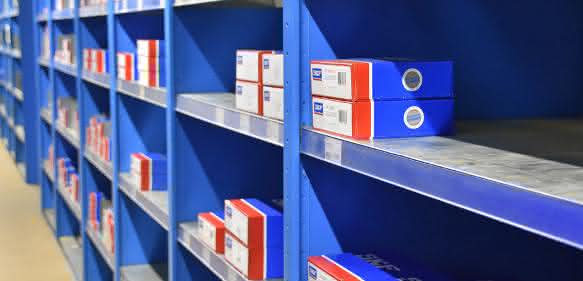
As a result, most of the communication was in English, and there was plenty of need for communication: "For example, we first had to transfer our existing product data records to the new system," says Brinks. "There was a kind of form for this, but a lot of detailed discussions were required to get the technical connection up and running." Among other things, various interfaces had to be defined and compatibility aspects discussed in order to ensure mutual data transfer. "There were also some debates on topics such as purchase quantities or throughputs," adds Seeger.
Once all the framework conditions had been met, the system went online for the first time in summer 2015. During the initial trial run, the Bocholt VMI pioneers worked with the SKF experts to adjust a few parameters. "We also manually checked on a daily basis whether the system's suggestions for stock adjustment or replenishment actually made sense and whether the corresponding orders had actually gone out," recalls Brinks.
The system is now up and running, constantly comparing stock levels and sales. "The continuous calculations for stock planning work just as reliably as the orders. In addition, the system even warns us if we are about to run out of stock," says Brinks. "We also receive statistics with important key figures every month. And they leave no doubt that we have been able to shrink our warehouse in the best sense of the word: Our total stock has fallen dramatically, while turnover rates and availability have improved enormously," reports Seeger. "And this is despite the additional sales channel that we opened in 2016 with an additional, freely accessible online store." as


You might also be interested in
Conrad continues to grow
Conrad Electronic now generates 80% of its sales with business customers and has successfully developed from a traditional technology retailer into a B2B procurement platform. The company aims to become Europe's leading procurement platform for...
 read more...
AI finds its way into automotive customer service
In addition to computer solutions for vehicle diagnostics, Getac now also offers AI-based digital tools that support customer contact in service operations.
read more...SMC: "Preferred Supplier" from Bosch
The technology and service company Bosch has recognized SMC for the performance of its automation technology in factory and process automation and awarded it the status of "Preferred Supplier" in the material group "Standardized Pneumatic Devices".
read more...Combined ERP forces
The medium-sized ERP providers Step Ahead Software, Godesys and Informing merge to form the Step Ahead Group.
read more...Cybersecurity for asset-intensive companies
Forge Cybersecurity Platform, the new software platform from Honeywell, has been developed for the cybersecurity of asset-intensive companies and critical infrastructures. The platform is available in three versions.
read more...Automated machine tool as a success factor
Industry 4.0 is the hot topic of the moment. For small and medium-sized companies and contract manufacturers, it holds great potential for increasing production efficiency step by step. The focus here is on efficient and user-specific automation...
read more...Nemo hand vacuum lifts all materials
A new addition to the Eurotech portfolio is the battery-operated Nemo vacuum cleaner, which is suitable for handling almost all surfaces.
read more...Future-oriented cobot projects
Three pillars of successful cobot initiatives
What is important if cobot projects are to be future-oriented? Automation and robotics expert Omron has identified three aspects for human-machine collaboration.
read more...Short-stroke linear actuator instead of pneumatic cylinders
The new short-stroke linear actuator from Ketterer Antriebe and halstrup-walcher is characterized by high dynamics and a large stroke in a compact size. Thanks to the integrated electronics, the drive is easy to control compared to pneumatic...
read more...