
Information room
Space for information
In times of digitalization and Industry 4.0, the importance of information is growing. Standardized products are being replaced by individualized ones. Flexible, self-contained information units are required to store all associated data. These must be created independently of each other and be able to be combined with each other as required. The intelligent system that manages this data is the information space. The required information can be flexibly compiled and published for the specific application.

The world is changing rapidly as a result of digitalization and Industry 4.0. As a result, the importance of information is also growing. Rigid, mass-produced products are increasingly being replaced by extensive function clouds from which customers can configure their individual products. Storing the relevant information in individual documents is becoming impossible. Nevertheless, the required information must be in the right place at the right time. New solutions are therefore required for both the creation and use of information.
Important information should be available without delay. However, it is spread across many different documents - or has not yet been collected at all. In the past, customers searched for products in a catalog and ordered them if the price and features were right. Today, they search according to application criteria, put together their own product according to their own ideas, adjust equipment details, patterns and colors and then order their individual product.
What is becoming increasingly commonplace for consumer goods is causing problems for manufacturing companies. How can the ever-increasing number of variants be handled? How can processes be automated to such an extent that production is still possible even with a quantity of one? Machine and plant manufacturers have to supply technical documentation for every machine. How can this be achieved with such a high number of variants? How does a service technician know which maintenance tasks are due for which machine?
"The solution to all these challenges is called the information space," says Uwe Reißenweber, Managing Director of Docufy. The company is a manufacturer of professional software solutions for technical documentation and a provider of multi-level documentation. "The classic document with its rigid boundaries has had its day. We need flexible and self-contained snippets of information that can be created independently of each other and combined as required. This information must be organized intelligently. We need an information system that provides unique addresses for all relevant information in a company. We call this the information space," explains Reißenweber.
Collection point for all relevant data
The information space depicts objects from the real world. The associated information modules are recorded individually and assigned appropriately. These snippets of information are called topics. Each topic has a unique address in the information space. This bundles knowledge about the entire product life cycle in one place. New important information such as customer reviews or tips from service technicians can be added as topics at any time and assigned accordingly. Answers to specific questions can thus be compiled and published flexibly and for the specific application. The information is displayed dynamically and as required as a printed document, mobile on a smartphone or in an augmented reality application.
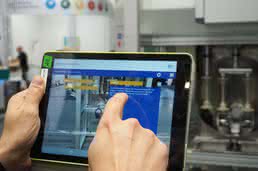
But where does most of the information come from? The treasure hunt for knowledge in the company leads to a department that many managers don't even have on their radar: technical documentation. All the data about a machine, its risks, its operation, its different variants, data sheets or photos - everything is already available in the company, usually in digital form and stored in interface-capable databases. These data treasures now need to be recovered. Reißenweber explains: "Every day we talk to companies that are constantly digitizing their technical documentation, breaking it down into components and modules and automating it. It became clear to us that if you replace the storage of data in its traditional structure with thinking in terms of topic-related information and if you find a system that can be used to clearly address and locate any information, you can make this data usable for many departments across the company. Instead of managing information in databases, we navigate to topics in information spaces. As a knowledge pool, technical documentation then becomes the most important department in a digital company."
This collection of knowledge, the information space, can be tapped into via machine displays, web browsers or mobile devices such as smartphones, tablets or even AR glasses. The solution that filters out and provides the right and important information depending on the search query is called TopicPilot at Docufy. TopicPilot is a mobile publishing platform, an out-of-the-box solution that enables the import from various sources and the output of information in a wide range of formats. Any company-wide content such as text, images, graphics, audio and video data, tables or PDF documents is available with TopicPilot and displayed in a device-specific way, regardless of the operating system.
From machine manufacturer to digital company
This intelligent use of knowledge helps companies in the mechanical and plant engineering sector to adapt quickly to changing conditions. For example, sales staff can now call up all the technical details on site at the customer's premises using a smartphone or tablet, show photos or films if required, and offer and explain device variants. The service technician can look up the description of functions or the specification of spare parts on the display of the machine to be serviced. The training documents for the technical briefing are compiled at the touch of a button, depending on the scope required, and the technical documentation is automatically created for each machine variant. The marketing department extracts photos and descriptions for the design of a product flyer. The company's website or intranet can also retrieve current technical details and photos from the database. On this basis, companies can benefit from all available information in all areas of the company - from marketing to production. am


You might also be interested in
Predictive maintenance in retrofit
Predictive maintenance pays off. This is because early detection of impending failures means that systems can be serviced in a targeted manner before production downtime occurs. But how complex is it to integrate such a maintenance concept into an...
 read more...
Maintenance instead of replacement
The circular economy starts with the machinery
Sustainability in industry starts with machines, says our guest author from Deguma: How maintenance, modernization and the 5R strategy save resources, energy and CO₂.
read more...3D printing for unplanned requirements
The material fails and the machine suddenly stops? Then you need to take the right measures to be able to resume production quickly. Material failure in the form of faulty components or material wear in the frame are a risk for any production.
read more...High demands in terms of safety, application and robustness
Demanding work in the electrical trade and energy supply as well as smooth processes in production require innovative and customized measurement technology that scores points for safety, ease of use and resilience.
read more...Car meets e-bike: riding with lubrication-free polymer bearings
Studies show that the proportion of pedestrian and bicycle traffic is increasing in urban areas. With the JetBike, JetBike GmbH from Braunschweig presents a mixture of e-bike and car and relies on lubrication-free polymer bearings from Igus.
read more...Hydraulic hub for more efficient servicing
Bosch Rexroth presents a digital toolbox for service and maintenance. With a comprehensive range of digital services, the Hydraulic Hub simplifies and accelerates the service and maintenance of hydraulic products and increases machine availability.
read more...Arnold Umformtechnik expands after-sales...
Faster help with VR glasses
Arnold Umformtechnik is expanding the after-sales service for its machines to include digital remote services. The focus is on data security, simple operation and clear processes.
read more...147,000 euros per hour: high costs for German companies due to unplanned downtime
According to the "Value of Reliability" study, 67% of industrial companies in Germany experience unplanned downtime at least once a month. This costs the German economy 147,000 euros per hour. Nevertheless, reactive maintenance concepts are not...
read more...Maintenance starts with a maintenance planner
Legal requirements stipulate that machines and systems must be serviced regularly. The maintenance work serves to ensure occupational safety and economic efficiency.
read more...