

Robotic drives in transition
Why stator and rotor laminations are becoming a performance factor
Robots are becoming smaller, stronger and more precise. They no longer just work behind safety fences in industrial halls, but move through warehouses or will increasingly interact with humans as humanoid systems in the future. This development is increasing the pressure on electric drive technology and therefore on a component that receives little attention outside the specialist world: Stator and rotor laminations.
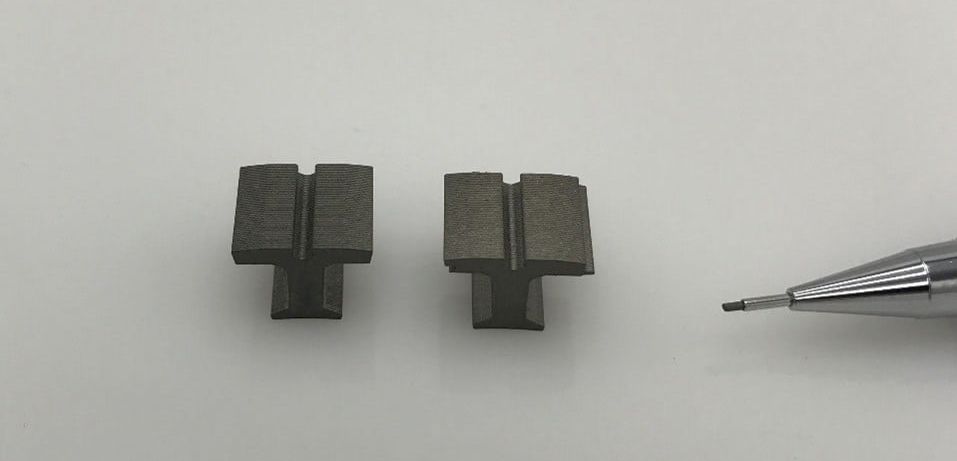
However, it is precisely these components that determine how efficiently, smoothly and precisely an electric motor works. The Swiss company SWD AG, which specializes in high-precision stator and rotor technology, sees this as a key technological lever for the next generation of robotic systems.
"We're seeing a significant miniaturization, combined with increasing demands on efficiency and precision," says Thomas Stäuble, CEO of the company. In fact, there is currently an apparent contradiction in robotics: systems are expected to become more compact, but at the same time deliver more power, consume less energy and operate as quietly as possible.
The consequences of this development extend deep into the design of electric drives. This is because tolerances are becoming smaller, air gaps narrower and material and manufacturing requirements higher as sizes decrease. Even minimal mechanical stresses or losses at the cut edges of the electrical sheet can affect efficiency.
"The sheet metal stacks make a decisive contribution to the losses in the motor," explains Stäuble. What sounds technically sober points to a fundamental problem of modern robotics: the performance of a system increasingly depends not only on software or control, but also on the precision of its physical components.
This change is particularly visible in the various robotics segments. Collaborative robots that work directly with humans primarily require low noise and vibration levels. In medical robotics, the focus is on smooth running and reliability. Conventional industrial robots, on the other hand, have to cope with high continuous loads and extreme dynamics. In addition, there are humanoid systems where every millimeter of installation space counts.
"It is clear that a fundamental change in motor concepts is taking place across all segments," says Stäuble. New topologies, integrated functions and increasing power densities mean that traditional manufacturing processes are reaching their economic limits.
This is particularly evident in the packaging of sheet metal. Processes such as welding or caulking are increasingly reaching their technical limits with thin materials and small diameters. Instead, full-surface bonding or cladding processes are gaining in importance.
"Miniaturization clearly demonstrates the advantages of full-surface bonding or gluing processes," emphasizes Stäuble. The homogeneous connection of the lamellas not only results in a mechanically more stable component. Heat can also be dissipated better, while noise and vibrations are reduced.
Especially in applications where humans interact directly with robots, this acoustic quality becomes a decisive factor. A robot that works audibly has a different effect than one whose movements are virtually silent. Technical properties therefore also become questions of acceptance and trust.
"Thanks to full-surface bonding, sheet metal packages make an important contribution to reducing NVH issues," says Stäuble. This refers to noise, vibration and harshness - i.e. noise, vibrations and roughness effects that have so far been known primarily from the automotive industry.
At the same time, the production logic is also changing. Segmented stators enable higher winding speeds and larger wire diameters. This in turn makes it easier to automate production. "What is often underestimated is the enormous strength of fully baked segments," says Stäuble. In a specific customer project, the higher mechanical stability meant that the winding process could be accelerated so much that a complete winding machine was saved.
However, the real challenge often only begins between development and series production. Many robotics manufacturers initially optimize their systems for functionality; manufacturing issues only come into focus later. Changes during the production ramp-up can then become expensive.
SWD therefore tries to consistently design sample tools and early process steps for later series production conditions. "The aim is to provide the customer with a stable basis and avoid surprises during the ramp-up," explains Stäuble.
A look at stator and rotor laminations is an example of how robotics is changing: Progress is not only achieved through artificial intelligence or new software architectures, but also through high-precision industrial manufacturing in the micrometer range. The future of robotics is therefore sometimes decided where it is barely visible: inside the motor.


You might also be interested in
Predictive Maintenance in the Powertrain: Stöber Is Gradually Expanding Its Approach
Step by step, the company is continuing to develop predictive maintenance: from monitoring to predictive maintenance to smart powertrains.
 read more...
Eric Goos Appointed to the Board of Sumitomo Drive Technologies
Sumitomo Drive Technologies EMEIA continues to expand its leadership team: Eric Goos has been appointed to the board and will serve as managing director of Cyclo Drive Germany GmbH.
read more..."As rebar gets thicker, automation has to keep up."
Larger wire diameters, greater performance, higher efficiency: How can rebar processing machines be adapted to changing market requirements using new drive technology and an open automation architecture? A user report.
read more...Synapticon and Generative Bionics Partner Up
Synapticon and Generative Bionics have entered into a partnership to develop propulsion systems for humanoid robots. The goal is to establish a European supply chain for the development, manufacturing, certification, and integration of the...
read more...ebm-papst is growing again thanks to AI and data centers
ebm-papst returned to a growth trajectory in fiscal year 2025/26. Air Technology, data center applications, and artificial intelligence are driving revenue and investment.
read more...Preventing Interference from Harmonics
Harmonics are underestimated sources of interference in electrical power grids. Particularly in wastewater treatment plants and water treatment facilities, harmonic distortion leads to poorer power quality and associated costs: additional heating of...
read more...Drives for Extreme Conditions
Standard solutions quickly reach their limits under extreme conditions. Together, Ultra Motion and Faulhaber develop custom-designed actuators for deep-sea, space, and other demanding applications that place the highest demands on reliability and...
read more...Triton Partners takes over Flender
Global investment firm Carlyle has signed an agreement to sell Flender, a provider of mechanical drive technology, to Triton Fund 6, advised by Triton. The terms of the transaction were not disclosed and is expected to close in the fourth quarter of...
read more...New roller conveyor cover from Hema
Rolls faster & lasts longer
Hema brings speed to roller blinds: With the expansion of the product family for roller conveyor covers, the specialist for machine and equipment protection has improved travel speed by 30 percent.
read more...