
Case Study
"As rebar gets thicker, automation has to keep up."
Machines used to process reinforcing steel must operate reliably, often for decades. For the Italian manufacturer MEP (Macchine Elettroniche Piegatrici), this also means continuously adapting to changing market demands. Larger wire diameters, new materials, and increasing productivity call for a new generation of machines and more powerful drive systems.
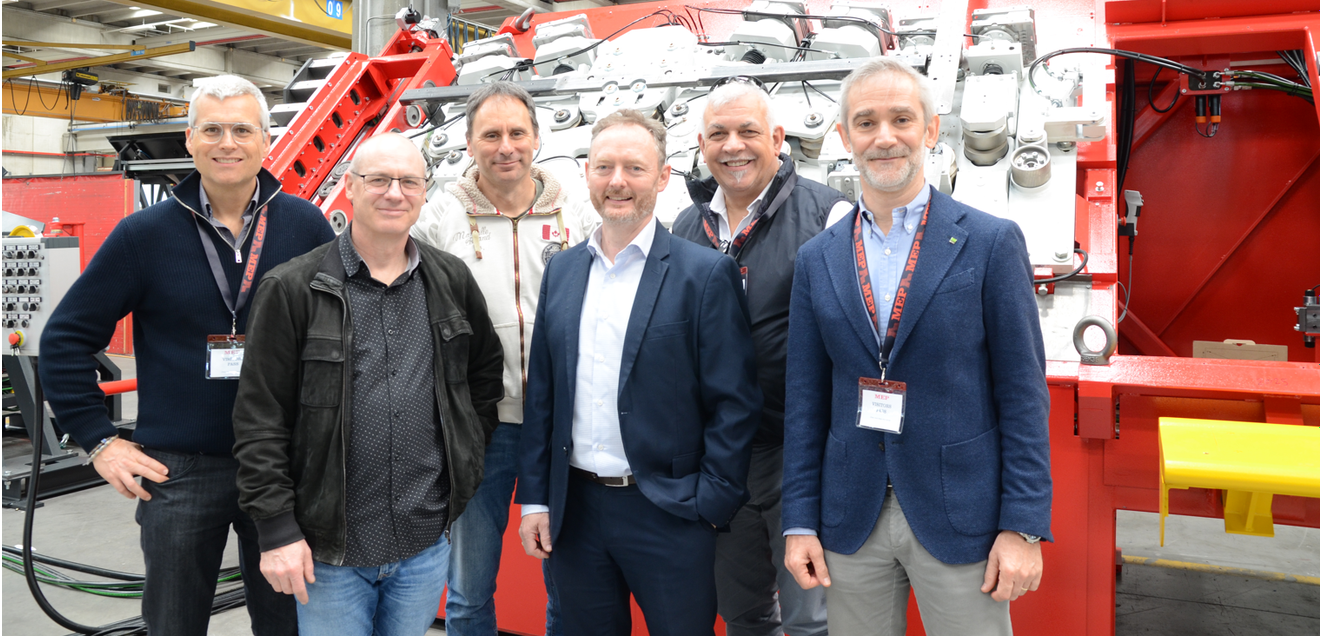
MEP has been developing and manufacturing machines for bending, processing, and welding reinforcing steel since 1966. In 2024, the company went public with the participation of the Wise Equity VI fund and, at the same time, acquired a majority stake in Promostar and Planet Automation. These companies merged to form the MEP Group.
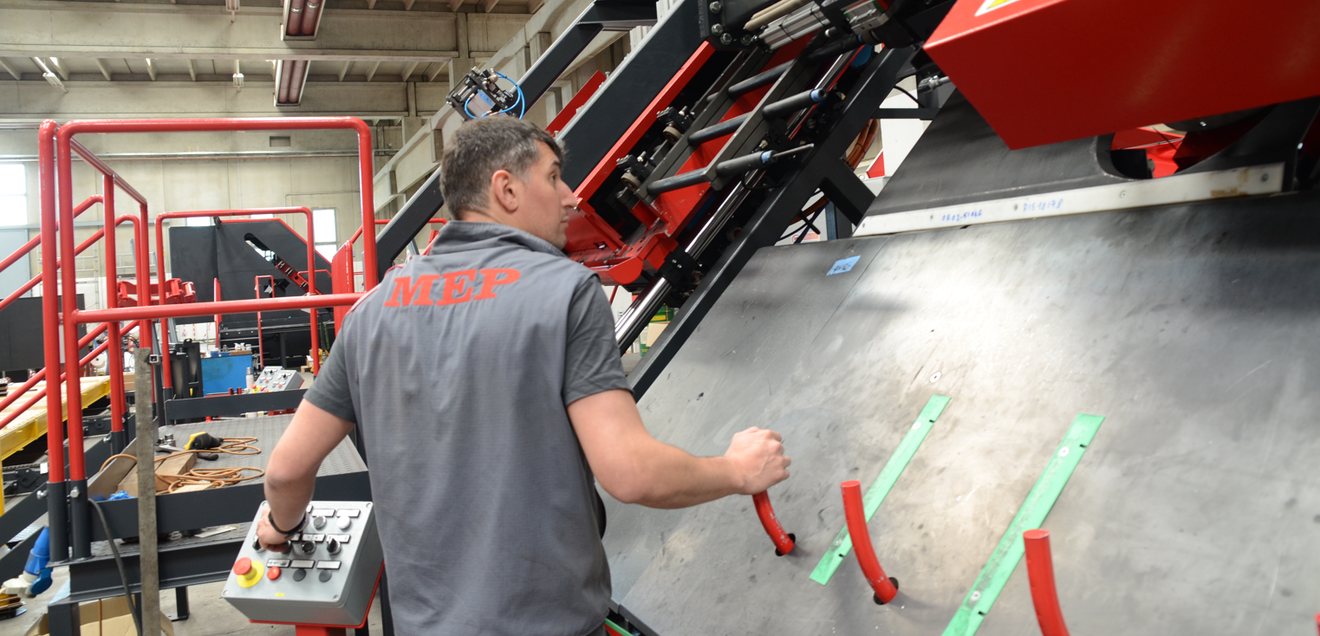
The basic process steps have hardly changed over the years, says Giles Haysom, Procurement Director at MEP. The requirements for the machines, on the other hand, have. “To be honest, there are several trends in the market that are influencing how we have to design our machines.” Whereas rebar with a maximum diameter of 16 millimeters was processed in the past, today’s equipment must be capable of handling material with diameters of up to 26 millimeters. At the same time, a growing variety of steel grades—including stainless steel—are being used. Added to this is the desire among many manufacturers for higher output rates. “And on top of that, manufacturers also want to increase the output of their machines. That’s why MEP machines can process two wires simultaneously,” adds Haysom.
More powerful drives will be needed
This had consequences for the designers. The machines had to be fundamentally redesigned, particularly the drive technology. “The changes and requirements mentioned earlier forced us to redesign our machines. To do so, we needed more powerful servo axes than the ones we had used previously. 100 amps used to be considered the maximum rated current requirement, but it was clear to us that we had to adapt and use drives capable of handling 150 amps,” explains Haysom. At the same time, a product previously supplied by their then-supplier was discontinued. The search for an alternative began.
Open system architecture enables flexibility
MEP established contact with Keba at the SPS trade show in Parma in 2012. There, engineers from both companies discussed the upcoming technical challenges for the first time. These discussions led to a long-term partnership.
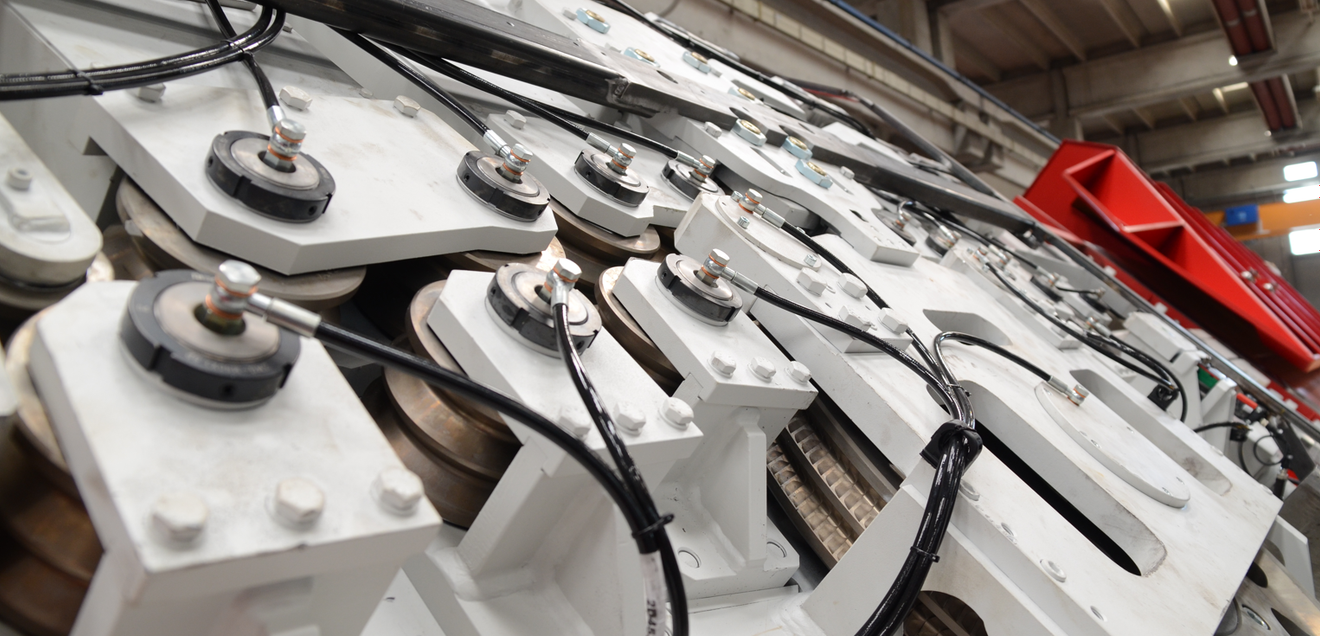
For MEP, two factors were decisive. First, the available product portfolio, which met both current and future requirements. Second, the openness of the system architecture. “We chose Keba for two main reasons: On the one hand, Keba offered exactly the products we needed at the time, as well as those we would need for our future growth. Second, Keba’s solutions are designed so that, thanks to appropriate interfaces, they can communicate seamlessly with various systems such as CANopen, EtherCAT, PROFINET, etc. And it was precisely this flexibility that our engineers were looking for.”
In addition to the technical specifications, the collaboration also played a role. “We established a very good relationship with the Keba team relatively quickly, one based on mutual trust,” adds Haysom.
Real-Time Communication for a Facility in Argentina
The way this collaboration evolved became evident in 2020 during a project for a wire mesh production line in Argentina. The project required support for the PROFINET (Process Field Network) industrial Ethernet communication standard, through which controllers, drives, and other automation components communicate with each other in real time. Together with automation partner Centro Automazioni and Keba, a corresponding solution was developed based on the D3 drive system.
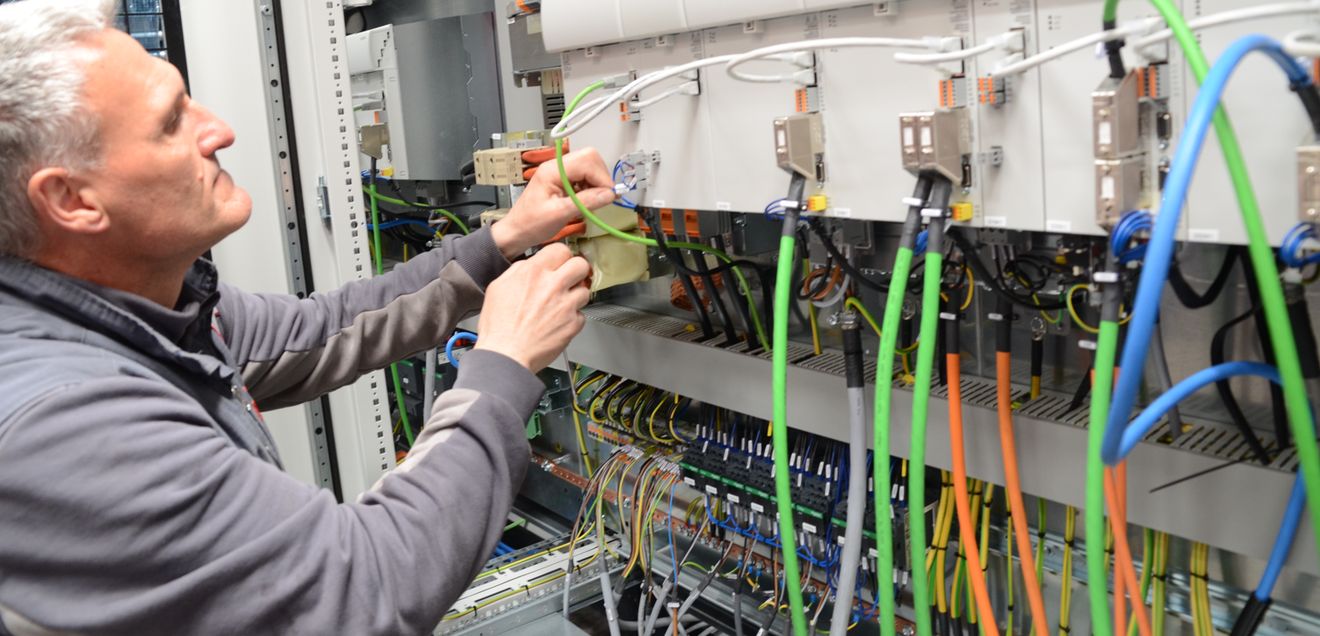
“At that time, we were commissioned to build a plant in Argentina for the production of wire mesh panels. One of the requirements was support for the PROFINET protocol. MEP then contacted their technical partner, Alfonso Sciarrabone of Centro Automazioni, who, based on the available project data, recommended using Keba’s D3 drive system. Colleagues from the Keba team in Italy then assisted with the design of the entire setup to ensure that MEP could offer a PROFINET solution. “This IRT-PROFINET protocol enables Keba’s D3 drives to communicate with the Siemens automation application.”
Using Energy More Efficiently
The collaboration is continuing. MEP is currently testing a new straightening and bending machine with an EtherCAT interface. The joint DC bus solution of the D3 drive platform is designed to combine the energy required by the train system with the energy fed back by the shearing unit. The goal is to reduce both total energy consumption and the energy dissipated via an external braking resistor. If the tests are successful, the collaboration could be expanded further. “For cutting and bending applications, it could very well be possible to extend the collaboration to the level of the servomotors.”
In addition to technology, global service plays a central role for MEP. “Local support and after-sales service in the respective countries—including, and especially, in remote regions—are a very important strategic pillar of our collaboration,” said Haysom.
Partnership Instead of Purchasing
Ultimately, however, the nature of the collaboration is what matters most. “We’re looking for partners who listen carefully to their customers and act accordingly, with their customers’ success in mind. Either you play in this league, or you don’t. We need people on the other side who say: ‘Okay, let’s solve this together, because that’s part of our responsibility, too.’”
And finally, Haysom sums up the collaboration with Keba this way: “Keba may not be the cheapest provider, but you know exactly what you’re getting.”


You might also be interested in
Synapticon and Generative Bionics Partner Up
Synapticon and Generative Bionics have entered into a partnership to develop propulsion systems for humanoid robots. The goal is to establish a European supply chain for the development, manufacturing, certification, and integration of the...
 read more...
ebm-papst is growing again thanks to AI and data centers
ebm-papst returned to a growth trajectory in fiscal year 2025/26. Air Technology, data center applications, and artificial intelligence are driving revenue and investment.
read more...Preventing Interference from Harmonics
Harmonics are underestimated sources of interference in electrical power grids. Particularly in wastewater treatment plants and water treatment facilities, harmonic distortion leads to poorer power quality and associated costs: additional heating of...
read more...Drives for Extreme Conditions
Standard solutions quickly reach their limits under extreme conditions. Together, Ultra Motion and Faulhaber develop custom-designed actuators for deep-sea, space, and other demanding applications that place the highest demands on reliability and...
read more...Triton Partners takes over Flender
Global investment firm Carlyle has signed an agreement to sell Flender, a provider of mechanical drive technology, to Triton Fund 6, advised by Triton. The terms of the transaction were not disclosed and is expected to close in the fourth quarter of...
read more...New roller conveyor cover from Hema
Rolls faster & lasts longer
Hema brings speed to roller blinds: With the expansion of the product family for roller conveyor covers, the specialist for machine and equipment protection has improved travel speed by 30 percent.
read more...Family-owned company invests 28 million euros in Nuremberg site
Anyone talking about German industry at the moment is often talking about uncertainty: a weak economy, high costs, global upheavals. A different story is being told in Nuremberg.
read more...Why stator and rotor laminations are becoming a performance factor
Why the future of robotics depends not only on software, but also on high-precision stator and rotor laminations inside the motor.
read more...New drives and image processing for networked production
B&R, the Machine Automation Division of ABB, will be presenting new solutions for machine and plant engineering at the all about automation trade fair in Wels. The focus will be on drive technology and industrial image processing.
read more...