
Interview with Norbert Hauser, Kontron
Cloud computing offers advantages to the manufacturing industry
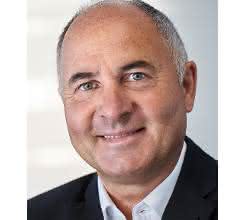
Embedded systems are one of the key technologies for the success of Industry 4.0. In this interview, Norbert Hauser from Kontron explains where the boards can already be found in production and how embedded manufacturers can support the manufacturing industry on the road to the smart factory.
Thanks to the takeover by S&T, Kontron was also able to further strengthen its position in the field of Industrial IoT and Industry 4.0. What are the strongest trends in this area?
In terms of hardware, it is clearly the trend towards miniaturization with increasing performance. If you look at the current state of embedded computing, this is a challenge. The reason is that more and more demanding tasks with increasing reliability are to be performed directly on the embedded board or module of the machine, for example in production. This is particularly true for computationally intensive applications such as artificial intelligence (AI), which require a lot of memory and computing power on the machine.
However, the Internet of Things (IoT) is also being driven forward and remains a hot topic. In this case, the evaluation of sensor and actuator data takes place directly on site, i.e. exactly where OT (Operational Technology) and IT (Information Technology) meet. Powerful embedded computers are the basis for this edge computing and therefore also for the integration of cloud technologies in industrial manufacturing and production.
If edge computers offer sufficient performance and memory to take on business-critical tasks without latency and bandwidth risk, then less time-critical functions can be outsourced to an embedded, private, public or hybrid cloud without affecting the machines. This includes, for example, complex analyses based on historical machine data. This means that cloud computing is becoming increasingly important for the manufacturing industry and will remain a strong trend in the future.
This is why wireless data transmission - and this is the fourth technology trend - must become faster and better. 5G can enable new application scenarios to flourish that were previously unthinkable due to a lack of availability and high latency. In the last two years, we have seen that TSN with OPC UA has what it takes to replace the fieldbus with the Internet protocol on factory floors too, from the IT to the field level. Corresponding certified products, including from Kontron, are already available on the market. Next, we will see how TSN with OPC UA can also be used over 5G, making it even more attractive for industry.
As a rule, the manufacturing industry and the embedded world hardly have any points of contact. What strategy are you using to tap into the market (note: traditional mechanical engineering, machine tools, production)?
Kontron's embedded products work invisibly but reliably in machines all over the world. Every machine and every device equipped with an embedded computer from Kontron is therefore also IoT-capable. In the separate worlds of OT and IT (operational technology and information technology), this fact was of no interest. However, with the convergence of OT and IT through standards such as TSN and OPC UA, with the inclusion of IT technologies such as cloud computing and IT applications such as artificial intelligence, Kontron now has a key role for many companies when it comes to Industry 4.0 and Smart Factory: we are, so to speak, the mediators between the IT and OT worlds. This has strengthened our position among automation specialists. We take this fact into account with the IoT software framework SUSiEtec from Kontron Technologies, formerly S&T Technologies, which enables the software-side connection between OT and IT, IT and cloud, OT and AI.
The digital transformation brings together two very different worlds and developer teams: OT (operational technology) and IT. How do you manage to bring the two together profitably?
Due to the convergence of IT and OT and the penetration of Internet technologies into factories, our IT know-how is increasingly in demand. Kontron, together with the S&T Group, is in a position to act as a mediator between the worlds of machines and computers, as we know both sides and understand their requirements. In particular, through the consulting services included in SUSiEtec, we bring together employees from the OT and IT sides and try to break down silos together and pave the way to the smart factory. This "change" not only requires technological know-how, but also employees from previously separate areas need to be brought together.
Single-board computers such as Raspberry Pi have long since made their way out of the hobbyist's corner and into the industry. To what extent does the popularity of the boards help you to gain a foothold in production?
Raspberry Pi (Rpi) has actually arrived in the industry. Kontron is not entirely innocent in this popularity, as many of the trainees and students we support use Rpi as a platform for their projects. When the young people then start their careers, they like to use Rpi to design prototypes. They then come to us to propose the prototype for series production.
Depending on the design, we can now also offer the realization of an industrial computer on Rpi if the required specifications allow it. Kontron has developed an industrial starter kit especially for the Raspberry Pi Compute Module 3. The starter kit was successfully used, for example, in the development of the mobile measuring station "Checkbox". This is a small measuring station installed under the patient's bed, which continuously monitors the vital data of patients in hospital without contact and alerts medical staff in the event of deviations above certain threshold values. By using the Rpi, Kontron significantly shortened the development time from prototype to market readiness.
In industrial production, production facilities are also being connected to the Internet as part of the transformation to the "smart factory". How can Kontron provide support here?
In cooperation with the S&T Group, Kontron now offers a comprehensive portfolio of software components and services that enable secure networking based on SUSiEtec. This also includes embedded, private and public cloud integration as well as hosting. The IoT software framework SUSiEtec serves as a link for secure connections between devices and into the cloud. From the sensor or actuator to the edge computer to the corresponding cloud, SUSiEtec links the respective IoT infrastructure for the individual requirements like pieces of a puzzle to form an overall structure.
Kontron, as a provider of industrial embedded/IoT modules, boards and systems including the future-oriented open standards TSN and OPC UA, stands for deterministic and secure communication from the cloud via the edge to the field level.
Hardware is no longer everything. What role do software and IT services play in S&T/Kontron's strategy?
Kontron is in the same position as many companies that have previously only offered products: The product alone is no longer enough, the software and the services around it make the difference. Our understanding also includes openness towards hardware from third-party manufacturers, so that our customers can use the IoT software framework SUSiEtec with plug-ins, e.g. for AI, SCADA, protocols, etc., not only with boards and modules from Kontron. The same also applies if the customer wants to introduce new, digitalized business models, for example on a pay-per-use basis. With the CodeMeter® technology from our partner Wibu Systems, we offer our boards with a special chip that can be used, for example, to activate licenses or functions for a test period or for additional payment.
Is software becoming a unique selling point? If so, why?
There is a lot of talk that hardware, including embedded hardware, has become an interchangeable commodity. However, this is only partly true. Quality and support still play an important role. Especially when embedded components are used in vital or critical products, for example in medical technology or passenger trains. Important certifications must be achieved and national and international standards must be adhered to. This applies above all in terms of reliability, but also for service & support and the product life cycle. The best software is useless if the hardware on which it is to run does not function according to requirements.
In times of open source development and development communities for apps - how can you still earn money with software?
The idea of simply "pulling" ready-made software from the community, adapting it a little and the individual solution is ready is unfortunately not feasible in practice. It starts with the fact that the question of intellectual property in community projects is often unclear and companies are obliged to publish their own further developments as open source. Otherwise, you expose yourself to unforeseeable risks if, for example, a developer sues for rights, and you can no longer protect your own developments.
Companies that offer their customers commercial software are of course also responsible for the quality of their products. In the case of open source software, however, they would have to painstakingly check the community code to ensure that it does not contain errors that may affect the correct operation of a machine. At the same time, they would have to ensure support and further development for software that does not originate from their company and, in turn, possibly offer its source code as open source.
These are all reasons why, in most cases, it is worth developing software yourself and, in our case, offering it together with the hardware.
Conversely, certain standard software is available as open source, such as Linux derivatives as operating systems or other frameworks that we use as components of our hardware or for software solutions such as AI or cloud integrations. When it comes to operating systems, we often offer customers the choice of whether they want to use the commercial Windows 10 IoT, Embedded or a free Linux system, for example.
In this respect, this broad range of services is an example of the change in business models towards greater customer orientation: Kontron's success, and therefore its future, lies in the combined offer of hardware and software with supplementary services tailored to the customer's needs.


You might also be interested in
Spectra Launches 5G RedCap Router for Industrial IoT Applications
With its new 5G RedCap routers, Spectra is expanding its portfolio to include a mobile communication technology for industrial applications designed to bridge the gap between traditional 5G and established IoT standards such as LTE-M and NB-IoT.
 read more...
5G in the industrial IoT
The Chair of Production Systems at Ruhr-Universität Bochum LPS is researching industrial applications with a local 5G network in the context of Industry 4.0.
read more...Implement milling tasks economically
Milling covers a wide range of applications - from the machining of large free-form surfaces in the aviation industry and in the manufacture of wind turbines to the milling of cavities and highly automated mass production.
read more...Mitsubishi Electric invests in the future
Further production building in Owariasahi City
Due to the growing importance of the Japanese region of Owarisahi in Aichi, Mitsubishi Electric Corporation is increasing its planned investments and announcing the construction of a second production building.
read more...Industrial Connectivity Lab opens
Siemens customers test wireless technologies
Siemens has opened a new test lab for industrial connectivity technologies at its Erlangen site. Embedded in the Siemens Technology Center on the Erlangen campus, the Industrial Connectivity Lab offers 300 square meters of space for testing...
read more...A sustainable foundation for the industry
The networks are growing together - this refers to the ongoing merging of IT and OT. Christian Korff, Managing Director Global Accounts and Member of the Management Board, Cisco Germany, explains the challenges and levers involved.
read more...It started with a timer for X-ray machines
In 2023, the automation expert Omron can look back on 90 years of innovative company history, in which many technological boundaries have been crossed and milestones set.
read more...Flexible component transport in production
Stein Automation presents the Stein 400 workpiece carrier system for parts weighing up to 80 kilograms and the C5G logistics control system.
read more...Extended image processing options
High-performance multispectral line scan camera with 5GigE
The new Linea2 4k Multispectral 5GigE camera takes machine vision systems to the next level with its performance and value, offering a 5GigE interface with five times the bandwidth of the Linea GigE camera.
read more...