
Software licensing
Licensing IoT devices
The individualization of machines does not have to go hand in hand with different hardware. By installing user-specific software packages, manufacturers and operators remain flexible and save costs. To ensure security and specific functionality, Wibu offers a system for individual licensing.
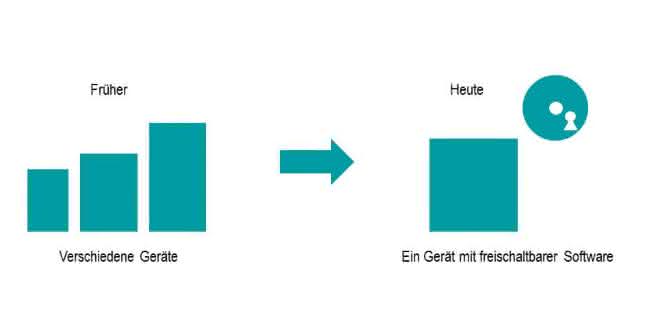
In the past, manufacturers of industrial equipment served their markets by producing machines with specific features for specific purposes. Today, however, manufacturers are increasingly licensing the various functions on standardized IoT devices, single-board computers and controllers. These are now so powerful that they can store entire software packages with all the functions. Manufacturers can offer the complete devices, activate functions directly upon delivery or subsequently and sell them separately, thus offering their customers hardware that meets their needs.
Licensing enables manufacturers to achieve a lean product portfolio and thus save on production costs, reach new target groups and target markets through low-cost entry-level offers and achieve the monetization of software innovations.
Manage authorizations securely
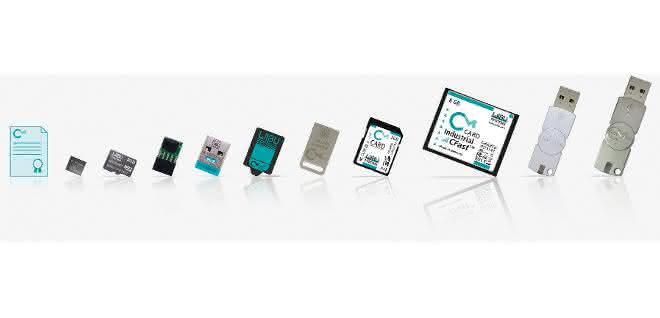
The protection and licensing technology CodeMeter from Wibu-Systems offers manufacturers the option of encrypting their software and activating the functions depending on the purchase. The authorizations, for example the information on the activated functions, are stored in the protection hardware CmDongle or the encrypted activation file CmActLicense. To enable a manufacturer to make subsequent updates, there is the so-called context file, which contains all the necessary information securely stored and can also transport it.
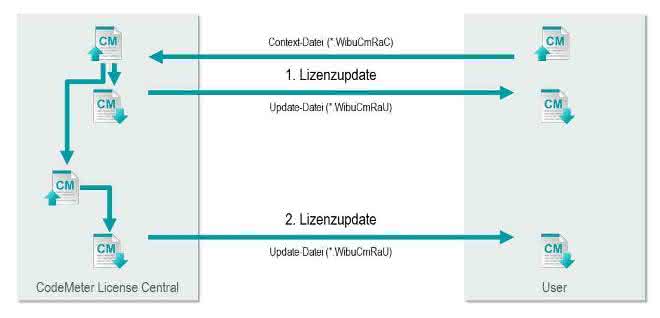
Since SPS IPC Drives 2018, CodeMeter has included push updates that allow the feedback channel as an option. The device generates a context file the first time it is activated. From the new CodeMeter version 6.70, a modified context file is automatically created when each update file is generated. This is the file that the device would send with the next request. Instead of requesting a new context file, the manufacturer can now create further updates based on this modified context file. The process is repeated so that a new modified context file is available for the next update.
This management of the modified files is carried out automatically and transparently for the manufacturer in CodeMeter License Central from version 3.21. CodeMeter License Central is a database-based application for creating, delivering and managing licenses. It can be easily connected to SAP, e-commerce and CRM solutions.
But what happens if an update has not been used on the device? As all updates are differential and build on each other, updates cannot be skipped. But CodeMeter License Central can help here too. All updates that have not yet been confirmed via a receipt are integrated into the current update file. The runtime components on the device automatically check which updates have already been applied and only carry out the steps that are still open.
The versions of CodeMeter and CodeMeter License Central presented at SPS thus offer the manufacturer the option of securely delivering licenses via a push update without a return channel from the device. Possible error states such as "Update forgotten" are automatically corrected. In addition to licenses, keys and certificates can also be delivered, for example for OPC UA.
Moving to a new device
The push update makes the return channel optional. Devices that are online can continue to use it. The return channel, again as a context file, can be used to acknowledge license updates and report usage data. The receipt is helpful for support cases and is required for moving a license to another device. The manufacturer wants to be sure that a license has been removed from the old device before it can be reactivated on a new device.
Another new feature for the trade fair is a bulk update for devices and machines. The initial situation can be as follows: An operator has a park of identical devices on which the same licenses are to be activated all at once. The operator then combines the context files of all the desired devices in an XML file. This file is transferred to CodeMeter License Central and processed completely. As a result, the software sends a new XML file back to the operator, which contains all update files for the desired devices. In the final step, these update files are distributed to the devices in the park.
Elke Spiegelhalter, PR Manager at Wibu-Systems / am


You might also be interested in
ebm-papst is growing again thanks to AI and data centers
ebm-papst returned to a growth trajectory in fiscal year 2025/26. Air Technology, data center applications, and artificial intelligence are driving revenue and investment.
 read more...
SPE on the Verge of a Market Breakthrough
Single Pair Ethernet (SPE) has moved beyond the conceptual phase and is increasingly being implemented in industrial settings. The focus here is not only on higher data rates and simplified cabling, but above all on the issue of system integration...
read more...More than 900 exhibitors already registered
Around six months before the start of the trade fair, more than 900 companies have registered for SPS 2026 in Nuremberg. The trade fair focuses on industrial AI, cyber security and digital transformation.
read more...Virtual PLCs in practice: How vPLCs make production systems more flexible and scalable
The increasing networking of IT and OT is fundamentally changing industrial automation. The IT/OT Integration Summit shows how modern technologies can make production environments more efficient, flexible and future-proof. The event will focus on...
read more...Sales growth in a turbulent market environment
Thanks to innovations and a focus on strategic industrial markets, Sick was able to moderately increase its sales in the 2025 financial year. In a turbulent market environment, the company was able to maintain its position and gain market share with...
read more...Siemens presents new AI agent
Siemens is launching 'Eigen Engineering Agent', an AI for automation technology. The solution is integrated into the TIA Portal, has been tested with over 100 companies and is designed to significantly accelerate engineering processes.
read more...Schaeffler keeps sales almost stable
Schaeffler generated revenue of EUR 23.5 billion in 2025 and increased EBIT before special items to EUR 936 million. At 266 million euros, free cash flow was significantly above the prior year and forecast. Net income remained negative due to high...
read more...Advancing artificial intelligence together
Helukabel is stepping up its activities in the field of artificial intelligence and is now a member of the IPAI. The innovation and collaboration platform for companies, research facilities, institutions and administration has set itself the goal of...
read more...New impetus for ifm sales
Two new positions were filled at ifm at the start of 2026: Markus Wolf becomes Managing Director Sales Germany, Sven Quant takes over the position of Central Managing Director in the Process Sensors division within the ifm Group.
read more...