
Embedded systems in the industry
Hidden intelligence in production
Embedded systems are playing an increasingly important role in modern production. They often work in the background. Users should take care to install systems that not only meet current requirements, but also possible future requirements.

Embedded systems are at the heart of automation solutions, test and inspection systems, transport and logistics systems as well as in the consolidation of data and networking for Industry 4.0, to name just a few examples from the production environment. Often inconspicuous and barely recognizable at first glance, they play to their strengths behind the scenes. Embedded CPU modules (computer-on-modules) are available for the realization of complex electronic components and give manufacturers the opportunity to integrate the highest computing power and data throughput individually and quickly into their devices. However, embedded systems also demonstrate their performance in the form of gateways, edge controllers and industrial computers, which are installed in control cabinets or hidden behind covers, for example.
It is not only advisable for device manufacturers, but also for plant manufacturers and process automation specialists to pay attention to the details of the systems used, which have such a significant hidden influence on efficient and smooth production. In order to keep pace with the constantly growing market requirements, it is also important to pay attention to a few basic points, especially with regard to embedded systems and their use.
Device manufacturer with vision
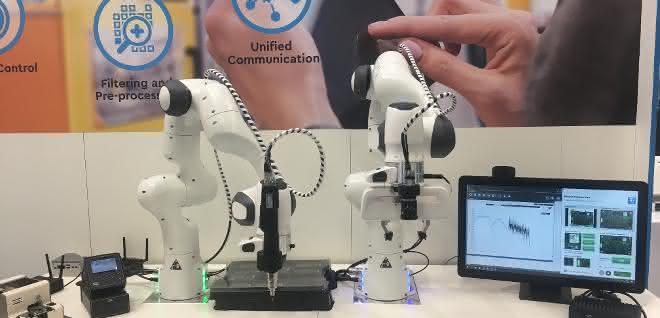
The performance should be scalable in order to be equipped for the growing demand for performance of the applications for years to come. Manufacturers who base their devices on modular concepts usually pursue a medium and long-term product strategy that is designed to offer end customers sustainable solutions for production. Modular standards such as COM Express have fundamental advantages, as the mechanics, connectors and signal assignment are standardized. This means that complete systems can benefit from the fact that suitable CPU modules are available with every new processor generation, enabling technical advances and increased performance to be incorporated quickly and easily into complete systems. For plant manufacturers and process automation specialists, cooperation with device manufacturers who pursue these modular approaches therefore brings lasting benefits.
Particularly in the case of gateways and edge controllers as intelligent links in production, it is important that the technology used not only meets today's requirements, but also reliably masters the trends and challenges of tomorrow. In the age of Industry 4.0, new requirements such as real-time networking of different system parts and functions are important aspects that embedded systems should be equipped for. As a rule, suitable products can be recognized by the fact that proven components designed for industrial use are installed. For example, CPU manufacturers such as Intel differentiate in their roadmaps between genuine embedded variants such as the Atom E3800 and E3900 series and the cheaper variants such as Celeron and Pentium, which are not designed for real-time applications but for typical PC applications with a lot of idle time and without continuous operation. There are also differences in the network controllers, which nowadays play a particularly important role in IP-based networking. For example, the Intel i210 Gigabit Ethernet controllers are equipped with full software support and additional features that are required for robust, real-time industrial networking and are not included in the cheaper variants such as the Intel i211 or many controllers from other manufacturers.
Providing the proof

As an application example, the MBox-ADV from TQ-Systems meets these challenges. The Intel Atom E3950 and four i210 Gigabit Ethernet controllers are used as the heart of the system. This allows the edge controller to be used flexibly for a wide range of applications in the production area, even when a wide variety of functions such as image processing, decentralized control and consolidation and filtering of Industry 4.0-relevant data are combined in one device. The MBox-ADV also demonstrated its suitability for state-of-the-art "OPCU UA over TSN" networking during the implementation of the open source implementation "open62541", which has since been officially certified by the OPC Foundation. This was realized by a working group of specialists under the leadership of OSADL and verified on the basis of the TQ-MBox-ADV, among other things.
As can be seen from the examples above, in many cases it is also worth taking a look behind the scenes. It is precisely the intelligence at the heart of the system in the form of a wide variety of embedded systems that should be given more consideration when selecting devices, systems and system platforms. Reliable operation, scalability and flexible adaptation options as well as trust-based cooperation with device manufacturers and suppliers from the embedded environment are particularly important in the production sector. Technology companies such as TQ offer device manufacturers and system integrators suitable foundations for this. The portfolio includes highly reliable CPU modules in a wide range of performance classes and configurations as well as modular solution platforms that can be used as gateways, edge controllers or industrial PCs, but also serve as a basis for the development of customer-specific devices and applications.
Harald Maier, Business Development Manager at the TQ-Group / am


You might also be interested in
Fraunhofer IPMS develops new 10G TSN endpoint
The demands on Ethernet networks in automotive, industrial and safety-critical applications are increasing rapidly. The Fraunhofer Institute for Photonic Microsystems IPMS is responding to this with a new 10G TSN endpoint IP core that enables...
 read more...
Ewald H. Kuk holds the keynote speech
On September 23 and 24, the international community from industry, research and development will once again meet in Stuttgart to discuss the latest developments in Time-Sensitive Networking (TSN). This year's keynote speech will be given by an...
read more...Basis for future-proof OT networks
Future-proof OT network solutions are the basis for advancing digitalization in industry. High-performance industrial Ethernet switches with a large number of ports, high data rates and extensive functions are required to ensure reliable and secure...
read more...EtherCAT all-rounder
In an interview with Andreas Mühlbauer, Thomas Rettig, Senior Management Control System and Communication Architecture at Beckhoff Automation, cites reliability, speed and compatibility as decisive factors for industrial communication.
read more...The tiger among processors
Since the move towards the Industrial Internet of Things (IIoT) and Industry 4.0 has picked up speed, processor boards and modules must be able to process exponentially growing amounts of data.
read more...One thing will win
Single Pair Ethernet is the technology that enables migration from various legacy networks to a universal physical layer. This is a further step towards making data available from the individual edge sensor through production to the desktop or...
read more...Faster start of series production with Computer-on-Module series and starter kits
TQ is presenting four versatile module series at this year's embedded world: TQMa243xL, TQMa64xxl, TQMa117xl and TQ110EB as well as a new, powerful SMARC starter kit in a practical form factor.
read more...One network for all applications
Reliable data communication with high data rates and deterministic time behavior is one of the prerequisites for production in accordance with the principles of Industry 4.0.
read more...Security of automation solutions
End-to-end safety in automation
Networking in industry and the associated Industrial Internet of Things (IIoT) are redefining the requirements for security - and therefore also for the automation solutions used.
read more...