
Internet of Things
Bringing light into the data darkness
A wide variety of hardware components and software versions, different transmission paths and operating systems as well as their spatially distributed nature make IoT setups complex and heterogeneous. Those who can keep track of everything are lucky.
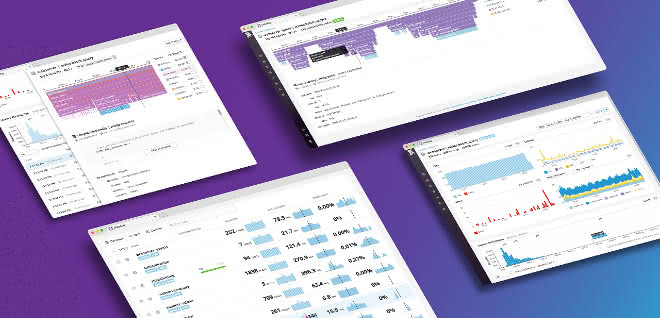
Whether in production environments, smart trailers or even at the point of sale: Internet of Things (IoT) infrastructures are highly developed technical elements embedded in complex architectures. From individual sensors in garage doors or truck trailers to entire sensor chains in smart industrial plants - the use cases and underlying processes are wide-ranging. It is not uncommon for sophisticated applications to require regular updates at one end of the chain as soon as a new generation of even more sophisticated devices has been installed at the other end as the IoT infrastructure grows.
As fast as the development in the field of networked devices is currently progressing, the characteristics of the individual devices are already diverse and wide-ranging in practical areas of application - especially if these have been growing for years. It is not uncommon for an environment to use different hardware architectures with different processors or network capabilities, different operating systems, versions of the same operating system or versions of their software and even different transmission paths for the collected data. The complexity is compounded by the - by definition - distributed nature of IoT across different locations. Different locations that may even require different connection and transmission paths. Chaos sends its regards. They either communicate with each other or with services that run in the cloud or in a private data center.
Regardless of what happens to the data in the first step, many modern industrial companies that build IoT products and services are now pursuing a cloud-first approach. This means that the devices must always communicate with a service running in the cloud or centrally. This processes and stores data and provides insights, which in turn flow back to the devices.
The bottom line is a heterogeneous collection of transmission paths, hardware and software, which often presents companies with new challenges if they want to maintain an overview. Without robust monitoring, even the most sophisticated IoT devices are sometimes flying blind thanks to increasingly complex applications. Only those who are able to build up an understanding of communication, data flows and the entire end-to-end system can look beyond the individual devices and services to assess the health and performance of the overall structure.
Performance at a glance
Although the white spots in the Federal Ministry of Transport and Digital Infrastructure's broadband atlas are becoming fewer and fewer, IoT installations in remote locations in particular cannot simply ramp up instances when their applications are in greater demand and performance decreases. Also, not every IoT installation provides for such scalability at all, but is a self-contained system limited by factory settings. Where "classic" cloud applications simply scale horizontally at other locations and in other environments, the physical hardware at the deployment site limits the possibilities. This makes it all the more important to seamlessly monitor the performance of IoT devices and their decentralized data processing, for example to ensure seamless predictive maintenance or to avoid slowing down smart supply chains.
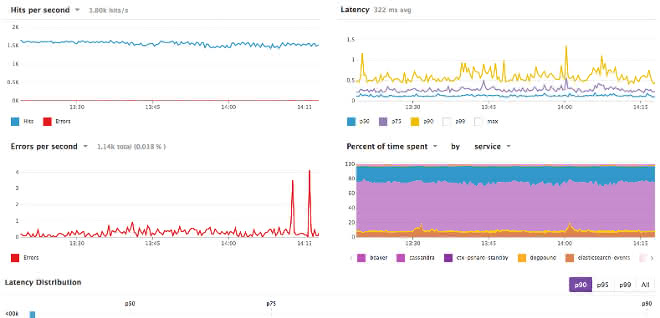
In IoT monitoring, it should be possible to visualize all devices flexibly, selectively and, if required, in groups in order to keep an eye on the performance of individual components as well as individual sub-areas or the entire IoT fleet. Criteria for grouping individual IoT devices could be their respective location, the conditions on site or deployment network, as well as a specific hardware generation, the respective software version or a specific Wi-Fi network via which they communicate. Each of these upper areas should represent a separate filter that allows users to display performance dependencies by cross-comparing individual parameters and react more quickly to any problems that arise.
The monitoring platform should have a flexible tagging-based data model in which the devices, the associated metrics and log data can be tagged with any key parameters. Put simply, an industrial company with multiple locations should be able to visualize and tag devices grouped by location to determine whether certain locations are more prone to outages or performance issues. From the grouped view, the problem can then be further isolated.
The future with perspective
A recent study conducted by TÜV Süd and IDG shows that the Internet of Things has now also arrived in German companies: more than half of all companies surveyed in the DACH region use IoT devices and 93% of them are very satisfied with the results. The use cases are becoming increasingly sophisticated, versatile and broadly relevant. Analysts assume that IoT investments will continue to accelerate at the same time as sensors and processors become more powerful and cheaper and, for example, the image processing of IoT-enabled cameras will also take a step forward. Thanks to 5G, the white spots of network coverage will also disappear more and more. Data will increasingly be processed locally and insights streamed back to the cloud.
In the future, every company that has a physical presence and is not a purely digital online company will become an IoT company in one way or another, using devices to improve its operations or customer movements or developing smart devices to differentiate its products. However, this also brings with it concerns about data protection and security fears, as the TÜV Süd study shows: 41% of those responsible in companies consider their data and 39% their IT security to be at risk as a result of IoT.
In order to overcome these concerns and focus on the benefits of IoT, existing monitoring of the cloud or legacy infrastructure must be extended to the growing IoT fleet. This is the only way to create an overall view and eliminate weak points. Only when a system provides everything in one place can it be understood what is going on in the context and where there are blind spots and which parts of an installation behave significantly differently and can therefore potentially become problematic.
Stefan Marx, Director Product Management for the EMEA region, Datadog


You might also be interested in
Spectra Launches 5G RedCap Router for Industrial IoT Applications
With its new 5G RedCap routers, Spectra is expanding its portfolio to include a mobile communication technology for industrial applications designed to bridge the gap between traditional 5G and established IoT standards such as LTE-M and NB-IoT.
 read more...
5G in the industrial IoT
The Chair of Production Systems at Ruhr-Universität Bochum LPS is researching industrial applications with a local 5G network in the context of Industry 4.0.
read more...Implement milling tasks economically
Milling covers a wide range of applications - from the machining of large free-form surfaces in the aviation industry and in the manufacture of wind turbines to the milling of cavities and highly automated mass production.
read more...Mitsubishi Electric invests in the future
Further production building in Owariasahi City
Due to the growing importance of the Japanese region of Owarisahi in Aichi, Mitsubishi Electric Corporation is increasing its planned investments and announcing the construction of a second production building.
read more...Industrial Connectivity Lab opens
Siemens customers test wireless technologies
Siemens has opened a new test lab for industrial connectivity technologies at its Erlangen site. Embedded in the Siemens Technology Center on the Erlangen campus, the Industrial Connectivity Lab offers 300 square meters of space for testing...
read more...A sustainable foundation for the industry
The networks are growing together - this refers to the ongoing merging of IT and OT. Christian Korff, Managing Director Global Accounts and Member of the Management Board, Cisco Germany, explains the challenges and levers involved.
read more...It started with a timer for X-ray machines
In 2023, the automation expert Omron can look back on 90 years of innovative company history, in which many technological boundaries have been crossed and milestones set.
read more...Flexible component transport in production
Stein Automation presents the Stein 400 workpiece carrier system for parts weighing up to 80 kilograms and the C5G logistics control system.
read more...Extended image processing options
High-performance multispectral line scan camera with 5GigE
The new Linea2 4k Multispectral 5GigE camera takes machine vision systems to the next level with its performance and value, offering a 5GigE interface with five times the bandwidth of the Linea GigE camera.
read more...