
Big Data
Cloud - an alternative to edge computing
Data (big data) is exploding with IoT, Industry 4.0 and the smart factory.
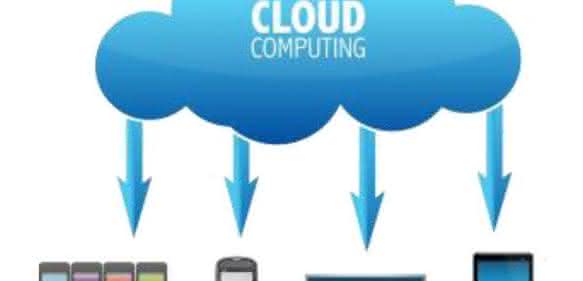
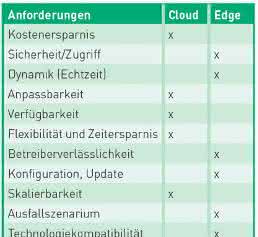
Storage, status monitoring and analysis with high computing power are the preferred means of economically managing this flood in real time. The latter can be provided entirely on site (edge computing). If the basic data comes from locally distributed sources, an external data center is recommended. This server, the cloud (data cloud), performs such tasks more cost-effectively and reliably. Universal software platforms installed on IoT gateways enable coupling - also for existing systems without interfering with the automation logic. By dispensing with gateways, the control system and cloud now even communicate directly(http://www.jetter.com). The decision between the two configurations influences the application. There are always processes that combine both options. Cloud architectures are recommended for all areas of industry and business.
Cloud services
This decentralized data center (server) of mostly external service providers stores processing programs and data for monitoring and visualization, for example (image). The user saves on their own IT infrastructure for less frequently required computing power. With suitable hardware (scalable gateway for recording process data from even complex systems or multiple machines), users benefit from low maintenance costs and robust, reliable operation. This development is also driven by the increasing demand for dynamic computing power.
In addition to the most secure private clouds, there are also freely available public cloud structures and hybrid solutions. The decentralization of computing power requires scenarios to manage cloud and/or data transmission failures. Multi-cloud environments with redundant "server farms" offer maximum reliability. Any internet-enabled device is suitable for access.
A fast, secure communication channel must be available at all times in order to permissibly limit delays compared to real-time processing. The risk of data theft and manipulation is naturally more pronounced compared to edge computing.
Edge services
Servers for edge computing are part of the company's internal network. Apart from the additional costs, this type of structure can handle the cloud tasks described above. Load limits come to light with high data volumes and/or when scalable solutions are required. The edge controller corresponds to a special PLC with high computing power.
Cloud-Edge cooperation
Neither approach can be ruled out. Attention should be paid to the technology cycle, which the user can only take into account for his or her area of responsibility. Their combination - culminating in the multi-cloud - is the method of choice. In the case of large data volumes and process-related fast response times, pre-processing/preparation in an edge device is recommended as an interface between operational and information technology. Special, secure, flexible IoT edge gateway connects the automation network with the cloud(http://www.netiot.com).
Data transmission and security in the cloud
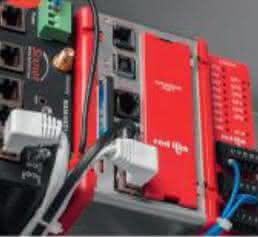
The main aim of cloud solutions is to increase the availability of machines and systems. Secure IoT solutions must be networked with the cloud. Connections with standards such as OPC UA enable encrypted communication and diagnostics from the cloud to the last sensor. Data travels securely and error-free from the field level to the cloud and back. The main focus of the security architecture is on identity protection and identity queries at network focal points. Hardware concepts that have changed compared to conventional M2M include "multilingual", modular, scalable, data-readout-capable multi-protocol cloud gateways (Fig.). Networks such as Profinet can also be expanded to include cloud functions (Proficloud www.phoenix-contact).
Outlook
The cloud as a platform for efficiency, data security, data collection, storage and optimization, which is essential for the "big data business", is changing business models. The company's reach can be expanded cost-effectively. At the same time, cloud computing is creating innovations for smaller companies.
Provided suitable communication solutions (e.g. OPC-UA) and intelligent power supplies (e.g. Sitop devices) are available, devices for permanent monitoring and data provision can be integrated into cloud solutions. The standardization of cloud communication with hardware-independent Application Programming Interface API facilitates gateway developments(http://www.congatec.com).
As MES software can be stored in a cloud, it is available to smaller companies as an attractive rental model.
The benefits of the cloud require caution with regard to the license conditions and security measures of such services. Cryptographic mainframes such as IBM Z take security and encryption to a new level. In addition, the alternative of blockchain without a central server is already under development in terms of technology and guarantees.
This advantageous technology, including the necessary artificial intelligence AI (e.g. for knowledge-based decision-making aids), will help shape the future. Of course, it must not have any negative social consequences.
Dr.-Ing. habil. Joachim Krause
Edge (fog, grid) computing - real-time data processing in a server located at the edge of a company network. It avoids risks during data transmission.
Cloud computing - External server takes over the storage and processing of large amounts of data. The "cloud" collects transferred data from decentralized sources and makes it available for processing.
Multi-cloud environment - combination of private, public, hybrid cloud and edge computing. Prerequisite: all potential participants are cloud-compatible.
Blockchain computing - Decentralized peer-to-peer network without a central intermediary. Each participant saves a copy of every transaction within the computer network.


You might also be interested in
ebm-papst is growing again thanks to AI and data centers
ebm-papst returned to a growth trajectory in fiscal year 2025/26. Air Technology, data center applications, and artificial intelligence are driving revenue and investment.
 read more...
SPE on the Verge of a Market Breakthrough
Single Pair Ethernet (SPE) has moved beyond the conceptual phase and is increasingly being implemented in industrial settings. The focus here is not only on higher data rates and simplified cabling, but above all on the issue of system integration...
read more...More than 900 exhibitors already registered
Around six months before the start of the trade fair, more than 900 companies have registered for SPS 2026 in Nuremberg. The trade fair focuses on industrial AI, cyber security and digital transformation.
read more...Virtual PLCs in practice: How vPLCs make production systems more flexible and scalable
The increasing networking of IT and OT is fundamentally changing industrial automation. The IT/OT Integration Summit shows how modern technologies can make production environments more efficient, flexible and future-proof. The event will focus on...
read more...Sales growth in a turbulent market environment
Thanks to innovations and a focus on strategic industrial markets, Sick was able to moderately increase its sales in the 2025 financial year. In a turbulent market environment, the company was able to maintain its position and gain market share with...
read more...Siemens presents new AI agent
Siemens is launching 'Eigen Engineering Agent', an AI for automation technology. The solution is integrated into the TIA Portal, has been tested with over 100 companies and is designed to significantly accelerate engineering processes.
read more...Schaeffler keeps sales almost stable
Schaeffler generated revenue of EUR 23.5 billion in 2025 and increased EBIT before special items to EUR 936 million. At 266 million euros, free cash flow was significantly above the prior year and forecast. Net income remained negative due to high...
read more...Advancing artificial intelligence together
Helukabel is stepping up its activities in the field of artificial intelligence and is now a member of the IPAI. The innovation and collaboration platform for companies, research facilities, institutions and administration has set itself the goal of...
read more...New impetus for ifm sales
Two new positions were filled at ifm at the start of 2026: Markus Wolf becomes Managing Director Sales Germany, Sven Quant takes over the position of Central Managing Director in the Process Sensors division within the ifm Group.
read more...