
Scanner
Six tips for mobile data collection
Targeted data collection and evaluation are among the challenges facing the logistics industry. High-performance scanners are the linchpin. Cipherlab has compiled a list of what is important when it comes to mobile scanning.
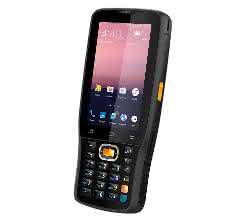
The combination of logistics and IT is essential for the effective, fast and affordable transportation of goods. 63% of the companies surveyed in the Fraunhofer survey want to use digital technologies to increase productivity and quality, 59% want to reduce costs and 41% want to increase transparency. For this to succeed, however, the devices and systems used must be reliable. Barcode scanners help logistics companies to record, control and transport goods. This should be taken into account when making a selection:
Reliable recording and transfer of large volumes of data
Lengthy paper processes slow down goods handling and logistics. In addition, ever larger volumes of data currently have to be recorded and processed. Companies should therefore rely on powerful, mobile, LAN-capable devices with integrated RFID and laser scanning functions that work seamlessly with the shipping and receiving management software used to avoid media disruptions, errors and efficiency losses.
Integrated solutions help to optimize the transport of goods without delays, for example to fill out forms or check order sheets. Wireless communication enables company-wide coordination - with the ability to track, inventory, manage, ship and deliver data from source to customer. Reliable WLAN transmission and fast roaming are essential, even in data-intensive environments such as warehouses. It should also be possible to transfer large files more quickly. The new RK25 series Android mobile computer from Cipherlab offers high data capacity and wireless connectivity.
Memory performance and flexibility
Processor, clock frequency and memory are other important criteria when selecting a device, as they speed up data capture. In this context, it is advisable that the memory of the scanner can be expanded using a card - important for data-intensive applications. In addition to reliable RFID data capture, logistics companies should ensure that the desired device supports NFC applications in peer-to-peer mode and in card emulation mode in order to automate ID verification and also read security access cards. Barcodes should be scannable from different distances and angles. A camera integrated into the device simplifies image and video capture.
Work-supporting input options
Scanners that can be used flexibly in different environments are useful. For example, it is helpful if the device can be used both via touchscreen and with a physical keyboard (buttons). The screen should be large enough and easy to read and operate. An automatically controlled backlight is useful so that entries can be read even in poor lighting conditions. Other practical functions include navigation assistance, GPS support and voice connection - especially for drivers and users who are on the road a lot.
Meeting individual scanning requirements and specifications
In addition, scanners and other devices should be easily adaptable to special requirements. For example, it is helpful if the devices can be configured with different lasers to meet individual scanning requirements: Regardless of whether the goods are very close or spread across the floor - the right laser optimizes efficiency.
A laser with an oversized distance enables the employee to scan a pallet without having to get off the forklift. One scanner that fulfills such requirements is the Android 6.0-based 9700A from Cipherlab with long-range functionality. A normal laser, on the other hand, allows employees to quickly read boxes and make sure that the right products have been picked. Compliance with applicable security and data protection standards should not be neglected.
Easy handling and additional support
Another requirement for use in logistics is that mobile devices should fit comfortably in the hand and not be too heavy or too large. The combination of ergonomic design, low weight and handy size allows fatigue-free, one-handed operation. In addition, the application should be intuitive and simple.
Expansion and adaptation to new requirements, for example through additional apps, are also important criteria. A pistol grip improves use even during long shifts and in hectic environments, while additional software support provides users with assistance in the event of questions or problems.
Robust design
In addition to their technical features, mobile scanners should impress with their design, as they are used in logistics in different environments - in dusty warehouses, on wet parking lots or in noisy and busy production halls. Key features include a robust design that protects the device from rain and dust, a scratch-resistant display, a sturdy housing and a long-lasting battery. as


You might also be interested in
Housing and inserts for plenty of power
Lapp presented the expansion of its Epic Power series at SPS 2023: four new M23 circular connector inserts and three new M23 housings. The special feature: all housings can be combined with any of the four inserts.
 read more...
News and product updates from Smartgas
Portable gas analyzers for outdoor use
Smartgas is starting the second half of the year with a series of updates to existing products and a number of new products. Portable analyzers expand the range of applications, while new accessories such as protective housings and heating modules...
read more...Everything accurate in switch cabinet construction
To ensure smooth work processes, tools for processing enclosures and housings must function flawlessly and reliably. Häwa rounds off its punching range with the Multi-Press 500.
read more...Shafts and conversion parts
The Rodriguez range includes ball bushings including matching housings, shaft brackets, crossbars and supports.
read more...Cooling and temperature control units
Hygienic packaging sells safely
In few industries are the requirements for hygiene in the production process as strict as in the food sector - the health of consumers has top priority. This results in enormous challenges for all machines and components involved, especially in...
read more...Simple tool change in seconds
With the CMS, Schunk is launching a user-friendly, manual change system for quick component replacement. In addition to its simple and convenient operation, the CMS also stands out with its extensive range of optional modules and complementary end...
read more...Motion controller for small drives
Medium power range covered
Faulhaber has another housing-less and compact motion controller in its range, which is particularly suitable for integration in device construction and medical technology applications.
read more...Welding solutions in the name of resource efficiency
At the Welding & Cutting trade fair in Essen (September 11-15), Fronius will be focusing on the major drivers in welding technology. Quality requirements are increasing in all industries, but the required welding specialists are scarce. In...
read more...Safe solutions for cable installations
From thick power cables to thin sensor lines, cables and lines must be routed safely through systems and machines. A challenge that should not be underestimated, explains Jörg Sokat, Head of Product Management at Pflitsch.
read more...