
Compressed air dryer
Drying compressed air in an environmentally friendly way
Anyone who uses refrigeration dryers to generate compressed air can no longer avoid thinking about the new F-Gas Regulation. The new directive will put many a dryer out of business. Operators should take precautions.
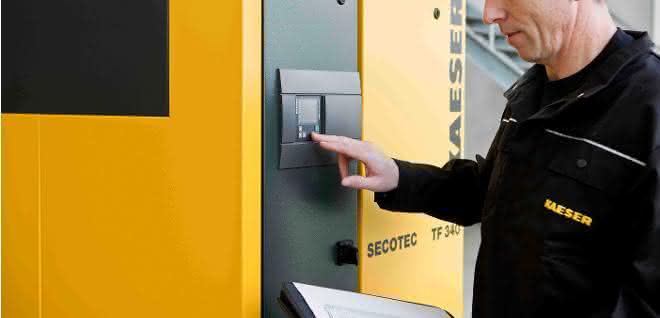
Compressed air drying is as much a part of compressed air generation as a lid on a pot. Virtually every compressed air station is equipped with refrigeration dryers, because hardly any application can do without these devices, which ensure dry compressed air. The F-Gas Regulation EU 517/2014 has been in force since 2015. Its aim is to minimize emissions of partially fluorinated greenhouse gases (F-gases) in order to counteract global warming. The effects of the regulation are now being felt. This is because it also affects operators of compressed air stations, as F-gases are used as refrigerants in refrigeration dryers. This means that anyone who has their existing refrigeration dryers serviced or repaired or who purchases a new refrigeration dryer must comply with the requirements of the directive.
Existing refrigerants are gradually being withdrawn from the market. This is being achieved through specific bans, but also through the targeted shortage of refrigerants with a high global warming potential (GWP). In terms of bans, the spotlight is on the refrigerant R 404A, which has been in common use to date. From next year, it will be prohibited to place new R-404A refrigerant dryers on the market. Only used refrigerant may be used to repair larger systems, and from 2030 it will also be completely banned in servicing. The effect is noticeable: R 404A is now difficult to obtain in large quantities and when it is, it is very expensive. However, the issue is becoming even more explosive.
Attention, shortage
In addition, the supply of refrigerants with a high global warming potential, such as the frequently used R 407C and R 410A, is being systematically reduced. Quotas, which are allocated to refrigerant manufacturers and importers on a binding basis and which limit their sales volumes, are used for this purpose. The following applies to the use of the quota: the lower the global warming potential of the refrigerants sold, the higher the permitted sales volume. Manufacturers are therefore in the process of switching their product range to refrigerants with the lowest possible global warming potentials. This process will intensify significantly as the original quota is gradually being reduced to just 21 percent. The higher their global warming potential, the faster the availability of refrigerants is likely to deteriorate. In future, many of today's refrigerants will no longer be available for repairs or will only be available at high prices. It therefore makes sense for operators to get an overview of the refrigerants they currently use and seek advice on alternatives. Stockpiling refrigerants is usually not an option for operators. Their purchase requires mandatory certification of operation and personnel. For all refrigeration dryers that are in use, it makes sense to prevent leaks in the refrigeration circuit in good time by having them serviced by appropriately certified personnel. This applies in particular to older systems. Operators must also comply with the new regulations on mandatory leak tests.
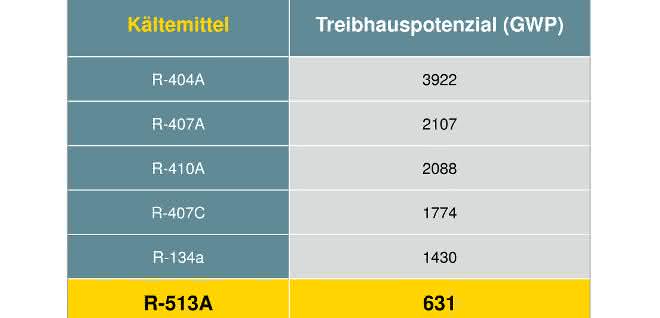
In many cases, converting the dryers to operate with new refrigerants is unfortunately not an alternative, as it is not always technically possible or the costs for a conversion would be uneconomical. In the long term, it makes more sense to include the purchase of new dryers in the investment plan and install new appliances.
As enormous progress has been made in the field of dryer technology in recent years, there are other advantages to buying a new appliance. New dryers are designed for maximum efficiency and low energy consumption and often take up less space than older appliances. In addition to operator safety with regard to the refrigerant, this could potentially reduce energy and service costs.
Pay attention to longevity
Anyone buying or planning to buy a new refrigeration dryer should make sure that it allows the use of a refrigerant that is not only available today, but also remains available for service work over the life cycle of the system. Refrigeration dryers that are already filled with a refrigerant with the lowest possible global warming potential or dryers that can be retrofitted with such a refrigerant at a reasonable cost offer the best opportunities here.
Some manufacturers use agents that may still be used at present, but will either be banned in future or will no longer be available on the market due to their high global warming potential. Operators of such refrigeration dryers would then face the same problem again within a short time.
Forward-thinking manufacturers of refrigeration dryers are already using new refrigerants such as R-513A in their production. This currently has the lowest GWP value of all refrigeration dryers available on the market and is therefore not only significantly more climate-friendly, but also a future-proof solution.
Dipl.-Betriebswirtin Daniela Koehler, Press Spokeswoman Kaeser Kompressoren / am


You might also be interested in
"We are clearly different from the competition"
The IT company 21unity offers a range of hardware and software services, as well as traditional services. Andreas Mühlbauer spoke to Managing Director Anja I. Gondolf about the company's appearance at the Hannover Messe, its services and future...
 read more...
Think digital, act local
When it comes to industrial damping technology, on-site advice is often very valuable for engineers and designers.
read more...Plagiarius 2024 negative prize
On January 26, 2024, the Plagiarius campaign awarded its dreaded "Plagiarius" negative prize for the 48th time to manufacturers and retailers of particularly brazen counterfeits and fakes.
read more...Spindel Full Service records second-best...
Maintenance as an economic success factor
Spindel Full Service, the spindle repair specialist from Baden-Württemberg, can look back on its second-best financial year in its history - with 15% growth compared to the previous year. And the further forecast also looks good.
read more...Thyssenkrupp and Novelis cooperate
Platform for the circular economy
With a platform for the circular economy in the automotive industry, the two companies Thyssenkrupp Materials Services and Novelis want to set new standards for the recycling of used materials. The open platform will enable access to larger...
read more...How production can benefit from AI
Together with AI technology, IIoT networking makes it possible to better control machine parameters and optimize quality with predictive quality. Downtimes and set-up times can also be further minimized. Cloud platforms also make these technologies...
read more...Marco Ghirardello takes the lead
Fanuc has appointed Marco Ghirardello (48) as the new President and CEO of Fanuc Europe. Ghirardello succeeds Shinichi Tanzawa, who has led the company since 2016 and will take on a new role at Fanuc's headquarters in Japan.
read more...Efficient robot monitoring
Microchips are installed almost everywhere - whether in smartphones, washing machines or cars. With increasing digitalization, the demand for semiconductors has been growing rapidly in all areas of the economy for years.
read more...Everything on one platform
Functional and powerful tools are essential for professional work on the construction site, in the workshop or when carrying out repairs.
read more...