

OT and IT in production
The digitalization of production
The boundaries between IT and operational technology, or OT for short, are becoming increasingly blurred in the course of digitalization. The goal is also more flexible production, but this also requires a more flexible infrastructure. This article describes four basic principles for the sustainably successful digitalization of manufacturing and business processes.
Information technology (IT) is permeating more and more areas of our lives and has long since penetrated production and all its processes and systems. It has already made many things possible, including more individualized products or spare parts from 3D printers, combined with ever shorter product life cycles. New business models based on data-driven services have also emerged, such as the control of maintenance techniques. With the help of data, maintenance intervals can be scheduled according to actual demand rather than after a certain period of time. This saves resources and costs.
In order for manufacturing companies to survive in this now global market, comprehensive digitalization of business processes is necessary for many. However, more flexible production also requires a much more flexible infrastructure. This is made possible above all by more powerful hardware and software components as well as comprehensive integration of corporate IT, production IT or operations technology (OT) and the Internet of Things (IoT).
Historically, these three areas have developed largely independently of each other, and their integration poses numerous challenges for many companies today. While new concepts such as microservices and open source have found their way into IT, change in OT has been much slower due to the considerable investment in production facilities and the large variety of manufacturers and standards.
The following topics form the foundation for the sustainable and successful digitalization of manufacturing and business processes.
All-round connectivity
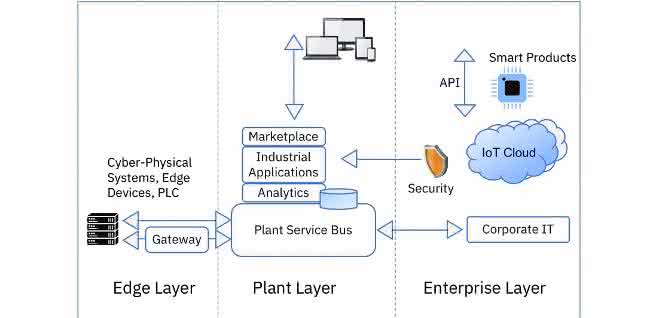
The most important aspect here is probably the all-encompassing integration within the company, between the companies themselves or with partners and increasingly also with customers. This flexible infrastructure is what makes changing business processes possible in the first place. In a digitalized factory, more and more machines will be connected to each other and to the internet. In addition, many IT and OT systems (ERP, PLM systems, SCADA, controllers and sensors) must be connected via many protocols, even if standardization (OPC-UA, MQTT) is being sought. Examples include the evaluation of sensor data in real time, direct access from MES systems to inventory information in SAP or the use of quality data in the development of new products. This makes efficient, flexible and controllable OT-IT integration based on a service orientation for adaptability, manufacturer independence and exercising data sovereignty for Internet connections all the more important. The Plant Service Bus (PSB) makes this possible.
The PSB supports a range of standard protocols from the IT and OT environment - from OPC-UA, MQTT and REST to databases and adapters to databases as well as standard applications, ERP, MES, EDIFACT and mainframes. For programmable logic controllers (PLCs) that are not yet supported, it is possible to develop a new adapter or use a gateway that converts this protocol, usually fieldbus, into a standard protocol. If required, IBM Streams, a stream computing platform with limited service bus functions, can be used to transport large data streams. Thanks to the use of modern virtualization methods (containers) and comprehensive automation, it is also possible to implement this solution in several plants with limited effort and a uniform appearance.
In particular, increasing communication with external systems in the cloud or with business partners is not only a technical challenge, but also a risk that can be reduced by using the Plant Service Bus.
The right decisions at the right time
The amount of sensor data and its heterogeneity (structured and unstructured) cause considerable effort in finding the causes of error patterns, anomalies or failures. Advanced analytics and AI techniques are increasingly replacing traditional business intelligence (BI) - not least because of the sheer volume of data, whereby a wide variety of data from previously separate sources has to be evaluated.
Ideally, this data should first be transformed into a form suitable for analysis and, if necessary, pre-processed and cleansed. Depending on the scope of the data or the required response time, the data is not only evaluated in the central company IT system, but also in an edge device or gateway on the machine. In addition to increasing system availability, quality and throughput, cross-company collaboration is another trend that manufacturers are using to find out how their products can be used and optimized. Thanks to data evaluation, costs can be reduced and resources better deployed.
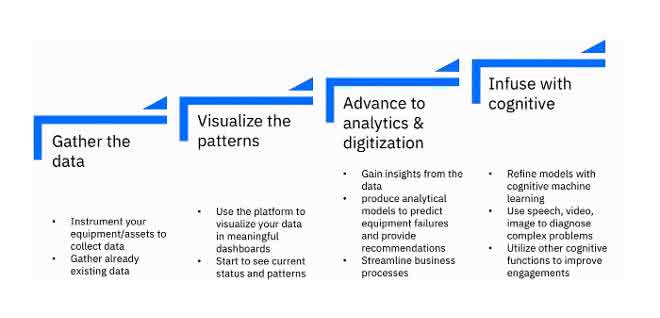
An agile and iterative approach is recommended for the successful implementation of analysis projects, as well as a continuous exchange between the specialist department and analysts and a gradual increase in analytical complexity. Thanks to comparatively simple visualizations - especially on mobile devices - production and system statuses can be called up on the basis of integrated data. Building on the project team's experience, complex correlations, predictions, optimizations and recommendations for action can be developed in further phases. Pre-trained AI solutions can cover common IoT issues and accelerate projects in your own company. These include, for example, predictive maintenance or production optimization. Watson Studio is a tool that supports data scientists in analyzing a wide range of data. Based on open source standards such as Jupyter Notebooks and Spark, it can be used to carry out a wide range of analyses of large volumes of data in teams locally or in the cloud.
Applying and marketing findings
The insights gained can then be used in applications such as IoT and smart data apps, which are often quickly created in the specialist departments as part of a pilot project. The data enables new business models and commercial exploitation. Development for industrial applications often takes place step by step based on user requirements. Not least because other company divisions proceed in a similar way. Later, of course, the question of integration with each other and with corporate IT arises. The challenge is then to remain dynamic and to operate the solutions economically, independently of providers. In many cases, companies want to operate the applications in-house for security reasons, for example, and still benefit from the advantages of the cloud.
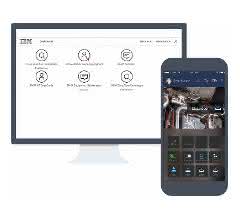
Platforms such as IBM SpliceX address precisely this requirement by already including frequently required infrastructure functions. Thanks to the lightweight platform, companies can focus on the actual application and significantly accelerate the implementation of applications. It is important that the project is driven from a business perspective in order to achieve early results with minimal effort and to be able to control development flexibly. This gives users the opportunity to select the microservices that are important to them in a very granular way and independently of platform providers.
A robust architecture is important
Consistent IT infrastructures and standardized interfaces are key elements for the success of Industry 4.0 projects. By networking heterogeneous systems from different vendors through common industry standards, a robust and open architecture can be developed for multiple use cases, including the Digital Twin, that integrates into the existing environment and can adapt to frequently changing requirements. SmartFactoryKL, the world's first multi-vendor smart factory, will be demonstrating these concepts in its sixth edition at Hannover Messe 2019.
Peter Schleinitz, Executive Architect / The Open Group Distinguished IT Architect at IBM / ag
If you would like to find out more about the connection between operation technology and IT in modern production, register for our "OT meets IT" congress.


You might also be interested in
ebm-papst is growing again thanks to AI and data centers
ebm-papst returned to a growth trajectory in fiscal year 2025/26. Air Technology, data center applications, and artificial intelligence are driving revenue and investment.
 read more...
SPE on the Verge of a Market Breakthrough
Single Pair Ethernet (SPE) has moved beyond the conceptual phase and is increasingly being implemented in industrial settings. The focus here is not only on higher data rates and simplified cabling, but above all on the issue of system integration...
read more...More than 900 exhibitors already registered
Around six months before the start of the trade fair, more than 900 companies have registered for SPS 2026 in Nuremberg. The trade fair focuses on industrial AI, cyber security and digital transformation.
read more...Virtual PLCs in practice: How vPLCs make production systems more flexible and scalable
The increasing networking of IT and OT is fundamentally changing industrial automation. The IT/OT Integration Summit shows how modern technologies can make production environments more efficient, flexible and future-proof. The event will focus on...
read more...Sales growth in a turbulent market environment
Thanks to innovations and a focus on strategic industrial markets, Sick was able to moderately increase its sales in the 2025 financial year. In a turbulent market environment, the company was able to maintain its position and gain market share with...
read more...Siemens presents new AI agent
Siemens is launching 'Eigen Engineering Agent', an AI for automation technology. The solution is integrated into the TIA Portal, has been tested with over 100 companies and is designed to significantly accelerate engineering processes.
read more...Schaeffler keeps sales almost stable
Schaeffler generated revenue of EUR 23.5 billion in 2025 and increased EBIT before special items to EUR 936 million. At 266 million euros, free cash flow was significantly above the prior year and forecast. Net income remained negative due to high...
read more...Advancing artificial intelligence together
Helukabel is stepping up its activities in the field of artificial intelligence and is now a member of the IPAI. The innovation and collaboration platform for companies, research facilities, institutions and administration has set itself the goal of...
read more...New impetus for ifm sales
Two new positions were filled at ifm at the start of 2026: Markus Wolf becomes Managing Director Sales Germany, Sven Quant takes over the position of Central Managing Director in the Process Sensors division within the ifm Group.
read more...