
Human resources in the industry
Interview: Taking the employee with you
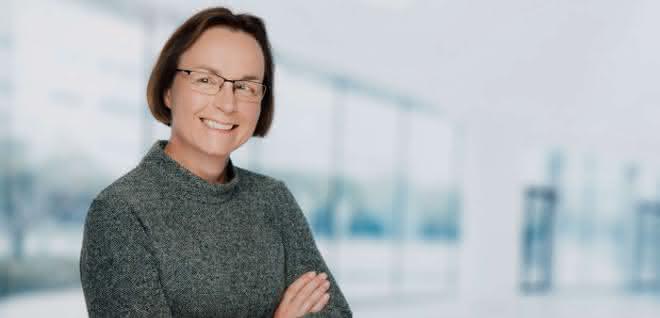
The industry is facing various challenges. But what do digitalization and the shortage of skilled workers mean for human resources? In an interview with SCOPE editor-in-chief Andrea Gillhuber, Anette Skau Fischer, Vice President Global Human Resources at Walter, talks about recruiting and employee management in times of digitalization.
The industry is struggling with a slowing economy. Will this also ease the shortage of skilled workers?
The shortage of skilled workers is a fundamental issue for us - regardless of the economic situation. This is why we are concerned with our future skilled workers and potential future managers. We continue to train our employees, but in these challenging economic times we are also required to review positions that are vacant due to natural fluctuation.
So the fact that vacant positions are no longer filled due to natural fluctuation has nothing to do with the economic situation?
The fact that we do not necessarily fill these positions does not mean that we are not hiring. We are always on the lookout for competent specialists. We are also constantly promoting young talent: we offer apprenticeships and dual study programs regardless of the economic situation.
How do you find new specialists?
We recruit skilled workers very intensively through our trainee program. We provide training in various professions and currently have around 50 young people in training across Germany, including industrial mechanics, machine and plant operators and industrial clerks. Promoting young talent is an important channel for securing our future need for well-trained specialists.
The majority complete an apprenticeship in a production environment. Many go on to train as technicians or foremen in order to switch from production to the office floor. How do you counter this trend?
For this reason, we offer a dual study program. This enables young people to combine theory and practice. This is how we find our future specialists, particularly in the fields of mechanical engineering and business informatics. There are currently around 15 employees on the dual study program.
But we also provide targeted support for our trainees who show potential and want to and can do more. After all, we would naturally like to keep a young person who wants to continue their education or go on to university with us.
You are responsible for HR not only in Germany, but worldwide. How do the different countries differ in terms of recruiting specialists?
Germany in particular is very unique with its various vocational training programs in the industry. Within the Walter Group, we are envied by colleagues from other countries for the resulting opportunities. This privilege is a unique selling point for Germany.
How do you attract sales experts?
We have a sales trainee program. Selected sales trainees go through a program in which they are assigned to projects all over the world for 18 months. In this way, they get to know the sales business across countries and then bring the knowledge they have gained back to their home branches. If they show potential, they can also take on specialist or management tasks in the future.
How does a company need to position itself in order to attract skilled workers?
The company offers competitive pay - this is and remains a basic requirement. Development and training opportunities also play a major role for the younger generation. They want to play an active role in the company's development. For us as a company and for our managers, this means engaging in dialog, taking employees and their wishes and abilities seriously and actively involving them. This is what makes an attractive employer, and we are constantly working to become even better at this.
Work-life balance is also playing an increasingly important role. What does this mean for the willingness to work shifts, for example?
When I look at our respective shift models in our production facilities, there is hardly any preference for the day or evening shift. The financial incentive of the night shift is still attractive. I think it's also down to the environment: in southern Germany in particular, the mentality of always being hard-working and very disciplined is widespread. This is also reflected in young people: the idea of saving for home ownership is very pronounced.
How do the criteria and requirements for specialists in production and IT differ according to which you select specialists?
Of course, professional competence and experience are a prerequisite. However, soft factors such as good comprehension, the ability to work in a team and flexibility are just as important to us. It doesn't matter which specialist area a person is employed in, we expect a certain attitude that fits in with our corporate culture.
Keyword digitalization: this is often accompanied by employees' fear of being rationalized away. How is Walter taking its employees along this strategic path?
The digital transformation is also underway at our company. We actively involve our employees and communicate very transparently. We believe that change can only be successful with the help of transparency and communication. And the concern that jobs will be lost due to automation and digitalization is also part of this change. We are succeeding very well, as automation is being gradually introduced in the production environment in collaboration with our employees and the works council. Of course, this means that certain jobs are no longer relevant, but other jobs are being created in this environment. We are not pursuing a radical digitalization strategy, but an ongoing optimization approach. And that also helps us to take our employees with us on the path of change.


You might also be interested in
Dr. Christina Franke is Engineer Powerwoman 2023
An independent jury, consisting of the members of the WomenPower congress advisory board, has chosen Dr. Christina Franke as Engineer Powerwoman. The announcement was made at the opening of the WomenPower career congress on April 21 in Hanover.
 read more...
Record sales and employee growth at Ziehl-Abegg
Ziehl-Abegg has published its annual figures for 2022. With a turnover of 873 million euros, the company increased by around 22 percent compared to the previous year. The number of employees rose to 5,100 globally and 2,800 in Germany.
read more...Turnover exceeds 4 billion euros for the first time
At the end of the 2021/22 financial year on June 30, 2022, the Trumpf Group recorded the highest turnover in the company's 99-year history with a strong increase in turnover of 20.5 percent to 4.2 billion euros.
read more...Companies have difficulties assessing their cyber risk
A new study by Trend Micro reveals that 54 percent of companies worldwide are dissatisfied with the maturity of their cyber risk assessment capabilities.
read more...New Head of Finance at Mapal
Matthias Cöster has 14 years of professional experience as CFO.
read more...Matthias Lapp becomes Chairman of the Management Board
The Lapp family business will be managed by the third generation from October 1. Matthias Lapp, grandson of company founder Ursula Ida Lapp, takes over as CEO of Lapp Holding.
read more...Compact computer for industry
As a versatile and compact computer, the Raspberry Pi is also interesting for industry. However, appropriate adaptations to the harsh production environment are necessary to bring the Raspberry Pi world into factories.
read more...Full power in a double pack
From September 22 to 26, 2021, the "EuroSkills", the European Skills Championships, will take place in Graz, Austria.
read more...Gregor Langer takes over the management of RK Rose+Krieger
Hartmut Hoffmann, who has managed the business of RK Rose+Krieger since 2008, is retiring on June 30. His successor from July 1 will be Dr. Gregor Langer.
read more...