
Tube processing
Batch size 1 for 5,000 variants
For the processing of tubes in the automotive sector, a machine was to be developed that is suitable for different diameters as well as for a wide range of variants and batch sizes - starting with a quantity of one.
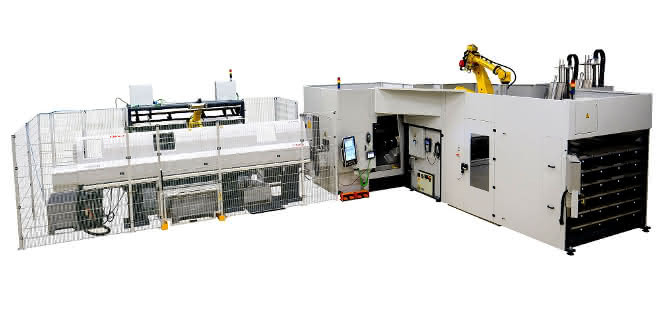
Many car manufacturers like to rely on KW Automotive coilover suspensions. Within 25 years, the company from Fichtenberg, east of Stuttgart, has developed into a premium manufacturer that is well known to car tuners, vehicle refiners and racing enthusiasts. Around half of the vehicles that take part in 24-hour races rely on the Swabian product, which was previously manufactured exclusively by hand in small quantities. Since the beginning of November, the first fully automatic machine has been in production at the medium-sized company with 400 employees. Only the first component, a machined tube, is produced on it.
It's actually quite simple: the machine picks up a tube, cuts it to length, processes the ends, drills any cross holes, washes the processed piece and blows it dry. For Spinner Automation, the commissioned automation specialist, the development of such a machine should not be so difficult because the accuracy requirements for these tubes are only a tenth to a few hundredths of a millimeter. The company from Markgröningen in Swabia can deliver greater precision. However, the employees were very surprised when Jörn Maier, one of the three managing directors, told them that the standard batch size for the machine is between four and 16, can also be one, that there are around 5,000 variants and that the machine should be expandable. The whole thing should of course be fully automatic, so that no manual work is required when changing between different diameters.
Digitized warehouse increases transparency
"We want to reduce storage costs on the one hand and increase quality on the other," says KW project manager Martin Wagner. The investment of more than one million euros should pay for itself over the years. Orders for the Golf type 7 and 8 come in for around 400 vehicles every month. The 1,600 tubes can now be produced overnight in a single pass. An order for a small quantity can be slipped in between if tube material with the right diameter is being processed anyway. Together with the digitalization of the entire warehouse, the company also expects greater transparency regarding current stock levels and more efficient control. It starts with the bar feeder: The first robot can access ten compartments with different bar diameters. Compartments and sticks are color-coded so that production assistants cannot make any mistakes when refilling. This reduction in errors was an important specification from KW Automotive. As a bar is usually not required in its full length, the robot places the rest back in the appropriate compartment and the software registers these parts so that they can be used for a subsequent order.
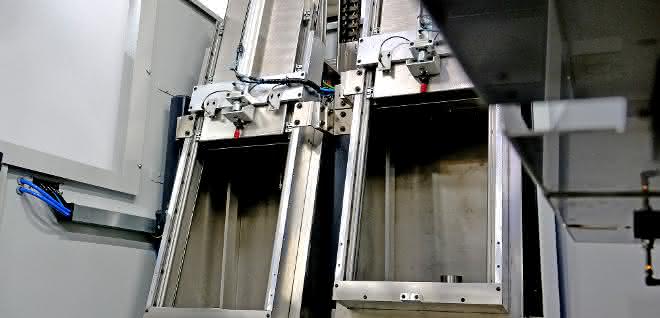
Maier sent this request to various manufacturers of bar feeders. Almost all of them were too expensive in relation to the machine as a whole, as they were mostly designed for mass production. Only one manufacturer called the machine manufacturer, discussed the matter with him and together they developed a solution for the bar feeder that met all the customer's requirements. "All sections of the machine are unique," says Maier, who originally applied for a design position at Spinner Automation eight years ago, but was then hired by owner Dominik Jauch in sales and development because it was "simply a good human fit".
New development washing unit
In the next step, the tube is CNC machined. It is cut to length, the ends chamfered as required and then provided with precise cross holes. "They were the biggest challenge for us in this section because there are so many variations," says Maier. The second robot then picks up the piece and feeds it into the "washing machine". Originally, the 15 Spinner employees involved in the development thought that they would also find an external partner for this washing process. However, there was no suitable solution on the market. The obstacle here was also the many different variants. No standard machine could cope with the different lengths and diameters or could be further developed so that the pipes were completely free of metal chips. "This was completely new territory for us," admits the spinner project manager. The final step: the robot picks up the clean pieces and places them in certain compartments of a second rack. If the finished pipes are removed by an operator for further processing, the operator first scans the QR code of the order. A lamp indicates the correct compartment. This is intended to prevent errors. The computer then resets the number in the compartment.
Always new challenges
The competent impression that Martin Wagner had after the initial discussions became increasingly solidified. "We were always on schedule. The cooperation worked well and was unbureaucratic," summarizes the trained master mechanic, who has worked in testing and development departments for many years and has been a project manager at KW Automotive for seven years. One reason for the success of the project is that Dominik Jauch and Jörn Maier rely on the expertise and creativity of their employees. "Our customers practically always present us with challenges that we don't yet know how to solve in the first few weeks," explains the company boss. One person alone can no longer keep track of the complexity of customer requirements. Even classic project management fails when sales, CAD design, production and IT development have to work together. This is why Jauch turned his company on its head back in 2012: he handed over responsibility to teams that each have the necessary skills and develop suitable solutions together. For him, this is the future of German industry: "Our strength is individual production. We can only master its complexity through agile work organization," says Jauch.
Jörn Maier therefore saw himself merely as part of the team - more often in the role of moderator than expert. Depending on the topic, designers, programmers or even fitters took the lead in discussions with customers. "Five years ago, we probably wouldn't have managed the project," says the Managing Director, but during this time Spinner has acquired a lot of specialist knowledge through projects or brought additional expertise in-house with new employees. Some time ago, Maier sat in a meeting room with 15 colleagues and they wrote the first ideas for solutions on metaplan cards. They were all on an equal footing, so that intensive discussions could take place and disagreements could be raised at any time. Originally Scrum-oriented, Spinner has changed the method in practice over the years, breaking with some dogmas and adapting it to his own needs.
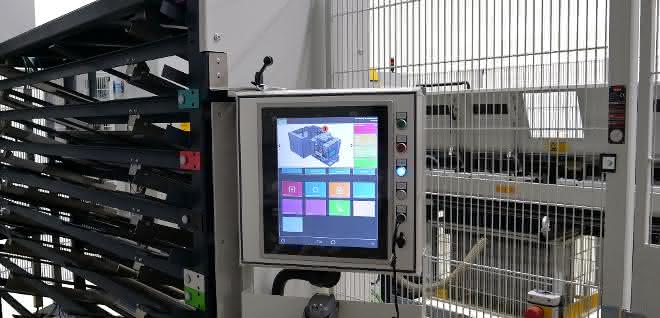
In order for the fully automatic machine to fit into the KW Automotive system, the programmers were repeatedly called upon. For example, they had to visualize the data on the monitors in a customer-specific look so that the machine remained familiar and easy to operate for the staff. Error reduction directly at the machine was desired, while it could be completely controlled from the office after preliminary work.
Jens Gieseler, freelance journalist / am


You might also be interested in
Plagiarius 2024 negative prize
On January 26, 2024, the Plagiarius campaign awarded its dreaded "Plagiarius" negative prize for the 48th time to manufacturers and retailers of particularly brazen counterfeits and fakes.
 read more...
Ivalua honors winners of the Generative AI...
AI-supported "add-ons" for buyers within 48 hours
Ivalua, provider of cloud-based spend management solutions, announced the winners and innovations of the first Generative AI Innovation Cup. The competition took place in December 2023. It was open to all Ivalua partners and employees - more than...
read more...Efaflex celebrates 50 years of high-speed...
The emphasis is on "fast"
Since day one, Efaflex has wanted to use new technologies as early as possible and drive progress in the industry. This year, the family business is celebrating its 50th anniversary under the motto "Fast Forward".
read more...Security of supply even during power outages
In the winter of 2022, Germany was worried about energy shortages. The drugstore retailer dm did not paint any horror scenarios, but nevertheless saw the possibility of controlled, temporary, regional power cuts (brownouts).
read more...Safety technology in mechanical engineering
Modules with new functions
Euchner's product highlights at EMO 2023 include the communication-capable solenoid interlocks.
read more...Transforming the paper industry towards climate neutrality
Together with partners from industry and research, Voith is developing a project for the optimization of energy and material flows in paper production. The aim of the research project is to develop a digital framework that enables effective process...
read more...Up to 95 percent less flue gas thanks to direct extraction
The requirements for occupational safety measures and safety technology are also constantly increasing in welding technology. The Technical Rules for Hazardous Substances (TRGS) stipulate that welding fumes and harmful substances must be extracted...
read more...Competitive advantages with large machines
Whether 3D-printed components for machines and systems, prototypes or aids for design: additive manufacturing is almost indispensable for modern companies in mechanical and plant engineering and automation if they want to play in the premier league.
read more...Transport technology from the modular system
Many transport tasks can be realized with the help of linear technology. Pre-configured solutions are available to simplify the interaction between the linear unit, motor, gearbox and controller. This minimizes the effort required for research and...
read more...