
Intec/Z connect 2021
Transformation of the supplier industry - Interview with Dirk Vogel
At the Intec/Z connect 2021 congress, Dirk Vogel, Network Manager of AMZ - Netzwerk Automobilzulieferer Sachsen, will speak about the transformation of the supplier industry. We asked him in advance about the most important trends.
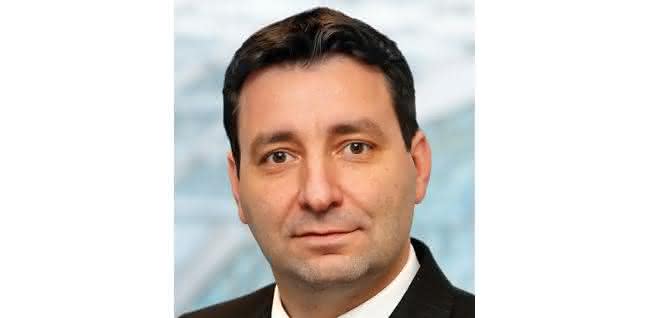
The structural change in the automotive industry was not unexpected; the corona crisis was. How has the crisis influenced structural change in recent months?
The structural change has been underway for several years. It requires investment in new technologies, especially e-mobility, but also for digitalization in the production process. The coronavirus crisis has caused car sales to plummet by over 20% in 2020, following a decline in 2019. There is a lack of money for investment throughout the industry. This affects both vehicle manufacturers directly and the entire supplier industry. The lockdown is still causing additional costs in measures to protect against the pandemic, replacement of employees in quarantine, greater distances between workplaces and similar challenges.
How far has digitalization progressed among automotive suppliers? How does it compare to the global competition?
Suppliers that deliver to the OEM in sequence or on time are at a very high level of digitalization. There, orders are given to the suppliers completely digitally with a lead time of a few hours and passed on by them to their suppliers. Digitalization is well advanced here, even internationally. The digitalization of the components themselves is in full swing, with more and more data on the component, the manufacturing and quality process being collected and stored in a concentrated form under the banner of the "digital twin". Automation and robotization are already higher in Germany today due to cost pressure, and this is accelerating the digitalization of processes. However, it is not possible to speak of a fundamental lead, as this varies greatly from one supply chain to another.
Does hydrogen still have a chance against the battery as a source of electrical energy generation?
We have analyzed all OEMs producing in Europe with regard to their hydrogen strategies. There are no signs of a short-term trend reversal towards hydrogen in the passenger car sector. Hydrogen will play a role for long-distance transportation and for higher loads, i.e. primarily buses and trucks. Especially if the construction of a charging network is too expensive. Another application will be logistics transport and municipal vehicles, which always drive back to their depot after their tour. A fundamental distinction must be made: The actual "transformation in the product" consists of the main drive becoming electric, and therefore smaller, lighter, less vibrating and quieter. The transmission is also largely eliminated, vehicles become larger on the inside or alternatively smaller on the outside with the same external dimensions. This reduces traffic noise in cities in particular.


You might also be interested in
Electromechanical spindle drives made to measure
Stabilus now also offers "Industrial Powerise Actuators" of type IPR40 as a customer-specific solution from batch size 1. Design engineers can individually configure forces, stroke lengths and speeds.
 read more...
Motors, gearboxes and encoders: Faulhaber expands Ø 16 mm portfolio
Faulhaber is expanding its portfolio with new DC motors from the SXR and GXR family, a 16 mm planetary gearbox and the IEX3 magnetic encoder for compact drive solutions.
read more...Gear technology for angular gearboxes
Customized gearing solutions for high-performance drives
Framo Morat presents the "speeroX gearing", a concept for high-ratio angular gears. The article explains the structure, functional principle, fields of application and material options of the technology.
read more...Low-noise gearbox models from Faulhaber
Faulhaber is expanding the GPT family with two high-performance models that impress with their whisper-quiet operation: the "22GPT LN" and the "32GPT LN".
read more...Compact printed matter
Producing complexly shaped bodies of consistent quality from ceramic bodies is a science. A special machine manufacturer produces high-performance extruders for this purpose. The company is now using new, space-saving planetary gear units from...
read more...Automation and industrial robotics
Customized gearbox solutions
At Automatica, SPN Schwaben Präzision will be showcasing various gearbox solutions from the fields of robotics and automation.
read more...Drive technology 2025
Drive technology is the heart of every production process. Nothing moves without it, and no machine can do without drive technology components. From frequency converters, electric motors and gearboxes to clutches and brakes. Who offers which...
read more...New drive solutions for industrial automation and robotics
Faulhaber presents drive solutions with the new GXR and SXR motor family, which offer high efficiency and flexibility in combination with powerful gearboxes and encoders. These optimized components open up new possibilities for applications in...
read more...Drive technology 2024
Drive technology is the heart of every production process. Nothing moves without it, and no machine can do without drive technology components. From frequency inverters, electric motors and gearboxes to clutches and brakes. Who offers which...
read more...