
Motor control
Soft starter or frequency inverter?
The efficient operation of electric motors is becoming increasingly important. In addition to smooth operation, environmental regulations and energy costs also play a role. Project planners and engineers have to decide on the best technology for controlling the speed of a motor. There is a choice between soft starters and frequency inverters. But which is best for which application?
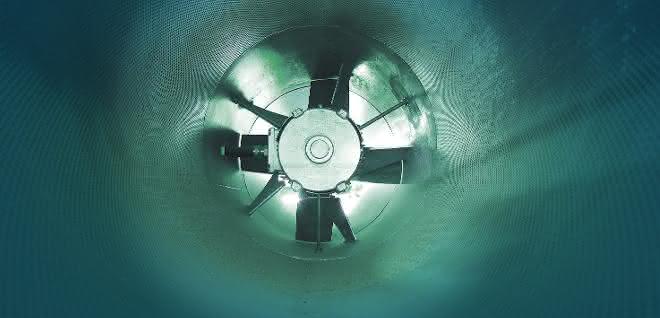
The decision between frequency inverters and soft starters is often not an easy one. Users must also take a number of factors into account to ensure effective control of the motors used. Factors to consider include the application, mechanical requirements of the system and costs. Compliance with standards, the reliability of the drive system and the improvement of energy efficiency should also be included in the decision-making process.
Whether the use of soft starters or frequency inverters is worthwhile can only be decided on an application-specific basis. If the application involves high power, a soft starter is often the more economical solution if continuous control of acceleration, torque and speed is not required. Further advantages are the compactness of the devices and their low acquisition costs. These aspects make soft starters so popular in many industries and areas of application.
In contrast, a frequency inverter may initially be the more expensive option, but in the long term it will result in a significantly greater reduction in energy costs if the production process requires variable process parameters. It helps users to comply with EU efficiency regulations and enables significant savings in operating costs by reducing energy consumption over the lifetime of a system. Another advantage of choosing a frequency inverter is the possibility of speed control with smooth acceleration. This allows the motor to deliver a high torque during start-up and at all speeds.
Variable speed control versus controlled acceleration
Running a motor up to its operating speed at full mains voltage results in a high inrush current. As the torque of three-phase asynchronous motors is generally set in line with the motor starting curve, excessive torque can occur during start-up, which can damage the mechanical components in the drive train.
Both soft starters and frequency inverters can prevent this and help to protect the systems and extend the service life of electric motors and mechanical components such as couplings and bearings of the driven machine. In both cases, this is made possible by the reduced clamping voltage, which ensures smooth starting and controlled torque in electric motors. The difference between the two technologies lies in the type of motor control.
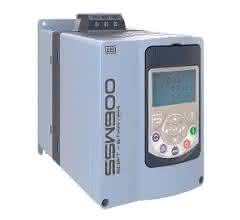
Soft starters are particularly suitable for applications where controlled, torque-limited motor acceleration up to the rated speed is required. With the help of power semiconductors such as thyristors, which reduce the voltage at the motor terminals during the start-up process, soft starters limit the inrush current and thus also the starting torque. In this way, they reduce the momentary loads on the mechanical drive train compared to direct switch-on and uncontrolled motor start-up. By steadily increasing the voltage at the motor terminals, the soft starter enables controlled acceleration up to the rated speed.
Applications include, for example, conveyor belts, belt drives and escalators. These require continuous, stepless speed control and torque limitation when starting and stopping. Especially when starting large motors, the inrush currents must be limited in order to avoid repercussions on the power grid. The soft starter helps the motors in these applications to start in a controlled manner and avoids torque peaks and other mechanical stresses that often occur during normal start-up of the devices. Soft starters are also suitable as limiters for pressure waves or water hammers, which can lead to strong vibrations in pipelines or systems; they prevent abrupt changes in the flow rate.
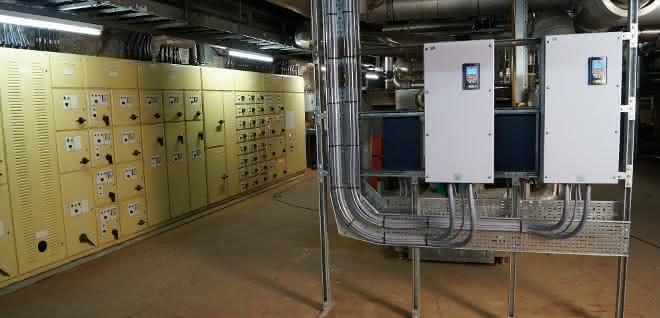
The frequency inverter, on the other hand, is used when permanent speed control is required. These applications include fans, pumps or compressors, for example, for which a number of general speed affinity laws apply. In contrast to the soft starter, the frequency inverter converts the stationary mains frequency and mains voltage into a variable frequency-proportional output voltage, which means that it works reliably during acceleration and deceleration as well as in operating states with constant or variable speed. Frequency inverters also play an important role in controlling the process speeds of industrial plants and production equipment such as mixers, grinders or crushers. A range of functions and options also enable individual adaptation to a variety of applications.
Improve energy efficiency
For many planners and designers, it is important to reduce the energy requirements and therefore the operating costs of drive systems. Frequency inverters are predestined for this, as they increase the energy efficiency of asynchronous motors by controlling their speed. With the help of frequency inverters such as the CFW series from WEG, the energy efficiency of electric motors can be significantly improved because they reduce the peak energy consumption and therefore also the power. Energy consumption can be between 40 and 60 percent lower, as process variables such as pressure or volume flow are adjusted by increasing and decreasing the speed, thus eliminating the need for mechanical, lossy actuators. In addition, frequency inverters are also suitable for applications such as elevators or rotary tables where the speed is variably adjustable and a uniform movement must be generated.
Thanks to the soft start and integrated protection functions, soft starters such as the SSW900 from WEG also ensure energy-efficient, reliable operation of electric motors. The high-end device with integrated PLC offers fully programmable procedures for controlling asynchronous motors and flexible torque control. The soft starter allows both the direct connection of motors in star or delta connection as well as a string connection.
This makes it possible to connect the three motor strings directly to the three thyristor pairs. As a result, the soft starter only has to carry 58 percent of the rated motor current - which corresponds to the phase current - and smaller devices can be used for the same power. Thanks to the integrated bypass contactor, the SSW900 ensures an extended service life, optimized use of space and very low power dissipation in the control cabinet.
Industrial direct current network
In addition to the question of whether a frequency inverter or a soft starter is more suitable for controlling an electric motor in an application, it also depends on the type of power grid. Many companies are now involved in redesigning the power supply for industrial systems via a smart, open DC grid. This could further increase the efficiency of drive systems and thus help users to save even more energy. DC voltage is also an issue at WEG. For example, the CWF11 frequency inverters are available in DC design. The advantages: With AC voltage, frequency inverters generally have a conversion loss of 2.2 to 3.0 percent. However, if they are connected to a direct current network, the losses are only 1.1 to 1.5 percent - i.e. half as much.
Johannes Schwenger, Head of Product Management Drive Systems Low Voltage and Medium Voltage Europe at WEG / am


You might also be interested in
ebm-papst is growing again thanks to AI and data centers
ebm-papst returned to a growth trajectory in fiscal year 2025/26. Air Technology, data center applications, and artificial intelligence are driving revenue and investment.
 read more...
SPE on the Verge of a Market Breakthrough
Single Pair Ethernet (SPE) has moved beyond the conceptual phase and is increasingly being implemented in industrial settings. The focus here is not only on higher data rates and simplified cabling, but above all on the issue of system integration...
read more...More than 900 exhibitors already registered
Around six months before the start of the trade fair, more than 900 companies have registered for SPS 2026 in Nuremberg. The trade fair focuses on industrial AI, cyber security and digital transformation.
read more...Virtual PLCs in practice: How vPLCs make production systems more flexible and scalable
The increasing networking of IT and OT is fundamentally changing industrial automation. The IT/OT Integration Summit shows how modern technologies can make production environments more efficient, flexible and future-proof. The event will focus on...
read more...Sales growth in a turbulent market environment
Thanks to innovations and a focus on strategic industrial markets, Sick was able to moderately increase its sales in the 2025 financial year. In a turbulent market environment, the company was able to maintain its position and gain market share with...
read more...Siemens presents new AI agent
Siemens is launching 'Eigen Engineering Agent', an AI for automation technology. The solution is integrated into the TIA Portal, has been tested with over 100 companies and is designed to significantly accelerate engineering processes.
read more...Schaeffler keeps sales almost stable
Schaeffler generated revenue of EUR 23.5 billion in 2025 and increased EBIT before special items to EUR 936 million. At 266 million euros, free cash flow was significantly above the prior year and forecast. Net income remained negative due to high...
read more...Advancing artificial intelligence together
Helukabel is stepping up its activities in the field of artificial intelligence and is now a member of the IPAI. The innovation and collaboration platform for companies, research facilities, institutions and administration has set itself the goal of...
read more...New impetus for ifm sales
Two new positions were filled at ifm at the start of 2026: Markus Wolf becomes Managing Director Sales Germany, Sven Quant takes over the position of Central Managing Director in the Process Sensors division within the ifm Group.
read more...