

Assembly automation
Product change within a PLC program cycle
The highly dynamic "PARO-Motion" linear system from Paro AG integrates the Multi-Carrier-System (MCS) from Siemens. It is based on the Simatic S7-1500 T-CPU controller.
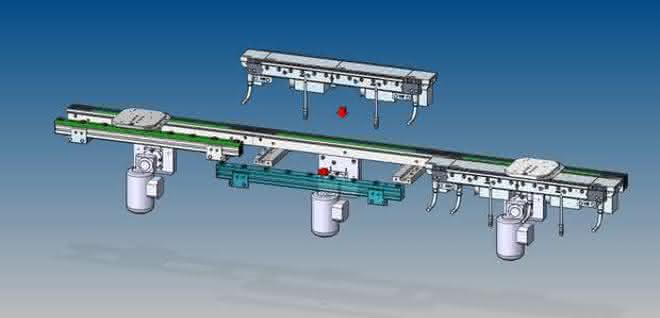
The transport system thus optimally implements different product variations within a PLC recipe change. The mechatronic concept of the system was validated in advance on the basis of the digital twin from Siemens.
Partnership and flexibility - this is how the Swiss company Paro AG has been successful since 1986. In order to combine a high cycle rate with maximum flexibility in the process, Paro today only uses linear technology in its machines and systems, from the transfer systems to the pick & place units through to the completely flexible assembly automation. The automatic assembly machines operate in a performance range of 5 to 60 parts (single-lane) per minute and are advancing into the performance range of cam-controlled systems thanks to optimum coordination of all components and a well thought-out, modular system concept.
Diverse types, short cycle times
"As a partner for automation and robotics, Paro implements completely individual special solutions in its assembly systems," explains Gregory Kyd, Technical Manager at Paro. "Flexibility or batch size 1 has always been a reality for us: we build machines and systems for specific applications.
We typically develop over 50 percent of the functionality according to customer requirements. This high degree of individuality is a real added value for Paro AG's customers, but always a challenge for the company itself. The time required for machine and system development is a particular focus for Kyd. In order to shorten the project duration in special machine construction, he and his team must above all minimize the uncertainties and risks that the development process can entail. To achieve this, the developers must quickly identify the critical path in design and engineering and verify the functionality of the concept. After extensive comparisons of various solutions, Paro recently started using the Multi-Carrier System (MCS) from Siemens for this task (see box).
Mr. Kyd says: "In general, the time that the workpiece carrier needs to move in and out of the station is an important factor for the performance of the entire system in our special machines and systems, so we were looking for a way to position the workpiece carriers flexibly directly in the conveyor system - and we found it with the Multi-Carrier System (MCS)."
Verification of the concept using the behavioral model
It was important for Mr. Gregory Kyd to clarify possible risks and problems at an early stage during the development of the system. Siemens therefore supported the project with a digital twin of the feeding system, which was created using the NX Mechatronic Concept Designer. This allowed the behavior of the system to be tested virtually using the model and the functionality of the sequence program and the library blocks for the Simatic controller to be verified: "For me, a real highlight of the digital twin was that the first hurdles of the PLC user program could already be discussed two months before the real commissioning. From then on, it was clear that we were using a technology with great potential," recalls Mr. Kyd.
The digital twin was also helpful in implementing the new concept beyond the concept verification. This made it possible to parallelize the development of the MCS and the "PARO-Motion" so that the machine could be implemented faster than usual. Last but not least, the virtual commissioning of the MCS also helped to optimally prepare the integration and commissioning of the MCS on site at Paro: In just two days, the MCS was installed on site and ready for the first test run - "that was then the second highlight of the project: seeing that the transport also works in the real machine," says Kyd.
Flexible product changes with the multi-carrier system now also based on SIMATIC S7-1500T
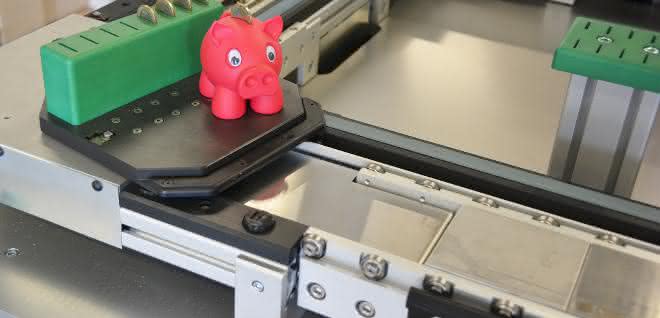
The multi-carrier system is a transport solution that enables quick product or type changes without long changeover times. The system makes it possible to position or move trolleys or carriers individually and flexibly within a line. The system consists of a basic profile, guide system and linear motor. The carrier itself has no motor or active electronics and therefore moves without vibration or wear. As a modular system, the MCS can be easily adapted to the respective requirements with scalable motion control systems such as Simotion and Sinamics as well as various motors, carriers and guides. At the end of this year, the MCS library for the Simatic S7-1500 T-CPU will be officially available as a motion control system. A correspondingly scalable modular system of software tools is also available.
Process improvements thanks to standardization
Gregory Kyd is certain that Paro is on the right track with this solution: "I expect that we will equip 15-25 percent of all new linear machines and systems with an MCS in the future. We can also easily retrofit existing machines. Thanks to the modularity of the solution, we will also be able to increase the degree of standardization in our machines and systems in the medium term, which will have a positive impact on project lead times. And last but not least, thanks to the uniform engineering environment for the MCS and plant automation, we can also make efficient use of our expertise and resources. Overall, this gives us more freedom to develop even more flexible and powerful solutions for our customers." Joffrey Schubert, Digital Industries, Siemens AG/dsc


You might also be interested in
ebm-papst is growing again thanks to AI and data centers
ebm-papst returned to a growth trajectory in fiscal year 2025/26. Air Technology, data center applications, and artificial intelligence are driving revenue and investment.
 read more...
SPE on the Verge of a Market Breakthrough
Single Pair Ethernet (SPE) has moved beyond the conceptual phase and is increasingly being implemented in industrial settings. The focus here is not only on higher data rates and simplified cabling, but above all on the issue of system integration...
read more...More than 900 exhibitors already registered
Around six months before the start of the trade fair, more than 900 companies have registered for SPS 2026 in Nuremberg. The trade fair focuses on industrial AI, cyber security and digital transformation.
read more...Virtual PLCs in practice: How vPLCs make production systems more flexible and scalable
The increasing networking of IT and OT is fundamentally changing industrial automation. The IT/OT Integration Summit shows how modern technologies can make production environments more efficient, flexible and future-proof. The event will focus on...
read more...Sales growth in a turbulent market environment
Thanks to innovations and a focus on strategic industrial markets, Sick was able to moderately increase its sales in the 2025 financial year. In a turbulent market environment, the company was able to maintain its position and gain market share with...
read more...Siemens presents new AI agent
Siemens is launching 'Eigen Engineering Agent', an AI for automation technology. The solution is integrated into the TIA Portal, has been tested with over 100 companies and is designed to significantly accelerate engineering processes.
read more...Schaeffler keeps sales almost stable
Schaeffler generated revenue of EUR 23.5 billion in 2025 and increased EBIT before special items to EUR 936 million. At 266 million euros, free cash flow was significantly above the prior year and forecast. Net income remained negative due to high...
read more...Advancing artificial intelligence together
Helukabel is stepping up its activities in the field of artificial intelligence and is now a member of the IPAI. The innovation and collaboration platform for companies, research facilities, institutions and administration has set itself the goal of...
read more...New impetus for ifm sales
Two new positions were filled at ifm at the start of 2026: Markus Wolf becomes Managing Director Sales Germany, Sven Quant takes over the position of Central Managing Director in the Process Sensors division within the ifm Group.
read more...