

Motion control
Safety in the joint
The development of cobots into a commodity product is closely linked to the issue of safety in robotics - a challenge that needs to be mastered efficiently.
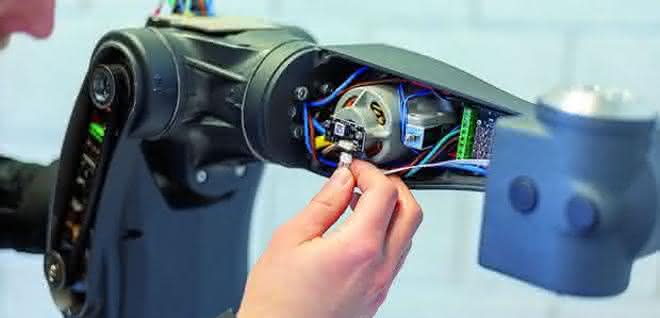
For several years now, many manufacturers have been talking about the rise of collaborative robots. Demand has recently picked up in China, but cobots still seem to be waiting for their big breakthrough in the European market. One of the reasons for this is the issue of safety and the associated costs. The high integration and qualification effort and expensive components have so far made high-performance safety one of the most expensive features of collaborative robots.
Automation, assembly lines and robots have been around for a long time, but in the past, safety requirements were usually limited to the emergency stop mode. This had to be activated manually or was triggered by a complex additional system using light barriers, video cameras, etc. The conveyor belt or robot cell then had to be restarted completely. The assembly line or robot cell then had to be completely restarted, which resulted in major delays. In view of the increasing diversity of electronic motion control, the safety requirements were later refined. Today, a number of standardized safety functions must be taken into account that go far beyond a simple emergency stop, and the safety systems must react more quickly. It is also necessary to assess whether the respective safety functions are suitable for the application and the electronics used. Last but not least, as safety requirements are refined, the development effort required to implement them in practice increases.
Robotics safety functions in the field of motion control initially focused solely on safe torque off (STO), for which a corresponding function was integrated into the drive. However, man and machine are moving ever closer together in the factory, which is why the machine must react even more sensitively. This is why the topic of safe motion, i.e. the safeguarding of ongoing motion control, is becoming increasingly important. The motto is: humans must not be injured by robots, despite sharing the same work areas. Modern robotics must therefore generally be able to do more in terms of safety:
The increasing demand for human-robot collaboration requires a new level of intrinsic functional safety of robotic arms. With limited production space, advanced safety concepts are advantageous as robot cages are avoidable.
Autonomous mobile logistics is experiencing enormous growth. In factory environments where people and mobile robots move side by side, advanced functional safety is the key to smooth work processes.
Interrupting production for machine maintenance can be very expensive. Safe motion control enables system designs that support uninterrupted maintenance operations, which has a positive impact on the total cost of ownership.
The four expansion stages of Safety
The development level in the field of robotics safety can be divided into four expansion stages. However, these should not be confused with the performance levels (PL) commonly used or standardized in functional safety, which are not discussed in detail below. In principle, it is assumed that SIL3 PLe will be required for most component applications in the future, even if some applications can already be adequately safeguarded with lower performance levels.
Level 1: Standard safety.
The level of safety established in mechanical engineering corresponds to the basic requirement for many applications. The basic functions STO (Safe Torque Off), SBC (Safe Brake Control) and SS1 (Safe Stop 1) are essentially all "hard-wired", which results in corresponding disadvantages. For example, only safe shutdown is possible, but nothing else. In addition to the existing cabling for motor cables, encoders, non-safe fieldbuses, I/Os, etc., a further cable (STO line) is added. The same applies to each function (STO, SBC, SS1). In decentralized systems, this is an even bigger problem than in centralized systems, where only one cabling is required in the control cabinet.
Stage 2: STO (SBC, SS1) via field bus.
Due to the amount of cabling involved, implementing the STO function (or SBC, SS1) via fieldbus is a logical step - especially with a decentralized controller, as the STO cables run through the machine and are not just located in the control cabinet. This approach reduces complexity and costs in mechanical engineering. However, it becomes more complicated for the controller manufacturer, as this requires an additional, redundantly designed safety processor in the controller, which significantly increases the complexity of the electronics and software. In addition, certification in this context is much more complex than with "hard-wired" STO. On this point, it remains to be seen whether customers will accept the additional costs in view of the advantages they can benefit from. Conversely, the question arises: are the effort and additional costs for STO alone worth it? Or would it not make more sense to take the entire machine to the next level of safety?
Level 3: Safe Motion (SLS, SP and SLP).
Safe motion means not only being able to switch off safely, but also being able to monitor safe motion sequences and guarantee safe motion parameters - for example speed and position. The decisive factor here is that a safety PLC can use safe encoders to monitor the speed and position of axes, for example, and switch off via STO if something deviates. However, it cannot guarantee that only the specified speed will be traveled safely at all times. This requires the SLS (Safely Limited Speed) or SLP (Safely Limited Position) function in the controller to directly ensure that only certain values are set. In combination with the safe fieldbus, this is currently the benchmark for safety technology in servo controllers. The user receives additional added value for the extra cost of the controller compared to pure fieldbus STO (level 2).
Level 4: SLT with focus on cobot requirements.
From Synapticon's perspective, the future safety level includes the SLT (Safely Limited Torque) safety function with a focus on cobot requirements - i.e. based on torque sensors - in order to avoid the problem of gear certification.
SLT, i.e. safely limited torque, currently represents the high-end league in the safety discipline. Only a few, very safety-sensitive applications have this requirement - and only very few controllers can implement it. However, the demand for SLT is likely to increase as the desire for even more automation leads to more and more force-controlled applications. Where previously the sensitive actions of humans were necessary and humans were still responsible, cobots & co. are now taking over. This offers the prospect of automating these even more sensitive areas. However, this also means that a safe dosage of force must be guaranteed.
Safety through safely limited torque
Today, manufacturers base the safety qualification of their products on aspects of dimensioning danger at system level. In other words, the robot is designed to be so weak or mechanically slow that there is no danger. However, this is becoming increasingly risky and costly for system operators when it comes to qualifying their systems, as they have to have their production line approved in terms of occupational safety. This increases the demands on component suppliers to design and certify functional safety technology more easily.
This results in the strategy of robot manufacturers to add appropriate safe motion functions - especially SLT in the case of cobots. In addition to safe force dosage and safe reaction to collisions, the special feature of the interactively working cobot is that the robot not only acts, but also reacts to external guidance. This means that situations can arise in which the external system - i.e. the workbench - feeds something towards the robot and the robot has to give way safely so as not to endanger humans. This cannot be realized in the conventional way due to the gears in the axes, which initially buffer the external force against the motor and thus the safely controlled drive and thus remove it from the "perception" and safeguarding possibility of the controller. In this case, the controller would measure the torque via the motor phases. Instead, additional sensors (torque, force) are required. The safe design of this sensor technology by the sensor manufacturers and the evaluation of such sensors by the controller suppliers is therefore currently the key issue in the field of safe motion and functional safety.
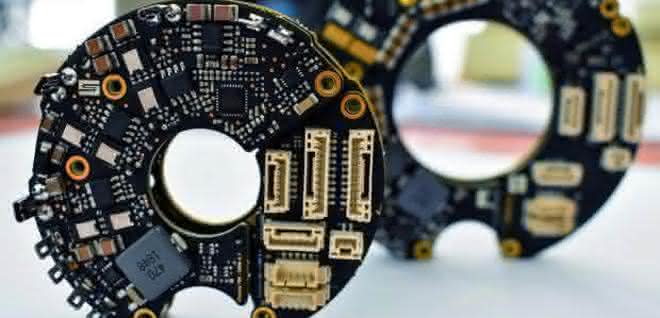
The industry generally demands cheaper and less complex - i.e. "leaner" - safety solutions, for example with less cabling. New approaches are needed here in particular. Small safety modules that are integrated decentrally into the control system on each axis, but are very powerful and flexible in order to meet future requirements up to the described expansion stage 4, are very promising.
Nikolai Ensslen, CEO at Synapticon; Andrija Feher, CTO at Synapticon / ag


You might also be interested in
ebm-papst is growing again thanks to AI and data centers
ebm-papst returned to a growth trajectory in fiscal year 2025/26. Air Technology, data center applications, and artificial intelligence are driving revenue and investment.
 read more...
SPE on the Verge of a Market Breakthrough
Single Pair Ethernet (SPE) has moved beyond the conceptual phase and is increasingly being implemented in industrial settings. The focus here is not only on higher data rates and simplified cabling, but above all on the issue of system integration...
read more...More than 900 exhibitors already registered
Around six months before the start of the trade fair, more than 900 companies have registered for SPS 2026 in Nuremberg. The trade fair focuses on industrial AI, cyber security and digital transformation.
read more...Virtual PLCs in practice: How vPLCs make production systems more flexible and scalable
The increasing networking of IT and OT is fundamentally changing industrial automation. The IT/OT Integration Summit shows how modern technologies can make production environments more efficient, flexible and future-proof. The event will focus on...
read more...Sales growth in a turbulent market environment
Thanks to innovations and a focus on strategic industrial markets, Sick was able to moderately increase its sales in the 2025 financial year. In a turbulent market environment, the company was able to maintain its position and gain market share with...
read more...Siemens presents new AI agent
Siemens is launching 'Eigen Engineering Agent', an AI for automation technology. The solution is integrated into the TIA Portal, has been tested with over 100 companies and is designed to significantly accelerate engineering processes.
read more...Schaeffler keeps sales almost stable
Schaeffler generated revenue of EUR 23.5 billion in 2025 and increased EBIT before special items to EUR 936 million. At 266 million euros, free cash flow was significantly above the prior year and forecast. Net income remained negative due to high...
read more...Advancing artificial intelligence together
Helukabel is stepping up its activities in the field of artificial intelligence and is now a member of the IPAI. The innovation and collaboration platform for companies, research facilities, institutions and administration has set itself the goal of...
read more...New impetus for ifm sales
Two new positions were filled at ifm at the start of 2026: Markus Wolf becomes Managing Director Sales Germany, Sven Quant takes over the position of Central Managing Director in the Process Sensors division within the ifm Group.
read more...