
Drives and controls
Drive technology news
The importance of drive technology is growing even more due to automotive technology. The basic structure of the individual drive (EN 61800-3 Power Drive System, IEC-TC 22 Adjustable Speed Drive) consists of an energy subsystem and information processing, whose tasks are constantly expanding in terms of protection/safety and monitoring, operation and diagnostics, communication, IoT connection with decentralized intelligence and efficiency.
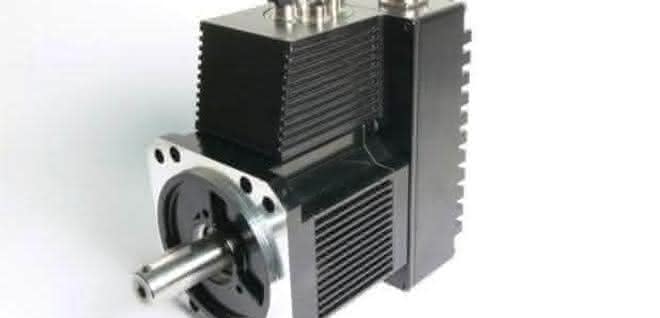
Functionality is increasing, particularly with regard to individual production requirements/flexibility, operating conditions/protection classes/EMC, EE supply, dynamics, retrospective and forward-looking energy and resource efficiency, safety and security, space, availability, Industry 4.0 compatibility and networkability via secure interfaces. Examples are presented. The external components of the driven machine and the supplying network influence the transmission behavior. They must also be taken into account during project planning.
Electrical machines
Known functional principles remain unchanged or are put to economic use. Improvements can be seen across the entire power range in excitation and flux routing (axial/transverse), cooling and bearings, energy efficiency, overload capacity and space requirements. Compatible with the EU motor regulation EC 640/2009, higher speeds, direct drive technology, operating conditions and robustness, efficiency at partial load, compactness and system dynamics all benefit from this.
Synchronous machine SM With permanent magnet PM excitation, it operates more economically than an asynchronous motor in all areas of application including e-mobility (higher utilization, multi-pole, field-weakenable, direct-torque motor with water cooling if necessary, efficiency class IE 4, etc.)
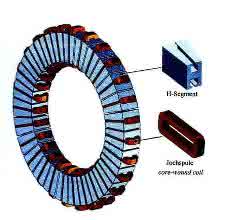
Reluctance machine RM In the robust RM without PM, the rotor positions itself to rotate synchronously (RM), switched (GSRM) or transversely (TFRM) according to the lowest magnetic resistance (reluctance). As an IE 4 and E-car-compatible competitor to the PM-SM, it saves up to 40 % energy when powered by a frequency inverter.
DC machine GSM It is experiencing a renaissance due to the lower-loss DC supply with EE.
Motors with low power Brushless GS servo motors with axial flux technology (high power density and robustness, speed extension > 3,000 min-1, air or liquid cooling) are also suitable for robotics and handling as compact servo drives (motor, gearbox, control unit, measuring system). Compact stepper drives (external rotor with internal stator cooling) offer corresponding precision. PM axial flux allows TORUS design.
Smart microdrives contain all the important functions of their larger relatives on a single chip.
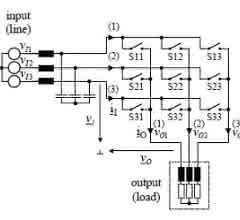
High-power motors They use HTSL superconductivity (also for retrofitting). Their lower weight favors rapid speed changes. Dynamically, they are superior to conventional electric motors (as torque motors RM, SM, for high-speed, vibration-resistant axial flux machines).
The development of power electronics is fueling MS drives.
Magnetic bearings can be economically integrated into motors as radial and axial bearings. In principle, their design corresponds to a converter-fed external pole machine.
Power electronics LE
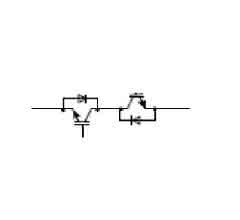
Although Si is still the most important base material, alternatives such as SiC, GaN - on Si carrier GaN-on-Si, GaS have the potential (higher efficiency, power level, switching frequency) to replace and supplement it. Progress is determined by their three-dimensional structure. Functions in the vertical plane increase energy density and switching speed. SiC and GaN are promising for series production. Such IGBTs and MOSFETs dominate intelligent drive converters, also in the MV range. Components such as MOS-controlled thyristors MCT allow improved circuits with bipolar switches in terms of space, power density and efficiency. E-mobility is again a driving force.
Energy supply
In addition to the MS/NS feed-in, DC sources such as RE, fuel cells and rechargeable batteries are increasingly being promoted by the LE. In addition, local and long-distance DC grids without capacitive losses (cf. HVDC for the feed-in of offshore wind energy).
Sensors
As a result of networkability, "sensors with scalable intelligence" are growing beyond their original task, although they are being replaced in sensorless structures. They also support the intelligent infrastructure with extended capabilities for evaluation, monitoring, RF identification, condition-based maintenance, adaptable protection/security and automation as cyber-physical systems CPS. Traditional principles are replaced or supplemented by low-maintenance, possibly wireless, new physical effects in miniaturized designs up to safety level SIL3/PLe(http://www.pepperl-fuchs.com).
Overall function/information processing
Trend is their intelligence. Systems are modular and adapted to the application. Monitoring and characteristic curve functions, overload adaptation, automatic parameter identification, integrated brake chopper, PID controller, PLC, monitoring are part of the basic equipment. The magnetizing current is automatically determined under partial load. Multi-axis motion control architectures can be implemented in a scalable manner in conjunction with inverters and robust, EM-compatible single-cable hybrid cables. A machine controller can be extended for CNC and robotics functions. Encoderless processes are standard. Highly energy-efficient drives that are more resistant to fluctuations in the supply voltage feed braking energy into the grid with virtually no harmonics. Intelligent, IoT-compatible networking (locally and globally cloud-supported) and condition monitoring are on the rise. Advances are leading to improved soft starters in a space-saving compact form(http://www.abb.com).
Miscellaneous
Passive components (power resistors, heat-dissipating capacitors for converters, chip ferrites against HF interference, etc.) also increase resource and energy efficiency. Passive and active cooling (with air, noise-reducing liquid) are of great importance. Conventional motor starters achieve innovations such as push-in technology(http://www.abb.com K series). Backlash-free, very precise gearboxes with the highest torque density improve drive technology, especially in the area of handling(http://www.harmonicdrive.de).
Flux guidance Radial - perpendicular to the axis (conventional machines, RM); axial - parallel to the axis (disk motor, transverse flux motor, RM).


You might also be interested in
ebm-papst is growing again thanks to AI and data centers
ebm-papst returned to a growth trajectory in fiscal year 2025/26. Air Technology, data center applications, and artificial intelligence are driving revenue and investment.
 read more...
SPE on the Verge of a Market Breakthrough
Single Pair Ethernet (SPE) has moved beyond the conceptual phase and is increasingly being implemented in industrial settings. The focus here is not only on higher data rates and simplified cabling, but above all on the issue of system integration...
read more...More than 900 exhibitors already registered
Around six months before the start of the trade fair, more than 900 companies have registered for SPS 2026 in Nuremberg. The trade fair focuses on industrial AI, cyber security and digital transformation.
read more...Virtual PLCs in practice: How vPLCs make production systems more flexible and scalable
The increasing networking of IT and OT is fundamentally changing industrial automation. The IT/OT Integration Summit shows how modern technologies can make production environments more efficient, flexible and future-proof. The event will focus on...
read more...Sales growth in a turbulent market environment
Thanks to innovations and a focus on strategic industrial markets, Sick was able to moderately increase its sales in the 2025 financial year. In a turbulent market environment, the company was able to maintain its position and gain market share with...
read more...Siemens presents new AI agent
Siemens is launching 'Eigen Engineering Agent', an AI for automation technology. The solution is integrated into the TIA Portal, has been tested with over 100 companies and is designed to significantly accelerate engineering processes.
read more...Schaeffler keeps sales almost stable
Schaeffler generated revenue of EUR 23.5 billion in 2025 and increased EBIT before special items to EUR 936 million. At 266 million euros, free cash flow was significantly above the prior year and forecast. Net income remained negative due to high...
read more...Advancing artificial intelligence together
Helukabel is stepping up its activities in the field of artificial intelligence and is now a member of the IPAI. The innovation and collaboration platform for companies, research facilities, institutions and administration has set itself the goal of...
read more...New impetus for ifm sales
Two new positions were filled at ifm at the start of 2026: Markus Wolf becomes Managing Director Sales Germany, Sven Quant takes over the position of Central Managing Director in the Process Sensors division within the ifm Group.
read more...