
Servomotors
Completely detached: hovering robot
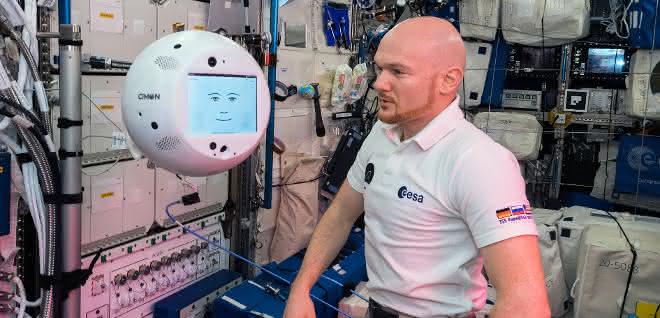
The Airbus Space Division has developed the first artificial assistant for astronauts. It supports the crew of the International Space Station ISS in several experiments. At the same time, the little helper itself is being tested and further developed for its suitability for later, larger tasks. Compact, lightweight DC servomotors with high power density allow it to move freely on board.
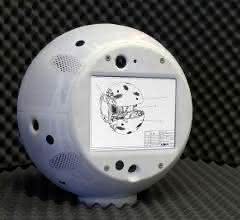
Airbus initially investigated the concept of the spherical flight attendant CIMON (Crew Interactive Mobile Companion), which floats freely in space, as part of a self-financed study. In August 2016, the Space Administration of the German Aerospace Center (DLR) then commissioned the project to be realized. A team of around fifty people from Airbus, DLR and the Ludwig Maximilian University of Munich (LMU) succeeded in less than two years. Experts from computer manufacturer IBM, on whose Watson technology the artificial intelligence of the CIMON project is based, were also involved. Thanks to this technology, the little helper independently learns to orient itself, move around in space, gather knowledge and recognize its human partner in order to communicate with it.
Technology experiments in space
As part of the Horizons mission, the astronaut assistant flew to the ISS in June 2018. Here, the major space-faring nations are jointly developing solutions for the global challenges facing our society, "Health, Environment and Climate Change" and "Digitalization, Industry 4.0, Energy and Mobility of Tomorrow". As a technology experiment, CIMON is intended to demonstrate the cooperation between humans and intelligent machines on board the ISS. Crew members can use it to work through checklists or procedures and enter into a real dialog with their assistant.
Project CIMON's mission was initially limited to three experiments, which he completed together with German crew member and temporary commander Alexander Gerst. Together, they set about sorting the colors of the Rubik's cube and conducted an experiment with crystals as well as a medical experiment. The artificial assistant provided support with learning processes, gave step-by-step instructions, checked completion with the help of its built-in camera and also intervened verbally to correct things if necessary.
Floating ball with propeller drive
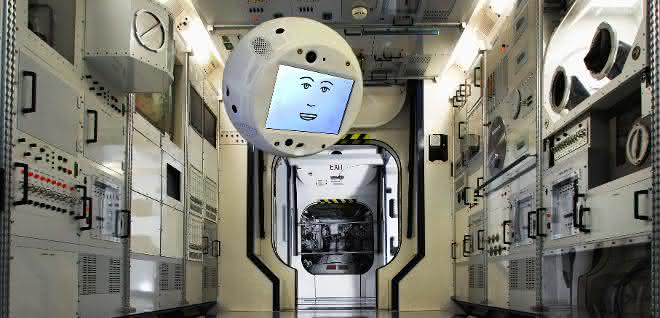
On board the ISS, the medicine ball-sized assistant floats weightlessly in space despite its mass of five kilograms. To enable it to move purposefully without bumping into anything, it is equipped with seven tubular air nozzles, each containing two small propellers. They also allow him to interact using body language. "Four tubes are aligned in the x-axis and are responsible for moving forwards and backwards, where we need the highest speed," explains Philipp Schulien, Science Engineer at Airbus in Friedrichshafen. "With appropriate control of the individual propellers, they also give the mission companion the ability to nod or 'shake its head'. Two tubes are designed for lateral movement, one for up and down. This arrangement - instead of one larger propeller per axis - was chosen partly because of the strict noise protection regulations of the ISS."
When the little helper is working with a crew member, it is supposed to stay in a "box", an imaginary cuboid in the station's airspace. In order to stay in place, however, CIMON has to make some effort, as its permitted area also moves in circles due to the constant rotation of the ISS. In addition, the air on board is constantly being circulated. The prevailing airflow and the rotation would quickly push it against the next side of the ship without any resistance. The propellers in its air nozzles therefore regularly provide small thrust pulses to correct its position.
Holding the position with servomotors
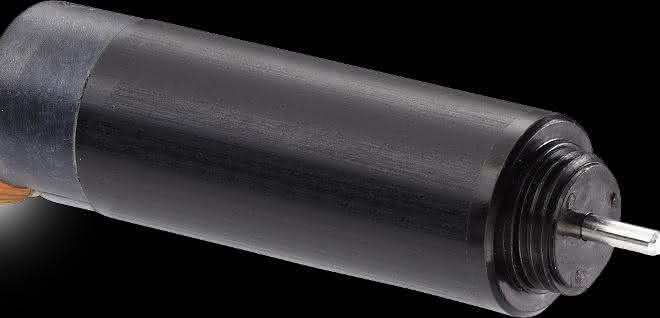
The various movements of the mission companion are controlled by switching individual propellers on and off and by the speed of the respective drive motors. The latter are brushless servomotors from the 0824...B series from the portfolio of drive specialist Faulhaber. The SC1801 speed controller from the same manufacturer translates the commands from the navigation software and regulates the speed accordingly. Philipp Schulien cites several reasons for this choice: "Faulhaber motors have already proven themselves in space travel. Since every gram and every cubic centimeter counts when it comes to space travel, we always need as much drive power as possible with as little weight and volume as possible. The chosen combination is extremely compact. Absolute reliability, durability and freedom from maintenance are just as important. Last but not least, the drives should also consume as little energy as possible and be very quiet so as not to cause additional noise for the crew." For the same reasons, other Faulhaber motors have also flown to the ISS: they drive the peristaltic pumps for a bio-experiment that is also being carried out during the Horizons mission.
The astronaut assistant remained on board after the mission was completed and continued his own training. His feedback is intended to help the developers on Earth to perfect the concept. After the trial and learning phase, he should be able to suggest solutions to technical problems. For example, it could guide repair work by announcing the necessary steps and pointing a laser pointer at screws that need to be loosened. It is also planned that one day it will be able to independently monitor the functions or status of on-board equipment and act as an early warning system in the event of difficulties. With such capabilities, the assistant could then take on important tasks during long-term missions to the moon or Mars, for example. As "Project CIMON" can also smile and tell jokes, terrestrial versions of the little helper are also planned for the future, for example to work in hospitals or in the social sector.
Dipl.-Ing. (BA) Andreas Seegen, Head of Marketing at Faulhaber, and Ellen-Christine Reiff, M.A., Redaktionsbüro Stutensee / am


You might also be interested in
Motors, gearboxes and encoders: Faulhaber expands Ø 16 mm portfolio
Faulhaber is expanding its portfolio with new DC motors from the SXR and GXR family, a 16 mm planetary gearbox and the IEX3 magnetic encoder for compact drive solutions.
 read more...
New drive solutions for industrial automation and robotics
Faulhaber presents drive solutions with the new GXR and SXR motor family, which offer high efficiency and flexibility in combination with powerful gearboxes and encoders. These optimized components open up new possibilities for applications in...
read more...Marco Altherr becomes new Chief Financial Officer
The Supervisory Board of Ziehl-Abegg has appointed Marco Altherr as the company's new Chief Financial Officer (CFO). Altherr will take up his post in May 2025.
read more...Hydrogen storage in metal hydride
With its focus on storage systems for green hydrogen in solid form (metal hydride), GKN Hydrogen presents itself as a pioneer in safety and efficiency for the industry. GKN Hydrogen offers safe storage systems for green hydrogen and focuses on two...
read more...INDUSTRIAL Production Products of the year...
2nd place, Robotics category: EGS Automation
The SUMO automation systems from EGS Automation - economical standard solutions for automating a wide range of processes in plastics and metalworking - took second place in the robotics category in the competition for Product of the Year 2024.
read more...More productivity with Drive Intelligence
The trends in automation are productivity, sustainability and connectivity. Baumüller is launching new products on the market that address these trends, including new tools for smart energy monitoring, condition monitoring in the drive and new...
read more...Intelligence in Motion
At SPS, Koco Motion will be showcasing its expertise in customized drive solutions based on DC and BLDC motors, stepper motors, servo motors, linear drives and controllers.
read more...Nomination Products of the Year 2024
EGS Automation: SUMO automation systems
The SUMO automation systems from EGS Automation, economical standard solutions for automating a wide range of processes in plastics and metalworking, have been nominated in the Robotics category in the competition for Product of the Year 2024.
read more...Transport technology from the modular system
Many transport tasks can be realized with the help of linear technology. Pre-configured solutions are available to simplify the interaction between the linear unit, motor, gearbox and controller. This minimizes the effort required for research and...
read more...