
Flexible laser processing
Ultra-short pulse laser for SMEs
Laser cutting and processing systems can help to make processes more efficient, cheaper and more precise. In order to make these systems profitable for small and medium-sized companies, two specialists have developed a flexible laser system with automatic selection of the operating mode depending on the application and material.
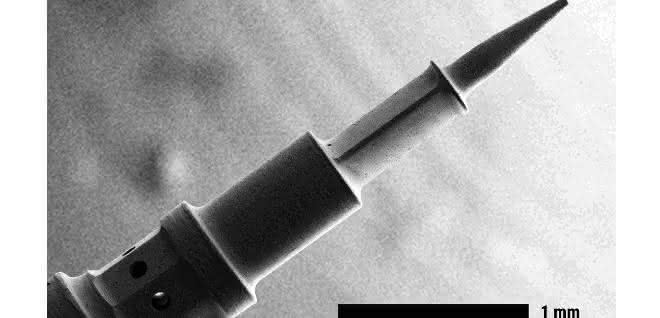
The demand for high-quality components in large quantities and the relocation of value chains to regions with low production costs are creating competitive pressure for many manufacturing companies, which can often only be cushioned by faster processing methods. This requires modern technologies with a high degree of automation, which appear oversized, especially for small and medium-sized companies. The procurement costs are often simply too high - such as for ultra-short pulse laser systems, which are highly precise, contactless and therefore gentle on materials. In the past, such systems were not only very expensive, they were also complex in design and limited to individual production steps. In practice, this often meant that different systems had to be purchased for different machining processes or complex and lengthy retooling work had to be carried out. The requirement for extensive expertise in terms of control and laser technology in order to deliver optimum results also made the technology unprofitable for small and medium-sized companies and was the reason for a reluctance to invest.
As part of the EU funding program "Horizon 2020", the companies GFH and neoLase have jointly developed a cost-effective and cross-industry solution. The "Smart Modular All-in-One Robust Laser Machining Tool" (SMAART) is a highly flexible and fully automated laser processing system that automatically switches between different work steps such as laser turning or fine structuring using a specially programmed intelligent control system.
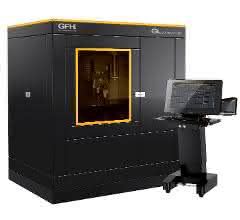
The system can be integrated into the new GFH system types. Depending on the existing machining material and machining process, it offers the appropriate laser selection - picosecond or femtosecond laser - via the input screen and generates the correct process parameters. In this way, it is possible to produce more efficiently and with a greater bandwidth without extensive specialist knowledge in the field of laser processing. "This makes it possible to achieve rapid amortization and establish laser processing as a key technology for the entire materials processing sector," explains Maik Frede, Managing Director of neoLase.
Flexible amplifier design for variable pulse duration and power classes
In the beginning, it was just a vague idea, born at a laser network meeting. "A joint exchange of experiences following the event showed that laser technology is predestined for such a project," explains Anton Pauli, Managing Director of GFH. "Thanks to the contactless and flexible processing with lasers without any significant heat conduction, the technology has the potential to replace even energy-intensive processes." The first step for both companies was to precisely define the challenges, the market situation, the technical status quo and the necessary development steps. "To make the implementation of such a project possible at all, we had to make the laser technology more customer-oriented and minimize its complexity," explains Frede.
In order to guarantee a high degree of flexibility - i.e. switching between different work steps and laser parameters without retooling - it is necessary to have a universal laser source for processing whose pulse duration and intensity can be quickly and automatically adjusted. The machines with integrated SMAART tool have a kind of intelligence of their own, which automatically recognizes the respective parameters and components for the individual processing steps, without these having to be calculated in advance by an operator and manually entered into the control system. "This control center is provided by neoLase with its GAP module," says Pauli. "Thanks to the flexible amplifier design, different pulse durations and power classes can be called up on our GL systems without having to integrate additional CPA or regenerative amplifiers." This enables a compact design of the systems, which can still generate pulse energies of up to 400 µJ and average powers of 80 W. At the same time, additional costs due to more complex lasers or components are avoided. "GFH's processing systems are generally designed for modularity and flexibility, which is why they are perfectly suited to our amplifier modules," confirms Frede. As the combination of both technologies covers the pulse range between 500 ps and 500 fs and guarantees a quick changeover, the system can achieve significant speed advantages and quality improvements. The simultaneous use of picosecond and femtosecond pulses even makes it possible to further optimize the removal speed.
Contactless processing replaces energy-intensive processes
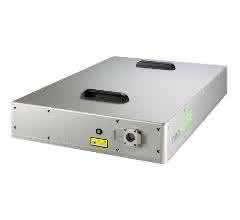
The non-contact processing by means of laser input also contributes to this. Because the pulses are so short that there is no significant heat conduction, material melting, structural changes, phase transformations and thermal stresses in the workpiece are avoided. "This opens up a large field of application for the production of microcomponents not only in traditional mechanical engineering, but also for various industries such as medical technology or the textile and watchmaking industries," explains Pauli. "Ideally, energy-intensive or ecologically questionable processes can be replaced." This is particularly important if consistently high quality is to be achieved in large quantities without increasing production costs. To ensure the desired flexibility right from the start, SMAART-capable systems not only have optimized hardware but also an integrated database in which the process parameters such as pulse duration, travel path of the optics or workpiece dimensions and material type are stored. This makes it possible to select from over 100 processing methods for laser drilling, laser cutting, structuring and ablation of metal, ceramics, glass and polymers via the input screen. "This allows the operator to initiate the desired work step simply by pressing a button. The machine is then automatically aligned in the same set-up," explains Frede. "If new applications or parameters are added that do not yet exist, the machine and GAP are adapted accordingly." In this way, SMAART can be continuously developed and can "learn".
User-friendliness and quality control
To ensure that the workpiece quality is consistently high, even with difficult-to-machine materials such as diamond, SMAART-capable systems have an online quality control tool that validates the process parameters during machining. This means that quality samples can also be taken during the ongoing work step.
"We didn't just want to optimize the laser technology, we wanted to increase the added value of these processes as much as possible, for example by simplifying handling," explains Managing Director Pauli. "A reliable machine solution that can be used for universal production immediately keeps the company competitive and allows it to grow in the long term without having to worry about staff pressure or investment fears."
Florian Lendner, MBA B.Eng., Managing Director GFH / am


You might also be interested in
Plagiarius 2024 negative prize
On January 26, 2024, the Plagiarius campaign awarded its dreaded "Plagiarius" negative prize for the 48th time to manufacturers and retailers of particularly brazen counterfeits and fakes.
 read more...
Ivalua honors winners of the Generative AI...
AI-supported "add-ons" for buyers within 48 hours
Ivalua, provider of cloud-based spend management solutions, announced the winners and innovations of the first Generative AI Innovation Cup. The competition took place in December 2023. It was open to all Ivalua partners and employees - more than...
read more...Efaflex celebrates 50 years of high-speed...
The emphasis is on "fast"
Since day one, Efaflex has wanted to use new technologies as early as possible and drive progress in the industry. This year, the family business is celebrating its 50th anniversary under the motto "Fast Forward".
read more...Security of supply even during power outages
In the winter of 2022, Germany was worried about energy shortages. The drugstore retailer dm did not paint any horror scenarios, but nevertheless saw the possibility of controlled, temporary, regional power cuts (brownouts).
read more...Safety technology in mechanical engineering
Modules with new functions
Euchner's product highlights at EMO 2023 include the communication-capable solenoid interlocks.
read more...Transforming the paper industry towards climate neutrality
Together with partners from industry and research, Voith is developing a project for the optimization of energy and material flows in paper production. The aim of the research project is to develop a digital framework that enables effective process...
read more...Up to 95 percent less flue gas thanks to direct extraction
The requirements for occupational safety measures and safety technology are also constantly increasing in welding technology. The Technical Rules for Hazardous Substances (TRGS) stipulate that welding fumes and harmful substances must be extracted...
read more...Competitive advantages with large machines
Whether 3D-printed components for machines and systems, prototypes or aids for design: additive manufacturing is almost indispensable for modern companies in mechanical and plant engineering and automation if they want to play in the premier league.
read more...Transport technology from the modular system
Many transport tasks can be realized with the help of linear technology. Pre-configured solutions are available to simplify the interaction between the linear unit, motor, gearbox and controller. This minimizes the effort required for research and...
read more...