
Control unit
Compact for DC wallboxes and individual charging points
Vector is expanding its product portfolio with a compact control unit for DC wallboxes and individual charging points.
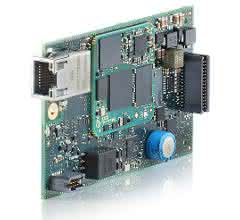
The powerful vSECC.single controller handles all communication and control functions for a DC charging point. This makes it easier for manufacturers of wallboxes, inverters and PV systems to enter the DC fast-charging market. Initially, vSECC.single is available as a plug-in board. A version in a top-hat rail housing is already under development.
As an interface between the electric vehicle and power electronics, vSECC.single regulates the charging communication for the Combined Charging System (CCS) in accordance with ISO 15118-2 and DIN SPEC 70121. vSECC.single also supports the Japanese charging consortium CHAdeMO and, in future, ChaoJi. The Vector control unit communicates with the charging station management system (back-end) via OCPP 2.0.1, with the power electronics via CAN or alternatively via Ethernet. The powerful processor is already prepared for other applications such as integration into energy management systems, smart homes or plug and charge.
Thanks to its compact dimensions, the initially available pocket-sized plug-in board is particularly suitable for intelligent DC or AC wall boxes in private and commercial environments. The vSECC.single board can be easily integrated into existing electronics and handles all communication within the charging station. It is simply connected to a base board via two plug connections. Inverter and PV system manufacturers can easily add electric charging to their portfolio, as the controller contains all the intelligence for charging communication and also controls the power electronics via CAN. vSECC.single is already prepared for bidirectional charging. The electric vehicle serves as a stationary storage unit by storing or feeding back energy as required, provided the electric vehicle user is not dependent on the full battery capacity for their journeys.
The vSECC.single is used in a top-hat rail housing, for example, when only one charging point per charging station is possible due to the size of the vehicle and limited cable lengths. Such a scenario arises, for example, when charging large commercial vehicles via plug or pantograph current collector. The large power electronics located further away can then be conveniently controlled via Ethernet with vSECC.single. Distances of up to 100 meters are possible. This means that small and slim charging stations can be installed. This saves space between the vehicles and also protects the expensive power electronics from accidents.
Vector already offers the universal control unit vSECC for controlling multiple charging points, as is often required for public charging stations. vSECC.single and its larger counterpart vSECC are functionally interchangeable thanks to compatible interfaces and software. Once one controller has been successfully integrated, developers can also use the other control unit. This saves users additional programming effort and allows them to easily expand their existing product portfolio.


You might also be interested in
Helu makes its first trade fair appearance under a new brand name
Helu Kabel will be presenting itself as Helu for the first time at Hannover Messe 2026, showcasing system solutions, Heluchain cables and new industrial luminaires.
 read more...
Strategic realignment with brand relaunch
In future, Helukabel will trade as Helu
The Helukabel Group is parting with part of its name: in future, the company will only operate under the Helu brand. With this step, the specialist for electrical connection technology is underlining its strategic development from a classic cable...
read more...Modular plant construction for corrugated board
Insight into the production of corrugators at BHS Corrugated: Automated, modular and equipped with Helukabel components.
read more...Best quality for the steel
Conditions in the steel industry are harsh and inhospitable. The machines used must be able to withstand the demanding environmental conditions in order to deliver the best quality at all times.
read more...If the standard cable is not sufficient
Lapp offers cables for countless applications - but not for all of them. From time to time, the developers have to modify a standard cable or develop a special cable.
read more...Slight decline in sales, strong investments
The Lapp Group has not been spared from the weakening global economy. However, the company only recorded a slight loss in the past 2024 financial year.
read more...Electrical connection technology
Cables and wires for industrial automation
Heukabel offers system solutions for cable routing from a single source. The subsidiary EKD Systems specializes in tailor-made cable drag chains made of steel, stainless steel and plastic, which are used in moving machines and systems as well as in...
read more...Lapp relies on Ultramid from BASF
Mobile charging of electric vehicles
The automotive industry is currently undergoing the biggest transformation in its history. The boom in battery electric vehicles in particular is presenting the industry with major challenges. Lapp, as a supplier of cables and connection...
read more...Cable handling application
At this year's Motek, ArtiMinds Robotics is showcasing a robot-based automation solution for the sensor-assisted assembly of flexible cables in connector housings.
read more...