
Drive and control components
Heavy on the wire
Serbian mechanical engineering company Mashtronics develops and manufactures systems for the automated processing of wires. For a new machine for the production of reinforcing steel mesh, the company was looking for drive and control components that would meet equally high standards of precision, quality and throughput. They found what they were looking for at Yaskawa.
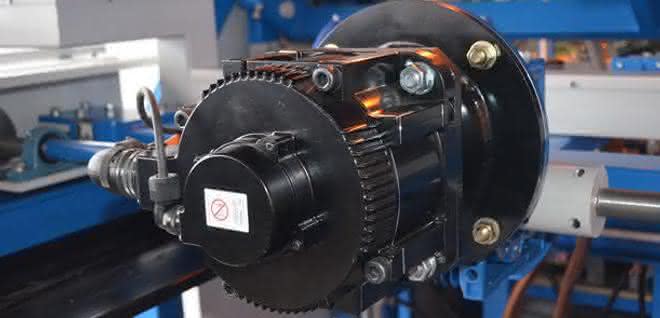
Whether straightening, cutting, braiding, bending or winding - the automated processing of wires is complex and places very specific demands on the machines used. The Serbian company Mashtronics has specialized in precisely this. Based in Mladenovac, 40 km south of Belgrade, the machine manufacturer supplies corresponding systems to the whole of Eastern Europe and also to North African markets. Founded in 1999, the company's recipe for success is to offer sophisticated technology to European standards at comparatively low prices. A key component of this strategy is the use of high-performance drive and control technology. Mashtronics has been working with an experienced partner from Yaskawa in this area since 2014: The automation specialist Tipteh is headquartered in Ljubljana, Slovenia, and has its own branches in several south-eastern European countries, including Serbia.
Wire processing machines are constantly being optimized to further increase their productivity - and ultimately to achieve higher prices. Productivity means that the machine must guarantee higher cycle rates with identical or even greater precision. The product wire has two characteristic requirements: the material to be moved is very heavy. And it has to be unwound and rewound during production.
In a new cutting machine for steel wire, the Mashtronics designers are meeting these requirements with drive and control technology components from Yaskawa, which will also be used in other applications in the future, such as in wire bending machines. As part of the collaboration with Tipteh, parameters such as torque and transmission ratio were also recalculated. Compared to the previous model, the machine manufacturer was thus able to significantly increase productivity.
Sigma-5 servo drive system
The precise and fast movement of the wire is ensured by servo drives from the Sigma-5 series, which are integrated into the overall solution via Profinet or CANopen, for example. The Sigma-5 servo system series from Yaskawa is a servo drive consisting of servo motors, servo amplifiers and Sigma Win+ commissioning software. The series includes rotary motors, direct drives and linear motors. The standard models guarantee a positioning accuracy of better than 1 µm with short positioning times.
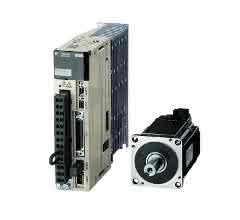
In addition to Profinet, there are also modular interfaces to EtherCAT, CANopen, Powerlink and Mechatrolink II and III for integration into comprehensive automation solutions. With the help of the autotuning function, an automatic filter function for vibration suppression, they run quietly and with low vibration even at low speeds. This guarantees optimum operation even in high-precision applications. At the same time, machine wear is reduced.
Sigma 5 components can be commissioned and diagnosed quickly and easily using the user-friendly SigmaWin+ software. No manual settings or specialist knowledge are required. For example, the auto-tuning algorithm allows two axes in high-performance machines to be set up in less than two hours - instead of the usual eight.
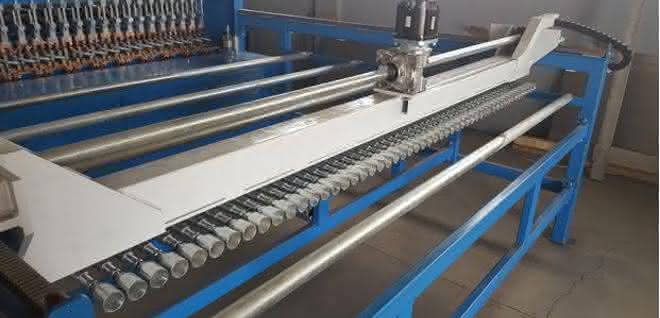
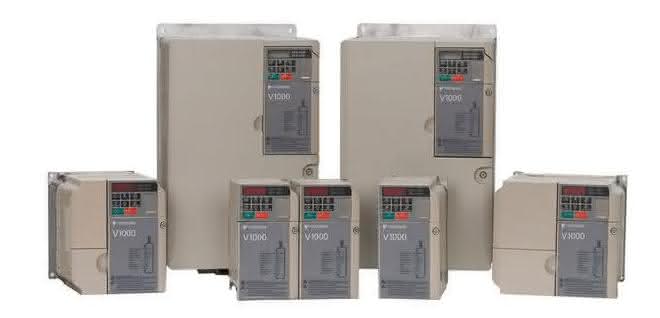
Regardless of whether a wire is being unwound or wound, the control and drive technology must fulfill complex tasks. For example, the roll diameter is constantly changing, and the speed and torque of the motor must be adjusted accordingly to ensure constant tension of the material web. In the machine designed by Mashtronics, this task is performed by a V1000 frequency inverter. Where permanent magnet motors need to be controlled precisely and safely, this frequency inverter series offers a solution that is both reliable and efficient. With its highly dynamic current vector control (Open Loop Vector), the inverters optimally drive both asynchronous and permanent magnet synchronous motors in the 100 W to 15 kW power range.
Introduced as the world's compact frequency inverter, the V1000 is characterized by its small footprint. In addition to its compact dimensions, it allows side-by-side mounting, i.e. the installation of several devices directly next to each other. This means that the inverters require little space in the control cabinet. A hybrid heat sink made of a special alloy compensates for the reduced ventilation effect and thus prevents the inverters from overheating.
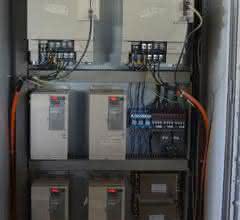
An integrated dual-rating function allows the frequency inverter to operate at 120 percent overload in normal-duty mode for applications that require a low overload. This means that a comparatively smaller frequency inverter is able to perform the work that would otherwise require a larger one. The braking resistor also reduces the deceleration time by 50 percent. Last but not least, the V1000 enables a rapid response to load and speed changes, which optimizes machine performance.
Machine control retains control
The processes in the machine are controlled by the MP2600iec control system. This is a controller for 1.5-axis applications that can be plugged directly onto the Sigma 5 servo drives as a module. Based on PLCopen Motion, the IEC development interface enables simple, fast and clear programming in accordance with the IEC 61131-3 standard.
The machine controller is particularly suitable for stand-alone sub-machines in modular, mechatronic machine architectures. By integrating motion control functions, PLC and drive control in one module, complete sub-machines can be automated.
The 1.5-axis controller is part of the MP2000iec controller family, which is particularly suitable for multi-axis applications. The MP2600iec works in 1.5-axis applications such as winders, cross cutters, flying saws or print mark and register control, labeling and cams. The sub-machine automated with the motion module receives the master value from a master encoder and synchronizes its slave axis to this master value. Thanks to the modular design, the sub-machines can be tested and commissioned individually.
The MP2600iec is suitable for communication with Ethernet I/P, Modbus TCP, OPC server and web browser. In addition to the master encoder input, it has eight digital inputs and outputs as well as one analog input and output each. All integrated inputs and outputs are freely programmable.
Peter Dietz, Key Account Manager Drives, Motion & Controls Division at Yaskawa Europe


You might also be interested in
ebm-papst is growing again thanks to AI and data centers
ebm-papst returned to a growth trajectory in fiscal year 2025/26. Air Technology, data center applications, and artificial intelligence are driving revenue and investment.
 read more...
SPE on the Verge of a Market Breakthrough
Single Pair Ethernet (SPE) has moved beyond the conceptual phase and is increasingly being implemented in industrial settings. The focus here is not only on higher data rates and simplified cabling, but above all on the issue of system integration...
read more...More than 900 exhibitors already registered
Around six months before the start of the trade fair, more than 900 companies have registered for SPS 2026 in Nuremberg. The trade fair focuses on industrial AI, cyber security and digital transformation.
read more...Virtual PLCs in practice: How vPLCs make production systems more flexible and scalable
The increasing networking of IT and OT is fundamentally changing industrial automation. The IT/OT Integration Summit shows how modern technologies can make production environments more efficient, flexible and future-proof. The event will focus on...
read more...Sales growth in a turbulent market environment
Thanks to innovations and a focus on strategic industrial markets, Sick was able to moderately increase its sales in the 2025 financial year. In a turbulent market environment, the company was able to maintain its position and gain market share with...
read more...Siemens presents new AI agent
Siemens is launching 'Eigen Engineering Agent', an AI for automation technology. The solution is integrated into the TIA Portal, has been tested with over 100 companies and is designed to significantly accelerate engineering processes.
read more...Schaeffler keeps sales almost stable
Schaeffler generated revenue of EUR 23.5 billion in 2025 and increased EBIT before special items to EUR 936 million. At 266 million euros, free cash flow was significantly above the prior year and forecast. Net income remained negative due to high...
read more...Advancing artificial intelligence together
Helukabel is stepping up its activities in the field of artificial intelligence and is now a member of the IPAI. The innovation and collaboration platform for companies, research facilities, institutions and administration has set itself the goal of...
read more...New impetus for ifm sales
Two new positions were filled at ifm at the start of 2026: Markus Wolf becomes Managing Director Sales Germany, Sven Quant takes over the position of Central Managing Director in the Process Sensors division within the ifm Group.
read more...