
Screwdriving and feeding technology
Reliable assembly
Industrial assembly systems for screwdriving and feeding technology consist of various complex components that have to work together perfectly. To avoid interface problems between the screw feeder and screwdriving tool, Deprag Schulz offers system components from a single source, which will be presented at Intec 2019.
The Deprag portfolio includes ergonomic handheld screwdrivers for manual use as well as stationary screwdriving tools for easy integration into automated PLC-controlled systems. Tools with EC servo technology are used for maximum flexibility. Integrated sensor-controlled torque and rotation angle measurement enables precise control and regulation of screw tightening. The free programmability of the applications enables flexibility at a consistently high level. In addition, comprehensive documentation and evaluation options for process parameters guarantee maximum accuracy and safety in the process sequence.
The brushless EC motors are a prerequisite for maintenance-free operation. Depending on the application, EC motors with torque measurement based on current consumption and pneumatically operated screwdrivers are also available. All screwdrivers are available in a straight design, angled design for confined spaces or with a pistol grip for horizontal use. Depending on the tool and requirements, torques from 0.008 to 500 Newton meters can be applied.
Feeding technology depending on part type
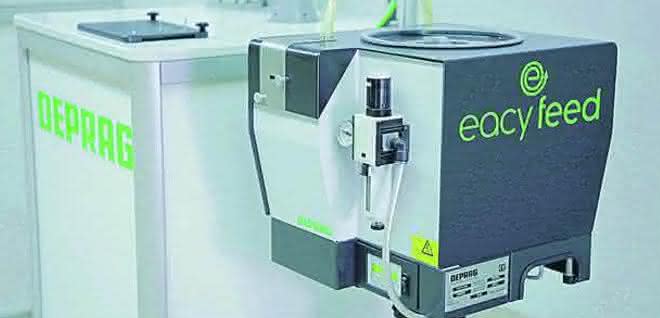
Choosing the right screwdriving technology is the first step on the way to optimized screwdriving assembly. However, smoothly functioning feed systems are also essential for high system availability, productivity and efficiency of assembly systems and the productivity and efficiency of manual workstations. Various feeding technologies are available depending on the requirements for technical cleanliness or noise levels. High conveying speeds and high output rates can be achieved with vibratory bowl feeders (also known as vibratory conveyors). The material to be conveyed is set in motion in a vibrating bowl by means of targeted vibrations so that one fastener after the other moves up a spiral and is conveyed into the separating system. Elements that are not in the correct position fall back into the bowl. With the "eacy feed" vibratory bowl feeder, Deprag has developed a next-generation feeding system. Thanks to the 24-volt vibratory magnets, a significantly reduced power consumption is achieved, resulting in energy savings of around 80 percent. In addition, "eacy feed" is Industry 4.0-capable and, with the 24-volt technology of the drives, ensures smooth operation worldwide, even with a poor mains supply. The vibrating bowls are available in filling sizes of 0.15, 0.75, 1.2 and 2.5 liters and can be filled with various materials such as screws, nuts, O-rings and other fasteners.
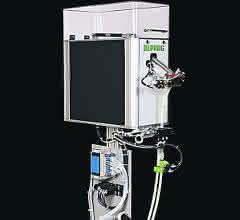
A segment or lifting rail conveyor is used when low-wear, low-noise conveying is required that is gentle on components. The parts to be conveyed in the storage container are threaded by the swivel movement of a segment-shaped lifting rail and slide by gravity into the separator. This feeding system is particularly suitable for applications with high demands on technical cleanliness. Screw sizes from M2 to M6 can be processed with the standard devices. Lifting rail conveyors are ideal for screws up to a length of 25 millimetres and balls with a diameter of one to twelve millimetres.
Screws are picked off
Linear feeders are possible links between the feeder and the screwdriving tool. Like vibratory bowl feeders, they work according to the micro-throw principle and are used when larger distances need to be bridged in the assembly system, part buffers need to be provided or the flow of parts needs to be pulled apart. As the linear feeder conveys the parts faster than the feeder provides them, the components can be removed easily and safely by grippers, for example. There is no risk of parts jamming back to the conveyor bowl, and the parts are sorted in the conveyor bowl without jamming pressure. Preferably, the fasteners are fed directly from the feed system into the screwdriving unit via a feed hose and processed. However, for screws with a very short shank, rivets with a large collar diameter or parts with complex external geometries, hose feeding is often not possible. In this case, the pick-and-place process is ideal, with which the screws are "picked" using a vacuum, gripper system or magnetism. After removal, the next part is automatically provided.
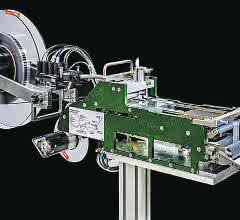
Single-sided or double-sided adhesive components, such as sealing rings, can be provided for processing via tape roll feed. They are fed onto a carrier film and removed using the knife edge of a peel-off carriage. Thanks to the combination of sensors and fast tape fusing, the tape roll feeders achieve exact positioning of the parts with high repeat accuracy. pb
Intec, Hall 2, Stand F32


You might also be interested in
ebm-papst is growing again thanks to AI and data centers
ebm-papst returned to a growth trajectory in fiscal year 2025/26. Air Technology, data center applications, and artificial intelligence are driving revenue and investment.
 read more...
SPE on the Verge of a Market Breakthrough
Single Pair Ethernet (SPE) has moved beyond the conceptual phase and is increasingly being implemented in industrial settings. The focus here is not only on higher data rates and simplified cabling, but above all on the issue of system integration...
read more...More than 900 exhibitors already registered
Around six months before the start of the trade fair, more than 900 companies have registered for SPS 2026 in Nuremberg. The trade fair focuses on industrial AI, cyber security and digital transformation.
read more...Virtual PLCs in practice: How vPLCs make production systems more flexible and scalable
The increasing networking of IT and OT is fundamentally changing industrial automation. The IT/OT Integration Summit shows how modern technologies can make production environments more efficient, flexible and future-proof. The event will focus on...
read more...Sales growth in a turbulent market environment
Thanks to innovations and a focus on strategic industrial markets, Sick was able to moderately increase its sales in the 2025 financial year. In a turbulent market environment, the company was able to maintain its position and gain market share with...
read more...Siemens presents new AI agent
Siemens is launching 'Eigen Engineering Agent', an AI for automation technology. The solution is integrated into the TIA Portal, has been tested with over 100 companies and is designed to significantly accelerate engineering processes.
read more...Schaeffler keeps sales almost stable
Schaeffler generated revenue of EUR 23.5 billion in 2025 and increased EBIT before special items to EUR 936 million. At 266 million euros, free cash flow was significantly above the prior year and forecast. Net income remained negative due to high...
read more...Advancing artificial intelligence together
Helukabel is stepping up its activities in the field of artificial intelligence and is now a member of the IPAI. The innovation and collaboration platform for companies, research facilities, institutions and administration has set itself the goal of...
read more...New impetus for ifm sales
Two new positions were filled at ifm at the start of 2026: Markus Wolf becomes Managing Director Sales Germany, Sven Quant takes over the position of Central Managing Director in the Process Sensors division within the ifm Group.
read more...