
Handling
Cobots for in-house production
The BMW Group plant in Landshut evaluated the use of a collaborative robot from Universal Robots in cockpit production in a pilot cell. Since then, a UR5e has freed employees from the monotonous and laborious task of assembling screwdriving blocks.
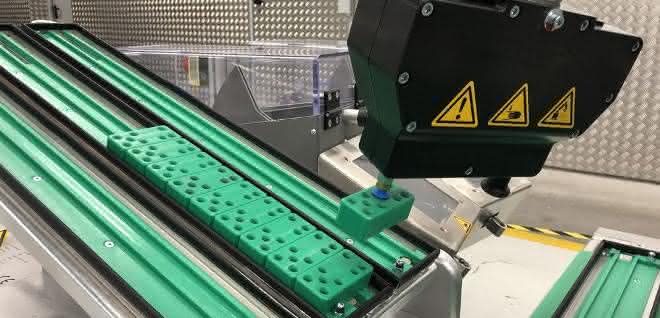
From Lower Bavaria to the whole world: The BMW Group plant in Landshut is the BMW Group's largest component plant and supplies almost all of the German manufacturer's vehicle and engine plants worldwide. Around 3,600 employees produce engine, chassis and body structure components every day, which can be found in almost all BMW, Mini, Rolls-Royce and BMW motorcycles.
Almost 4,000 interior components leave the plant every day. In order to ensure maximum comfort, function and individuality in the interior, cockpit production relies on technological innovations - not only in the components themselves, but also in the production process.
Avoid non-value-adding activities
In-house cockpit production is also in competition with external suppliers for every new order. This makes it all the more important for the Lower Bavarian site to produce cost-efficiently despite the highest quality standards. In particular, it is important to avoid non-value-adding activities, such as the assembly of screw blocks.
This process serves as work preparation for the subsequent assembly of the components. The employee takes an empty screw block and manually loads it with the appropriate combination of up to eight different individual screws. He performs the assembly process several times in succession in order to transport a supply of filled screw blocks to his workstation. This is laborious, takes a lot of time and therefore detracts from the actual value-adding assembly process - a work process with high automation potential.
Cobot takes over automation tasks
Those responsible for cockpit production at the Landshut plant have already used human-robot collaboration (HRC) technologies in the past - however, collaborative lightweight robots (cobots) have not yet been used in this area. For this reason, the use of a cobot was to be evaluated using the non-value-adding process of screw block assembly for cockpit production.
Based on the selected application, the BMW Group drew up a comprehensive list of requirements: Above all, the robotics solution had to meet the high standards of occupational safety, be cost-efficient and easy to program. It was particularly important that the robot did not require a protective housing and could work safely alongside humans.
Together with the system integrator Voith Robotics, which is certified by Universal Robots, the decision was ultimately made in favor of a collaborative lightweight robot from Universal Robots, which met all of the BMW Group's requirements. Following a successful risk assessment, the selected UR5e model can operate safely alongside the employee without a physical protective housing.
Lightweight robot with two end effectors
Since its implementation by Voith Robotics in March 2021, the cobot has been processing around 300 units per day, each consisting of eight individual screws. For this purpose, the lightweight robot was equipped with two end effectors: a normal suction gripper for handling the screw blocks and a suction gripper with a protective device for safe handling of the often sharp screws.
The employee simply places their empty screwdriving blocks in the rail and selects the combination of different screw variants to be assembled via a program. The cobot then automatically picks up the first empty screwdriving block using the suction gripper and places it in a fixture provided for this purpose.
The robot arm then moves to the corresponding screw separators, removes the respective screws one after the other and inserts them into the screw block. The UR5e handles up to 2,400 individual screws per day. As soon as the order has been processed - or during the process - the employee can collect the finished screw blocks for assembly.
Safe detection and braking
The lightweight robot works with a cycle time of around one minute per screwdriving block. If an employee moves close to the cobot, it automatically slows down without stopping completely. The reason for this is the integration of UR+-certified area scanners from Sick, which signal to the lightweight robot when a person enters the marked area.
Cockpit production at the BMW Group plant in Landshut also has to adhere to a certain cycle time in order for the process to be profitable and efficient. It is therefore an advantage that the collaborative robot does not stop completely, but only works at a reduced speed.
For the time being, the UR5e in screw block assembly serves as a pilot cell to test the automation of this process using cobots and to evaluate the resulting findings. It is therefore conceivable that cockpit production will be expanded to include new robot colleagues in the future: the fear of contact with the cobot is low due to existing experience with HRC technologies, the feedback is consistently positive and the robot works without any problems.
Relief for employees
The low-cost and easy-to-program collaborative robots open up new ways to automate other processes profitably. In addition to reducing non-value-adding activities, automation using cobots offers a cost-effective and efficient way of relieving employees of unergonomic, dangerous and strenuous tasks and using them for higher-value tasks instead.


You might also be interested in
Motors, gearboxes and encoders: Faulhaber expands Ø 16 mm portfolio
Faulhaber is expanding its portfolio with new DC motors from the SXR and GXR family, a 16 mm planetary gearbox and the IEX3 magnetic encoder for compact drive solutions.
 read more...
New drive solutions for industrial automation and robotics
Faulhaber presents drive solutions with the new GXR and SXR motor family, which offer high efficiency and flexibility in combination with powerful gearboxes and encoders. These optimized components open up new possibilities for applications in...
read more...Marco Altherr becomes new Chief Financial Officer
The Supervisory Board of Ziehl-Abegg has appointed Marco Altherr as the company's new Chief Financial Officer (CFO). Altherr will take up his post in May 2025.
read more...Hydrogen storage in metal hydride
With its focus on storage systems for green hydrogen in solid form (metal hydride), GKN Hydrogen presents itself as a pioneer in safety and efficiency for the industry. GKN Hydrogen offers safe storage systems for green hydrogen and focuses on two...
read more...INDUSTRIAL Production Products of the year...
2nd place, Robotics category: EGS Automation
The SUMO automation systems from EGS Automation - economical standard solutions for automating a wide range of processes in plastics and metalworking - took second place in the robotics category in the competition for Product of the Year 2024.
read more...More productivity with Drive Intelligence
The trends in automation are productivity, sustainability and connectivity. Baumüller is launching new products on the market that address these trends, including new tools for smart energy monitoring, condition monitoring in the drive and new...
read more...Intelligence in Motion
At SPS, Koco Motion will be showcasing its expertise in customized drive solutions based on DC and BLDC motors, stepper motors, servo motors, linear drives and controllers.
read more...Nomination Products of the Year 2024
EGS Automation: SUMO automation systems
The SUMO automation systems from EGS Automation, economical standard solutions for automating a wide range of processes in plastics and metalworking, have been nominated in the Robotics category in the competition for Product of the Year 2024.
read more...Transport technology from the modular system
Many transport tasks can be realized with the help of linear technology. Pre-configured solutions are available to simplify the interaction between the linear unit, motor, gearbox and controller. This minimizes the effort required for research and...
read more...