
Backlash-free clutches
Clutches in high-tech use
In high-tech applications, couplings are critical to system performance. Choosing the right coupling ensures that machinery performance requirements are met and ensures a long and trouble-free system life. Conversely, incorrect coupling selection can result in end users of a system being faced with inaccurate positioning, high maintenance costs and long downtimes.
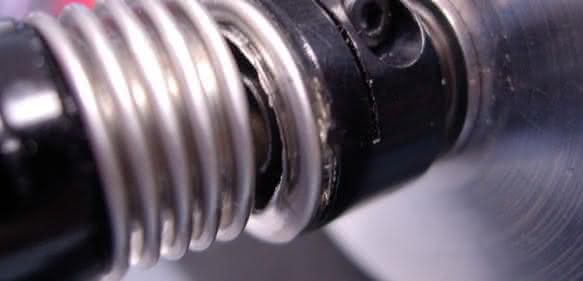
High-tech applications can be found in almost all industrial sectors, for example in semiconductor manufacturing, medical technology or in the agricultural, printing and aerospace industries. Precise positioning systems usually consist of a drive component and a driven unit. The coupling performs the power transmission function. In order to select a backlash-free coupling for drive technology that meets the requirements, it is first necessary to gain an overview of the strengths and weaknesses of individual coupling types.
Beam couplings and rigid couplings offer high torsional rigidity
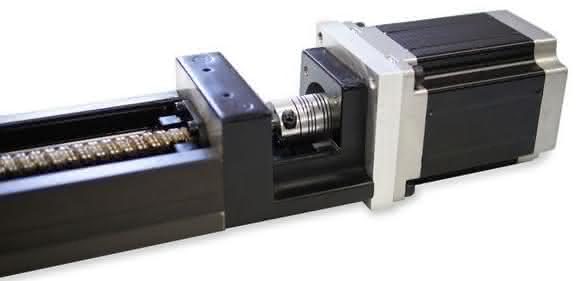
Beam couplings, also known as helical couplings or flexible couplings, have continuous incisions or helixes on the coupling body for torque transmission and offset absorption. They are ideal for high-tech applications with medium speeds of up to 6,000 rpm, high misalignment values and a certain amount of damping required.
There are two basic versions: Versions with a long continuous single helix (spiral cut) and versions with multiple helixes with one or two groups of interlocking, shorter helixes. Beam couplings with multiple helixes have better torque capabilities, higher torsional stiffness and can better absorb parallel misalignment. The couplings with single helix show greater elasticity with angular and axial misalignment. Beam couplings are usually made of aluminum to achieve a low mass moment of inertia or stainless steel to achieve a higher torsional stiffness.
Rigid couplings, also known as shell couplings, are available in various materials and designs. For high-tech applications, the clamp design is more suitable than the set screw design as they do not cause damage to the shaft and have higher torque capabilities. Rigid couplings have the highest possible rated torsional stiffness and are therefore ideal for high-tech applications with precise motion sequences and small work steps, such as 3D printers.
Compared to other couplings, the bearing load is highest with rigid couplings. The shafts must be perfectly aligned. At high speeds, thermal expansion must also be taken into account, as rigid couplings cannot compensate for the resulting stresses.
Clutch types for high speeds in semiconductor and printing technology
Multi-plate clutches consist either of two hubs that are connected via a flexible, metal center disc (single-joint design) or of two hubs and a center piece in which two metal plates provide the connection (double-joint design). The latter can accommodate parallel and angular misalignments. Multiple-disc couplings in single-joint design are intended for smaller installation spaces and only compensate for angular misalignments.
Both variants are torsionally rigid, result in low bearing stress and have a low mass moment of inertia. The flexible disks make it possible to compensate for larger shaft misalignments, especially in the double-jointed version. Multi-plate clutches are suitable for applications up to 10,000 rpmand beyond. These features make them the perfect choice for semiconductor and solar applications.
Bellows couplings consist of two aluminum or stainless steel hubs that are connected to each other via a metal bellows. The thin walls of the stainless steel, bronze or nickel bellows give the coupling a dynamic response and high precision. The bearing load is low and constant at all points of the rotary movement. Bellows couplings can compensate for all types of misalignment.
In addition to all these advantages, the bellows coupling has excellent torsional stiffness. The maximum speed of around 10,000 rpmalso corresponds approximately to the performance of a multi-plate clutch. It is particularly suitable for the printing industry, where maximum precision is required to avoid streaking on printed copies.
Non-positive clutches for start-stop operation and precise regulation
The backlash-free elastomer coupling, also known as a claw coupling, has rounded hub and claw profiles. It consists of three frictionally connected parts, i.e. two aluminum hubs and a star-shaped elastic connecting element, also known as a star or spider. Thanks to their high damping properties, elastomer couplings with rounded profiles are ideal for inspection systems with start-stop operation.
Like an elastomer coupling, the Oldham coupling also consists of three friction-locked components, namely two aluminum hubs and an insert. The couplings compensate for large parallel displacements with low bearing loads, the center disc is easily replaceable and they act as a mechanical safety device in the event of torque overload. Oldham couplings are used, for example, in valve control applications where particularly precise regulation is required. These types of clutch can only compensate for small angular displacements and axial movements. Their speed range extends up to around 4500 min-1.
Performance and durability thanks to the right clutch in the right place
The performance of high-tech applications depends largely on the performance and quality of the respective components. All the clutch types described have design-related strengths and weaknesses. There is no coupling that can cover the requirements of all systems and applications.
In any case, it is advisable to select the correct backlash-free clutch in the initial phase of system development based on all available data. Only the selection of a coupling whose functional characteristics fulfill all system requirements can ensure the best possible system performance and longevity. am


You might also be interested in
Predictive maintenance in retrofit
Predictive maintenance pays off. This is because early detection of impending failures means that systems can be serviced in a targeted manner before production downtime occurs. But how complex is it to integrate such a maintenance concept into an...
 read more...
Maintenance instead of replacement
The circular economy starts with the machinery
Sustainability in industry starts with machines, says our guest author from Deguma: How maintenance, modernization and the 5R strategy save resources, energy and CO₂.
read more...3D printing for unplanned requirements
The material fails and the machine suddenly stops? Then you need to take the right measures to be able to resume production quickly. Material failure in the form of faulty components or material wear in the frame are a risk for any production.
read more...High demands in terms of safety, application and robustness
Demanding work in the electrical trade and energy supply as well as smooth processes in production require innovative and customized measurement technology that scores points for safety, ease of use and resilience.
read more...Car meets e-bike: riding with lubrication-free polymer bearings
Studies show that the proportion of pedestrian and bicycle traffic is increasing in urban areas. With the JetBike, JetBike GmbH from Braunschweig presents a mixture of e-bike and car and relies on lubrication-free polymer bearings from Igus.
read more...Hydraulic hub for more efficient servicing
Bosch Rexroth presents a digital toolbox for service and maintenance. With a comprehensive range of digital services, the Hydraulic Hub simplifies and accelerates the service and maintenance of hydraulic products and increases machine availability.
read more...Arnold Umformtechnik expands after-sales...
Faster help with VR glasses
Arnold Umformtechnik is expanding the after-sales service for its machines to include digital remote services. The focus is on data security, simple operation and clear processes.
read more...147,000 euros per hour: high costs for German companies due to unplanned downtime
According to the "Value of Reliability" study, 67% of industrial companies in Germany experience unplanned downtime at least once a month. This costs the German economy 147,000 euros per hour. Nevertheless, reactive maintenance concepts are not...
read more...Maintenance starts with a maintenance planner
Legal requirements stipulate that machines and systems must be serviced regularly. The maintenance work serves to ensure occupational safety and economic efficiency.
read more...