
Obsolescence management
Additive manufacturing and obsolescence
Current developments in additive manufacturing are fueling hopes that 3D printing can be used to produce any part in any shape from any material, thus solving the problem of sourcing obsolete components. But is it really that simple? Why AM cannot replace a good obsolescence management plan.
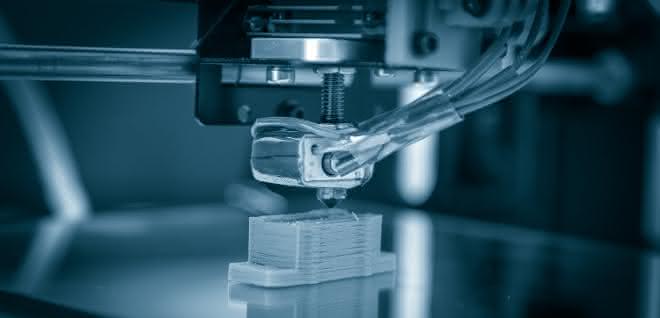
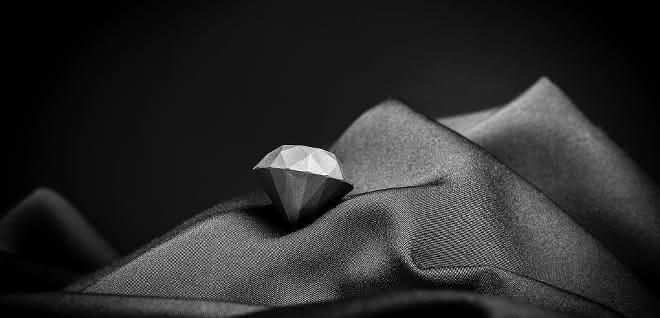
Additive manufacturing (AM) is a production process for manufacturing components using various 3D printing techniques. The range of materials that can be used is almost infinite - from innovative plastics and metal alloys to concrete, wax, resins and even human tissue. Recently, Sandvik Coromant discovered the possibility of printing with diamond powder, where the hardest material on earth is molded into the desired shape.
However, additive manufacturing processes have other advantages compared to mechanical manufacturing. For example, it is possible to print complicated and hollow shapes without waste, as only the necessary amount of material is added for the process. This has made it a popular technique in areas that require the production of highly specialized components in a small production run, such as aerospace or biomedicine, and has led to continued investment in exploring how additive manufacturing could help manage component obsolescence.
The problem of obsolescence
Our society is characterized by rapid technological developments in terms of the use of big data, automation and informatics. These technologies have had a positive impact on manufacturing, allowing plant managers to maximize productivity, reduce waste and create a safe working environment for their employees.
However, technological components, both hardware and software, tend to have a shorter lifespan. When new versions of the same components are distributed, the original equipment manufacturer (OEM) may discontinue production of the version purchased from the manufacturer, rendering it obsolete.
When obsolete components break, it can be difficult to find identical replacement parts. Obsolescence management is therefore crucial, as broken or non-functioning obsolete components can result in costly downtime for the company or require an upgrade of the entire system.
Additive manufacturing: a sensible alternative?
Material engineers are currently investigating the potential of additive manufacturing in connection with obsolescence management. The core idea is to simply additively manufacture components that are no longer available from the OEM.
For stakeholders working in highly regulated industries, where upgrading to newer components involves a lot of paperwork and bureaucracy, it is particularly important to explore this possibility. Several governments, for example in the US and Switzerland, have already launched research programs to investigate the potential of additive manufacturing to manage obsolescence within the defense industry. While the results are promising, there are still technical and bureaucratic questions that need to be answered.
One of these issues is compliance with legal regulations. From a legal perspective, it is unclear what conditions 3D printed components must meet to ensure that they are safe for use in certain applications. This is particularly true for highly regulated sectors such as the nuclear, pharmaceutical or food and beverage industries, where the use of components and the frequency of replacement are prescribed by law.
From a purely technical point of view, the biggest disadvantage of additive manufacturing is that although this technology could help with obsolescence of mechanical components, it is not clear whether this would also be the case in other areas, for example electrical engineering. Mechanical components, electronics, cables, software and know-how can all be subject to obsolescence and solutions that address only one aspect of this are only partially helpful.
A holistic approach
Obsolescence is the natural consequence of technological progress and the marketing of ever more efficient solutions. It is therefore not completely avoidable. However, its impact on the company can be drastically reduced.
There are two main approaches to obsolescence management: the reactive and the proactive. The reactive approach consists of taking action to replace or repair parts as soon as a failure occurs. The proactive approach is based on constant monitoring and planning to prevent faults from occurring in the first place.
The proactive approach is of course preferable, as it allows manufacturers to plan ahead. In this way, spare parts can be procured and stocked cheaply and downtime due to unexpected downtime can be avoided or minimized. To implement this approach, manufacturers need to know the expected lifecycle of their equipment and be aware of which components will be coming out of production in the near future. In small and medium-sized plants, it may be enough to create and update a table of equipment lifecycles; in larger plants, obsolescence management can become a full-time job.
To this end, hiring an obsolescence manager can be a good solution. These experts can help track the lifecycles of manufacturing components, monitor the condition of machines and tools, collect data from sensors for predictive maintenance and plan necessary repairs before a malfunction even occurs.
It is also important to partner with a reliable supplier who can deliver parts quickly and efficiently to minimize downtime. EU Automation supplies a wide range of new, reconditioned and obsolete parts that can be delivered within Europe in just nine hours and worldwide within 48 hours.
Sophie Hand, UK Country Manager at EU Automation / ag


You might also be interested in
Helu makes its first trade fair appearance under a new brand name
Helu Kabel will be presenting itself as Helu for the first time at Hannover Messe 2026, showcasing system solutions, Heluchain cables and new industrial luminaires.
 read more...
Strategic realignment with brand relaunch
In future, Helukabel will trade as Helu
The Helukabel Group is parting with part of its name: in future, the company will only operate under the Helu brand. With this step, the specialist for electrical connection technology is underlining its strategic development from a classic cable...
read more...Modular plant construction for corrugated board
Insight into the production of corrugators at BHS Corrugated: Automated, modular and equipped with Helukabel components.
read more...Best quality for the steel
Conditions in the steel industry are harsh and inhospitable. The machines used must be able to withstand the demanding environmental conditions in order to deliver the best quality at all times.
read more...If the standard cable is not sufficient
Lapp offers cables for countless applications - but not for all of them. From time to time, the developers have to modify a standard cable or develop a special cable.
read more...Slight decline in sales, strong investments
The Lapp Group has not been spared from the weakening global economy. However, the company only recorded a slight loss in the past 2024 financial year.
read more...Electrical connection technology
Cables and wires for industrial automation
Heukabel offers system solutions for cable routing from a single source. The subsidiary EKD Systems specializes in tailor-made cable drag chains made of steel, stainless steel and plastic, which are used in moving machines and systems as well as in...
read more...Lapp relies on Ultramid from BASF
Mobile charging of electric vehicles
The automotive industry is currently undergoing the biggest transformation in its history. The boom in battery electric vehicles in particular is presenting the industry with major challenges. Lapp, as a supplier of cables and connection...
read more...Cable handling application
At this year's Motek, ArtiMinds Robotics is showcasing a robot-based automation solution for the sensor-assisted assembly of flexible cables in connector housings.
read more...