
Additive manufacturing
3D printing in the aerospace industry
The advancement of 3D printing in aerospace is driving efficiency in the value chain and solving problems in production. Scott Sevcik, VP Aerospace at Stratasys, describes why this technology is so popular with major OEMs and numerous suppliers.
The aerospace sector has always been an early adopter of new technologies to reduce both the weight and cost of aircraft. The acceptance of additive manufacturing (AM) is proof of this. The industry has come a long way since the early 1990s. During this time, OEMs began investigating whether 3D printed prototypes of a component could be used in aircraft design. Thanks to significant technological advances - particularly in material development - the scope of applications for additive manufacturing in aerospace has expanded rapidly. OEMs now knew how flexible and efficient 3D printing could be. They soon began using the technology for various applications in equipment and fixtures to meet tooling needs.
These applications are now almost taken for granted in the industry. In fact, over the past five or six years, there has been an increasing focus on using additive manufacturing to produce aircraft components for production. This is demonstrated by Airbus' recent contract extension with Stratasys. Airbus has been using 3D-printed components in its A350 aircraft for several years. The company is now expanding additive manufacturing and using it for its entire aircraft portfolio to produce spare parts as part of its maintenance, repair and overhaul activities.
A breakdown of this aircraft component category continues to show that OEMs are using additive manufacturing for more and more cabin interior applications. Recently, Stratasys has also been working with leading companies to develop materials for non-cabin aircraft components. A good example is Boeing, who consider the FDM material Antero to be suitable for this requirement. This particular material has high resistance to chemicals, favorable fatigue properties and can withstand contact with hydraulic fluids and fuels. It is therefore well suited for numerous components throughout the aircraft. This illustrates how OEMs and 3D printing companies need to work together to further expand the application potential of additive manufacturing.
Achieving basic goals
Regardless of the challenge, most customers want to use additive manufacturing to produce lightweight and cost-effective components using 3D printing. And the technology offers various ways to achieve this. First of all, extremely high-performance thermoplastics can be used instead of metal components, thus significantly reducing weight. The layer-by-layer additive structure enables the production of complex geometries, such as hollow cell structures, which cannot be realized with conventional processes. Some customers often use this geometric freedom to combine several components in one part. With conventional methods, several components often have to be assembled individually. Above all, all these weight savings lead to lower fuel and energy consumption. This illustrates how additive manufacturing can have a direct impact on the economics of flying.
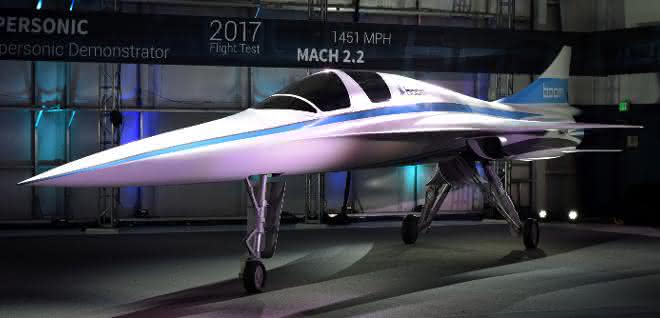
Several new platforms are currently under development. This opens up new markets such as urban air mobility or eVTOL (Electric Vertical Takeoff and Landing) as well as the reintroduction of supersonic aircraft. Certain additive manufacturing technologies are now more mature. As a result, these new platforms can utilize additive manufacturing in the design and development phase in a way that was not possible with previous generations. This is also evident in the development of Boom Supersonic's aircraft. The company has been very open to sharing details of how it is building the next generation of supersonic passenger aircraft. The XB-1 demonstration aircraft contains hundreds of components printed using FDM.
In terms of manufacturing costs, aerospace production is best suited to the benefits promised by additive manufacturing due to its unique characteristics. Unlike the automotive industry, which produces millions of cars every year, only a few thousand new aircraft are manufactured each year. Additive manufacturing eliminates the need for costly tooling and allows OEMs and their suppliers to produce components quickly and cost-effectively in small batches - this is particularly useful for spare parts. When aerospace OEMs take full advantage of on-demand, on-site production, they can make huge cost savings. With no minimum order quantity restrictions, there is no need to produce and store large quantities of stock that may never be used.
The US Air Force, for example, uses additive manufacturing to produce spare parts on demand from a "digital inventory". It currently operates around 100 older C5 Galaxy transport aircraft. No new aircraft have been produced for several years and spare parts are always needed in small quantities - sometimes just one. By adopting additive manufacturing to manage the supply and maintenance of spare parts for this aircraft, the US Air Force is avoiding the costly and time-consuming traditional procurement of small quantities of spare parts for its C5 fleet.
Wider acceptance throughout the supply chain
Major OEMs such as Airbus and Boeing recognized these agility-, performance- and efficiency-enhancing properties some time ago. However, they are now also increasingly using additive manufacturing in the downstream supply chain. Customers such as BAE Systems and Senior Aerospace BWT are examples. They have found that their own OEM customers are now fully embracing the general benefits of additive manufacturing. In practice, they have therefore integrated it as a solution into their own operations to deliver robust and repeatable 3D printed components while becoming more efficient themselves in terms of cost and time.
The increased demand for low volumes has underlined the strong case for AM, shifting the make-buy analysis and the trade-off between its use and traditional manufacturing technology for high-volume parts. The agility of additive manufacturing has proven to be a significant advantage, which is reflected in this: the aerospace industry is not considered particularly agile, but reacted very quickly at the beginning of the Covid-19 pandemic. The industry realized that it already had the technology to switch production from aircraft components to face shields and then quickly switch again. In some companies, this opened the eyes of even the laymen and skeptics to the strengths of additive manufacturing. Decision-makers in aerospace companies are now looking at the benefits of additive manufacturing and the problem of small-scale production and the desire for greater cost-effectiveness from a new perspective.
Those involved in the development of AM were already aware of the benefits, whether during a pandemic or otherwise.
Additive manufacturing has much more to offer as the development of materials continues to push new boundaries and open up new areas of application to meet the constant and increasingly demanding needs of customers.
Scott Sevcik, VP Aerospace, Stratasys


You might also be interested in
Predictive maintenance in retrofit
Predictive maintenance pays off. This is because early detection of impending failures means that systems can be serviced in a targeted manner before production downtime occurs. But how complex is it to integrate such a maintenance concept into an...
 read more...
Maintenance instead of replacement
The circular economy starts with the machinery
Sustainability in industry starts with machines, says our guest author from Deguma: How maintenance, modernization and the 5R strategy save resources, energy and CO₂.
read more...3D printing for unplanned requirements
The material fails and the machine suddenly stops? Then you need to take the right measures to be able to resume production quickly. Material failure in the form of faulty components or material wear in the frame are a risk for any production.
read more...High demands in terms of safety, application and robustness
Demanding work in the electrical trade and energy supply as well as smooth processes in production require innovative and customized measurement technology that scores points for safety, ease of use and resilience.
read more...Car meets e-bike: riding with lubrication-free polymer bearings
Studies show that the proportion of pedestrian and bicycle traffic is increasing in urban areas. With the JetBike, JetBike GmbH from Braunschweig presents a mixture of e-bike and car and relies on lubrication-free polymer bearings from Igus.
read more...Hydraulic hub for more efficient servicing
Bosch Rexroth presents a digital toolbox for service and maintenance. With a comprehensive range of digital services, the Hydraulic Hub simplifies and accelerates the service and maintenance of hydraulic products and increases machine availability.
read more...Arnold Umformtechnik expands after-sales...
Faster help with VR glasses
Arnold Umformtechnik is expanding the after-sales service for its machines to include digital remote services. The focus is on data security, simple operation and clear processes.
read more...147,000 euros per hour: high costs for German companies due to unplanned downtime
According to the "Value of Reliability" study, 67% of industrial companies in Germany experience unplanned downtime at least once a month. This costs the German economy 147,000 euros per hour. Nevertheless, reactive maintenance concepts are not...
read more...Maintenance starts with a maintenance planner
Legal requirements stipulate that machines and systems must be serviced regularly. The maintenance work serves to ensure occupational safety and economic efficiency.
read more...