

Sustainability
Insight into energy management
The regression and correlation analysis in Weidmüller's ResMa energy management system opens up new possibilities for energy managers to adjust and normalize key figures and make well-founded decisions. The extension helps companies to meet the requirements of the EU Sustainability Reporting Directive (CSRD).
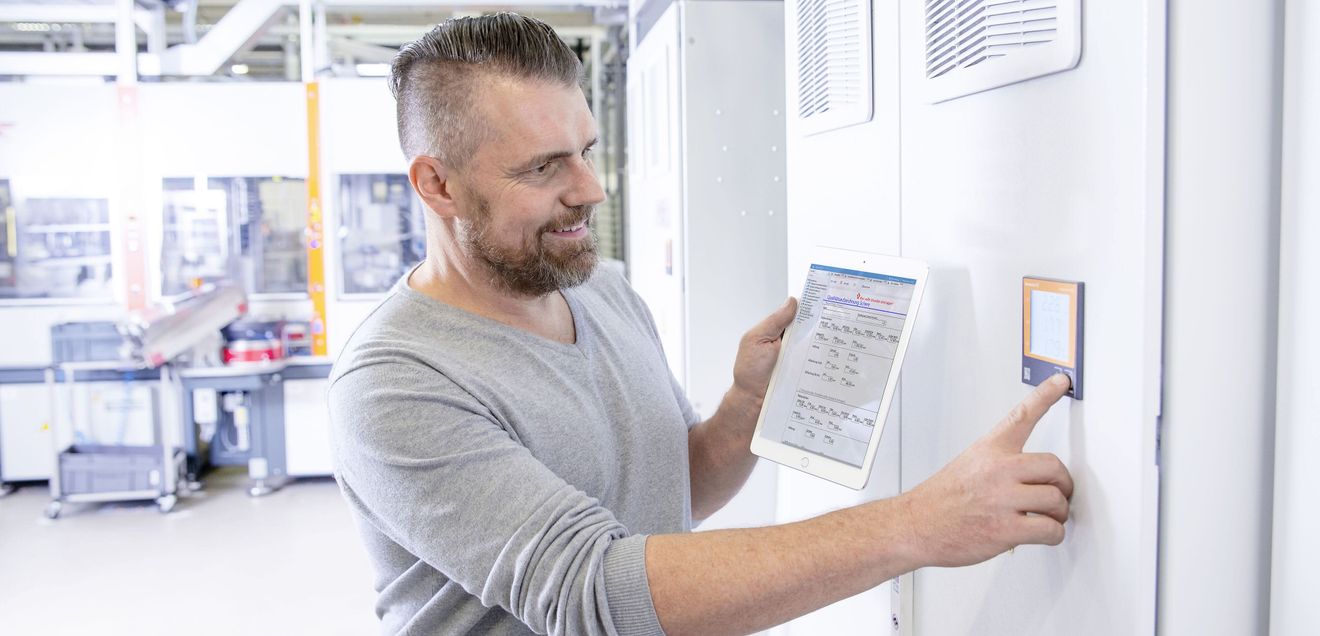
In energy management, energy consumption often depends on external factors - such as the weather. For example, a new air conditioning system is purchased to reduce electricity consumption. However, the following summer is unusually cool. Although electricity consumption falls, this is not necessarily due to the new technology, but to the lower outside temperature. How can you still prove whether the investment was really successful?
This is precisely where the regression analysis in ResMa comes in: it compensates for influencing factors such as temperature or hours of sunshine and normalizes the consumption data. This creates an objective picture of the savings potential regardless of fluctuating framework conditions.
The path to regression analysis begins with a correlation analysis. Users examine their energy data for dependencies - for example between maximum daily temperatures, production times or hours of sunshine and the electricity consumption of a system. The calculations provide values between +1 (strong positive correlation) and -1 (strong negative correlation). A value close to 0 indicates that there is no correlation.
Once the relevant influencing factors have been identified, the regression model follows. This calculates how certain variables - such as the weather - affect energy consumption and isolates these effects. The analysis does not require in-depth data science expertise: ResMa guides users through the process step by step. The tool is also useful beyond traditional energy management. In production, for example, it can be used to investigate quality problems based on data. At the same time, energy anomalies can be traced back to machine faults or incorrect settings.
Fit for ISO 50006 - and the future
Energy management is becoming increasingly important for companies. Driven by the new EU directives, in particular the CSRD, companies are obliged to make precise statements about their energy consumption. The energy and resource management tool ResMa enables energy management in accordance with ISO 50001 and therefore complies with EU requirements. The regression analysis tool expands ResMa to include energy management in accordance with ISO 50006. Together, they enable companies to plan for the future and prepare for upcoming legal changes.
Weidmüller, http://www.weidmueller.de


You might also be interested in
Power distribution of the future
ABB and Rittal enter into technology partnership
Making the electrical infrastructure fit for future challenges with greater safety and speed - that is the aim of the new technology partnership between ABB and Rittal. Together, the two companies want to create innovations for the European and...
 read more...
Peak load management in forklift trucks
Intelligent energy management prevents expensive power peaks
Targeted and efficient energy management is becoming increasingly important for customers in the logistics sector: a large number of devices, different charging cycles and high electricity volumes mean that electricity is a critical cost factor for...
read more...Shuttle bearing with energy recovery
54,000 storage spaces for mountain sports clothing and equipment in seven aisles: With its high-bay warehouse and downstream logistics, which went into operation in 2022, Bergzeit has been supplying its customers even faster and more sustainably...
read more...Energy efficiency through high efficiency
One of the most important components in the field of automation applications is the DC supply voltage. Cost-sensitive miniature machines in particular require economical power supplies.
read more...How Brussels wants to strengthen the industry
EU Clean Industrial Deal: less bureaucracy, cheaper energy
The EU Commission wants to get Europe's economy back on track for growth with the "Clean Industrial Deal" - and is focusing on green technologies, lower energy prices and less bureaucracy. But what exactly are these measures supposed to look like?...
read more...Feed-in meter and energy management
Keeping an eye on energy flows
The Energy-Hero from Austrian company M-Tec combines energy meters for up to 65 A and energy management in a single device, offering a comprehensive solution for monitoring and optimizing energy consumption.
read more...Protection and power management
Mersen at the PCIM 2024
Mersen, an expert in electrical protection and power management solutions, will be presenting a wide range of new products and solutions for power electronics, e-mobility, charging stations and energy storage systems at PCIM 2024 in Nuremberg from...
read more...EnerSys presents new outdoor charger
Enersys, provider of energy storage solutions for industrial applications, presents the NexSys+ outdoor charger, its latest innovation in the range of NexSys power solutions.
read more...Focus on safety and efficiency
In keeping with the trade fair motto "Energizing a sustainable industry", the Schmersal Group presented new products and systems for the safe, efficient and sustainable design of machines and systems at the Hannover Messe.
read more...