

Climate-neutral production and e-mobility
Kistler strengthens sustainability initiatives
Kistler has set itself the goal of making all six German production sitesCO2-neutral by 2025, while at the same time expanding e-mobility throughout the company. A sustainability report is also planned for this year. A sustainability team led by Franziska Kunz has been appointed as the new Sustainability & CSR Manager.
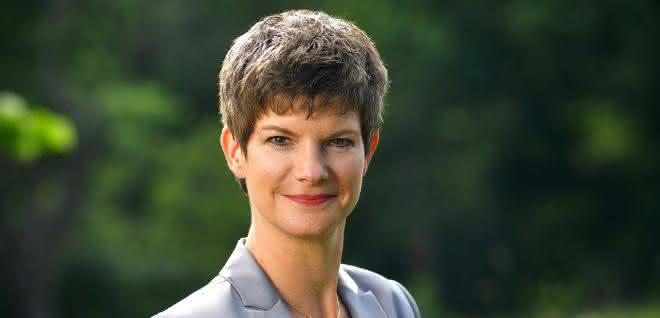
"Protecting people and the environment is very important to us. That is why it is also one of our top corporate values," explains CEO Rolf Sonderegger. "With our own project team, we are now bundling our measures and goals in the area of sustainability and consistently driving them forward." Franziska Kunz, Head of the Meerane site since 2011, has also led the sustainability team as the new Sustainability & CSR Manager since April 1, 2022.
One of the biggest tasks is to implement the "Cut the Carbon" project: The company is committed to making all six German production sites completelyCO2-neutral by 2025. Kistler is following the guidelines of the Greenhouse Gas Protocol (GHG) for Scopes 1 and 2, i.e. addressing both direct emissions from combustion processes at its own sites and indirect emissions from purchased electricity, steam, heat and cooling. In order to achieve this goal, Kistler wants to make its entire production process emission-free - production at all German sites already runs exclusively on electricity from renewable sources.
At the same time, e-mobility is to be expanded within the company. Charging stations for electric cars are being installed at the headquarters in Winterthur, Switzerland, and at the two German sites in Sindelfingen and Lorch. In addition, the proportion of electric company vehicles is to be gradually increased.
Sustainable management
Furthermore, Kistler's products also ensure sustainable business practices on the customer side, according to the company. For many years, for example, the diagnostics of combustion engines in the automotive sector have led to more efficient engines and thus lowerCO2 emissions. In the large engines of ships, on the other hand, sensors from Kistler monitor the pressure in the cylinders in order to reduce fuel and thus also emissions. Similarly, in joining processes, electromechanical joining modules ensure that large amounts of energy can be saved in production compared to pneumatic or pneumohydraulic systems. "In this way, we are making a contribution to global decarbonization and resource efficiency at various levels," explains CEO Rolf Sonderegger.
Franziska Kunz and her team are currently summarizing all goals, measures and results in a sustainability report in order to make them accessible and transparent to the public. "We show that we take our responsibility seriously," says Franziska Kunz. "In doing so, we focus on the social and economic components of sustainability as well as the ecological ones - after all, the task can only be accomplished through cooperation across all areas."


You might also be interested in
Motors, gearboxes and encoders: Faulhaber expands Ø 16 mm portfolio
Faulhaber is expanding its portfolio with new DC motors from the SXR and GXR family, a 16 mm planetary gearbox and the IEX3 magnetic encoder for compact drive solutions.
 read more...
New drive solutions for industrial automation and robotics
Faulhaber presents drive solutions with the new GXR and SXR motor family, which offer high efficiency and flexibility in combination with powerful gearboxes and encoders. These optimized components open up new possibilities for applications in...
read more...Marco Altherr becomes new Chief Financial Officer
The Supervisory Board of Ziehl-Abegg has appointed Marco Altherr as the company's new Chief Financial Officer (CFO). Altherr will take up his post in May 2025.
read more...Hydrogen storage in metal hydride
With its focus on storage systems for green hydrogen in solid form (metal hydride), GKN Hydrogen presents itself as a pioneer in safety and efficiency for the industry. GKN Hydrogen offers safe storage systems for green hydrogen and focuses on two...
read more...INDUSTRIAL Production Products of the year...
2nd place, Robotics category: EGS Automation
The SUMO automation systems from EGS Automation - economical standard solutions for automating a wide range of processes in plastics and metalworking - took second place in the robotics category in the competition for Product of the Year 2024.
read more...More productivity with Drive Intelligence
The trends in automation are productivity, sustainability and connectivity. Baumüller is launching new products on the market that address these trends, including new tools for smart energy monitoring, condition monitoring in the drive and new...
read more...Intelligence in Motion
At SPS, Koco Motion will be showcasing its expertise in customized drive solutions based on DC and BLDC motors, stepper motors, servo motors, linear drives and controllers.
read more...Nomination Products of the Year 2024
EGS Automation: SUMO automation systems
The SUMO automation systems from EGS Automation, economical standard solutions for automating a wide range of processes in plastics and metalworking, have been nominated in the Robotics category in the competition for Product of the Year 2024.
read more...Transport technology from the modular system
Many transport tasks can be realized with the help of linear technology. Pre-configured solutions are available to simplify the interaction between the linear unit, motor, gearbox and controller. This minimizes the effort required for research and...
read more...