
Patent from Schaeffler 1950
The cage-guided needle roller bearing - 70 years old and ready for the future
70 years ago, Dr.-Ing. E.h. Georg Schaeffler revolutionized bearing technology. The idea: to give the needles in the needle roller bearing more guidance by means of a cage. The first practical trials with cage-guided needle roller bearings began in February 1950.
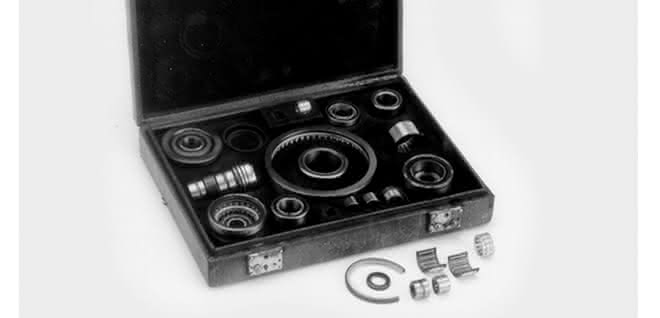
The results were convincing, the components were extremely low-wear and low-friction - the basis for the product's success was created with the patent application in September 1950. Just one year after the first prototype was built, in February 1951, the first series orders from car manufacturers were won, followed by use in industrial applications.
"With this invention, my father Georg Schaeffler laid the foundation for the rapid growth of our company. The cage-guided needle roller bearing is one of the most important innovations in our company's history as an automotive and industrial supplier," says Georg F. W. Schaeffler, family shareholder and Chairman of the Supervisory Board. "The development of this product impressively demonstrates what sets us apart: With the cage-guided needle roller bearing, we have utilized all synergies to serve all relevant target markets with this innovative product and generate real customer benefits - in both the automotive and industrial sectors."
Higher speeds with lower friction
With this invention, Dr.-Ing. E.h. Georg Schaeffler eliminated the serious disadvantages of the previously common full complement needle roller bearings: The long needle rollers tended to move crosswise during bearing rotation, which then led to the bearing blocking. In addition, there was a lot of sliding friction between the counter-rotating needle rollers. The development of the needle roller cage overcame these disadvantages and allowed significantly higher speeds with less friction. Engineers were thus able to replace other bearing designs with cage-guided needle roller bearings and significantly improve the performance of their applications.
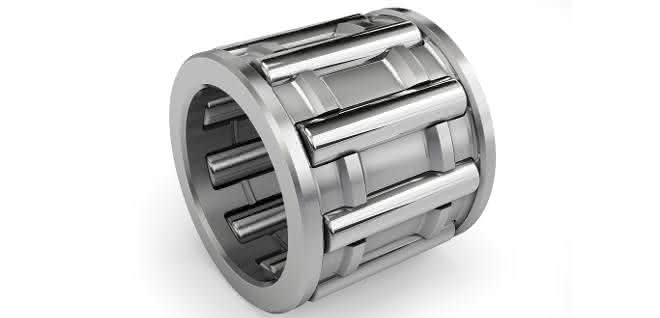
Needle roller bearings have made an invaluable contribution to the development of small, powerful and cost-effective automobiles in particular. "Without reliable needle roller bearings, modern automotive drives would still be inconceivable today," says Matthias Zink, Member of the Executive Board Automotive Technologies at Schaeffler. Needle roller bearings were also gradually used in mechanical and plant engineering, in construction and agricultural machinery and in conveyor technology.
Role in future markets
Needle roller bearings will continue to play an important role in the future. In e-mobility, needle roller bearings are indispensable for the function of numerous electrified transmissions. Needle roller and cage assemblies enable bearing arrangements with minimal installation space, as their overall height only corresponds to the diameter of the needle rollers. They also have a high load carrying capacity and are cost-effective compared to other bearing designs. KZK needle roller and cage assemblies (crank pin cages) are used in electric axles with a coaxial design. One example of an application is the Schaeffler e-axle transmission produced for the Audi e-tron since 2018.
Needle roller bearings can also be used in industry to downsize the joints of lightweight robots, which are increasingly in demand, to make them light and compact. Needle roller bearings ensure minimum compliance and maximum safety. The latest example is the XZU angular contact needle roller bearing from Schaeffler, which is used both as an articulated arm bearing in lightweight robots and cobots and as the main bearing arrangement in the new RTWH precision gearbox, a ready-to-fit reduction gearbox for robot joints.
Technological development
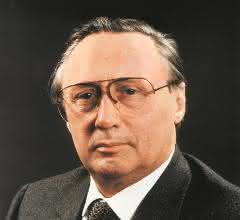
What began with an ingenious idea by Dr.-Ing. E.h. Georg Schaeffler has been continuously developed by Schaeffler engineers over the course of 70 years in terms of performance and type diversity. Compared to a solid needle roller bearing from the 1950s, the rating life has increased by a factor of fifteen and the static load carrying capacity by a factor of three for the same dimensions. The enormously improved power density thanks to the needle roller and cage assembly offers considerable downsizing potential for applications that conserve energy and resources.
The variety of types has also grown steadily: Today, the Schaeffler needle roller bearing portfolio comprises more than 15,000 variants for a wide range of requirements. Since the patent application was filed 70 years ago, Schaeffler has sold a total of over 100 billion needle roller bearings. The length of wire needed to produce 60 billion needle rollers a year would be enough to wind them 18 times around the earth's equator. Almost 170 million needle rollers are produced every day.


You might also be interested in
Hamburg Regional Court issues preliminary injunction against Elite Robots Germany
In the copyright dispute between Teradyne Robotics and Elite Robots Germany, the Hamburg Regional Court has issued an interim injunction. The distribution of the software and products concerned is prohibited, and there is also a comprehensive...
 read more...
Schunk founds tech spin-off for humanoid robot hands
Schunk is bundling its activities in humanoid robotics by founding its own spin-off at the beginning of January. The aim of the new company is to develop modular humanoid robot hands for industrial applications.
read more...Partnership for humanoid robotics
Schaeffler and Neura Robotics jointly develop humanoids
Schaeffler and Neura Robotics will work together in the future to develop and supply key components for humanoid robots. The systems will also be integrated into Schaeffler's global production network.
read more...Yaskawa at the Automatica 2025
AI meets robotics
At this year's Automatica, everything at Yaskawa revolves around AI-based robotics solutions for the smart factory and beyond. As a trade fair highlight, the manufacturer is presenting its new Motoman Next product concept.
read more...Kassow Robots at the Automatica
7-axle vehicle in action
At Automatica, Kassow Robots will be presenting a wide range of industrial applications for production and logistics tasks that provide new impetus for efficiency and flexibility in industrial automation.
read more...Robotics and automation in six exhibition halls
From June 24 to 27, 2025, Automatica, the trade fair for intelligent automation and robotics, will bring industry and research together in six exhibition halls. Preparations are in full swing.
read more...Interview with Jörg Rommelfanger
Robotics in 25 years
The annual IFR report shows that the number of industrial robots is steadily increasing worldwide. They have already played an important role in ABB's portfolio for decades. In an interview with INDUSTRIAL Production, Jörg Rommelfanger, Head of...
read more...Reliable end effector for cobots
Collaborative robots are now widely used for a wide range of handling tasks. SMC offers three versions of the RMH pneumatic gripper for this purpose; it is compatible with cobots from a total of twelve companies.
read more...7-axis cobots with controller in robot base
With the Edge Edition, Kassow Robots has launched the world's first 7-axis cobots with a controller integrated into the robot base.
read more...