
Interview with Stefan Zach, Wieland Group
Close integration of IT with production creates added value
Wieland-Werke has developed its own MES and is constantly adapting it to new production requirements. In this way, the company has consistently moved towards IT-supported production. Stefan Zach, Director Supply Chain Management (IT), explains exactly how this was achieved in an interview with SCOPE.

SCOPE: Mr. Zach, let's start with a background question: Why did Wieland-Werke decide to set up its own MES in the 1990s?
Stefan Zach: 25 years ago, the term MES didn't even exist. Back then, people talked about production control and production control technology. This market was very clear back then. In the course of material flow projects, which required in-house development, the "MES features" were also implemented individually at Wieland. With the BDE (production data acquisition) and MDE (machine data acquisition) modules, Wieland took the first step towards IT-supported production.
SCOPE: As Wieland repeatedly emphasizes, numerous parts of the Wieland Factory Suite (WFS) were purchased because in-house development was not profitable in certain areas. How do you decide whether to buy in or develop in-house?
Zach : We always ask ourselves the make-or-buy question when it comes to major extensions to the scope of functions or extensive refactorings. Our principle is simple: we want to protect core functions and special processes that are optimally tailored to our production through in-house development and remain the intellectual property of the company. Complex software is not usually developed in-house. There are established solutions on the market for this, such as warehouse management or transport control systems or detailed planning software.
We pursue the strategy that only one application needs to be operated by the user in production. Third-party software is seamlessly integrated into our MES. We are currently planning to merge the user interface of the SAP applications with the Wieland Factory Suite. With UI5, a JavaScript framework for creating intuitive web applications, or Fiori as GUI technology (Graphical User Interface), users will no longer be able to tell whether they are working with an SAP or WFS application. Nevertheless, WFS remains technically independent of ERP.
SCOPE: Thanks to its many modules, the WFS connects several levels of the automation pyramid. How did this development come about?
Zach: Like many MES providers, we initially started with functions such as production data, machine data and quality data acquisition. We then gradually expanded our WFS to include other modules such as energy data acquisition, personnel, logistics, shipping and reporting. In recent years, Industry 4.0 has changed the requirements for digitalization and networking of all components in production. As a result, the integration of the plant level has become increasingly important.
We are constantly expanding the functions of our own IoT platform, which we use to integrate the SCADA level with the MES and business level. Among other things, we rely on an IoT gateway based on the Raspberry Pi as an edge computing layer, which can be used to merge the systems and MES levels in a very flexible, non-invasive way.
We are also realizing that the classic automation pyramid is no longer applicable. Cloud computing, IoT possibilities and the impact of digital transformation on the supply chain are blurring the lines. An MES is now more important than ever because it can take over the orchestration of all relevant processes. Our WFS in combination with the IoT platform forms the mediating, coordinating service component between the various architectural layers in production, so to speak.
SCOPE: Wieland uses SAP as its ERP system. WFS, for example, also has a Human Resources module, a classic topic at ERP level. Could you briefly explain the connection between the two systems?
Zach: " Traditional ERP functions such as employee master data management remain in the SAP HR system. With its HR solution, WFS supplements the ERP functions with the HR processes in production. The personnel times and activities of the employees at the plants are recorded in the MES. Overviews show the shift supervisors where which employees are working and the personnel and shift planning is taken into account in the detailed production planning.
SCOPE: How important is the exchange with other companies?
Zach : The exchange with other industrial companies, but also with other MES manufacturers, is very important to us. We gain many valuable insights and impulses, can learn from other companies, but also receive confirmation that we are on the right track with our strategy.
I have been the second member of the board of the MES D.A.CH Association for several years. Communication with the members of the association and other MES users is very valuable. The association makes it possible to build up a network and thus offers an excellent platform for exchanging experiences.
SCOPE: Are you planning to market the WFS outside your group of companies?
Zach: The primary goal of our MES team is initially to operate within the Wieland Group and to further improve the production processes there. Not all Wieland Group sites are yet equipped with the Wieland Factory Suite.
Whether and when we offer our comprehensive MES to the external market is part of the Wieland Group's strategic orientation.
SCOPE: With the MES development, Wieland has set up and expanded its own IT department. What advantages did this bring for Wieland?
Zach: The production processes in a metal industry company are demanding and complex. If you want to design these processes efficiently and support them with software - which is what characterizes an MES - you have to understand how production works and speak the language of production. Our MES consultants embody the symbiosis of IT and production process know-how. With this claim, we are superior to pure software manufacturers. The close integration of IT with production creates the added value that distinguishes Wieland as a quality and service leader.
SCOPE: OT and IT have very different areas of expertise. How did you manage to reconcile the two? Were and are there interdisciplinary teams?
Zach : Two years ago, a "Digital Change Team" was set up at Wieland to drive forward the digital transformation in areas such as production. This interdisciplinary team is made up of employees representing all areas of the company. With new ideas, different approaches and, above all, modern technologies, the team is heralding digital change in the company. Every member of the team is a multiplier, pioneer and driver. This is an important step in the merging of OT and IT. Automation is and will remain a joint topic that can only be managed efficiently if the skills of both disciplines are brought to bear.
SCOPE : Do you also see yourself as a pioneer for Industry 4.0 with the networking of all levels and the consistent integration of OT and IT?
Zach: The exchange with other companies shows us that we are intensively driving forward digitalization in production and have a wealth of experience in the use of new technologies. But we also see that some other industrial companies are even better. Innovation drives us; the time is now ripe for implementing new ideas thanks to the latest digitalization technologies: 'Industry 4.0 now!
The process of dovetailing OT and IT is in flux and will certainly be with us for some time. I see potential for optimization and look forward to leveraging this through the use of assistance systems or new tools. Ultimately, it's a lot of fun to test and use the rapid technological innovations of digital transformation in the production environment. With data glasses and smart watches, we see great potential for establishing the smart factory at Wieland.
SCOPE: What tip would you have for small and medium-sized companies that are on the way to networked production or on the way to becoming a networked company?
Zach: Every company has its own culture and must find its own way - but then follow it consistently. A 1:1 copy of someone else's approach will fail. Our digital change team has been on a "learning journey" for a year and has matured as a result. We have taken the company with us on this process - and the journey continues. Trying things out and learning from other companies is our credo. And above all, 'Doing - not just watching'!
About Stefan Zach
As Director Supply Chain Management (IT), Stefan Zach is responsible for the IT systems and IT processes in production and logistics at the Wieland Group. For many years, he managed MES projects in production and logistics and was responsible for other IT topics such as optimization and integration solutions, ERP and managed services. In his area of responsibility, Mr. Zach relies on an in-house developed MES solution that is used at production sites worldwide.
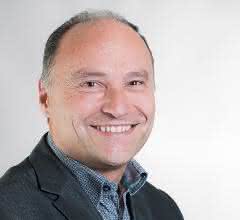
In addition to his role as head of department, Mr. Zach is responsible for a team at Wieland that is driving forward the digital transformation in the company. Mr. Zach has been the second board member of the MES D.A.CH Association for two years and teaches Industry 4.0 at the DHBW Heidenheim.


You might also be interested in
ESTIA aims to strengthen Europe's cloud
New tech alliance for EU sovereignty
Twelve companies, including Dassault Systèmes, are founding the European Sovereign Tech Industry Alliance (ESTIA). The initiative aims to strengthen Europe's technological independence and define requirements for sovereign cloud services. The start...
 read more...
Deutsche Telekom and Nvidia launch one of Europe's largest AI factories
With the Industrial AI Cloud in Munich, Deutsche Telekom and NVIDIA are creating one of the largest AI factories in Europe. Companies can train AI models, carry out simulations and access 10,000 GPUs.
read more...Leveraging data potential with AI and streaming
Huge data treasures are still lying dormant in many manufacturing companies. And yet it is high time that these treasures were unlocked. There is often a lack of resources and capacity to make data usable in real time. Streaming production data can...
read more...More awareness of noise
Dematic offers solutions that are tailored to different cloud environments and reduce environmental impact through reduced material consumption and improved energy efficiency.
read more...Generative AI in the automation environment
The mechanical engineering and automation industry is undergoing profound change. This transformation is being driven by more volatile global trade, geopolitical crises and increasing market pressure, which demands greater agility, technological...
read more...Rigid data structures have had their day
The traditional data center is no longer the center of data. A hybrid cloud storage approach enables manufacturing companies to both meet the current requirements of data-intensive processes and future-proof their infrastructure.
read more...Software as a service in three stages
CIM Database Cloud is a new out-of-the-box solution from Contact for end-to-end digital product development.
read more...How production can benefit from AI
Together with AI technology, IIoT networking makes it possible to better control machine parameters and optimize quality with predictive quality. Downtimes and set-up times can also be further minimized. Cloud platforms also make these technologies...
read more...More expertise for digital engineering
Altair, a computational science and artificial intelligence (AI) company, has acquired OmniV, a technology from Michigan, USA-based software company XLDyn.
read more...