
Product management
Performance and security in the cloud
Adler Pelzer is the world's number two in acoustic and thermal vehicle components. The company has improved cross-functional collaboration in the development phase and increased cost transparency with globally standardized project management software. Since switching to the cloud, the number of users has increased rapidly.
The Adler Pelzer Group develops and manufactures floor panels, headliners, trunk systems, engine compartment insulation and other components that have an impact on vehicle acoustics. The globally active company is both a development partner for Volkswagen, BMW, Mercedes and other OEMs and a contract manufacturer that builds or has built the tools required for production. "At normal capacity, we produce 2.1 million parts every day," says Karsten Meise, globally responsible for Quality, HSE & Management Systems at Adler Pelzer Holding in Hagen.
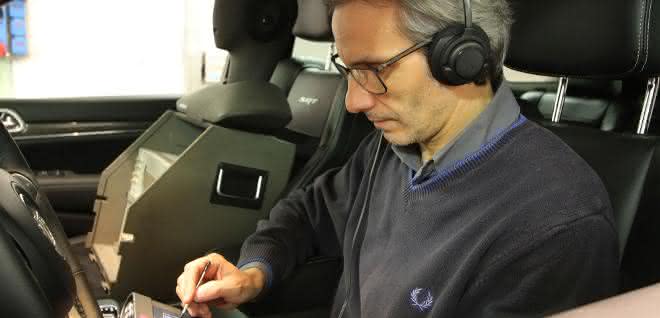
Last year, the company grew through the acquisition of a majority stake in the STS Group and Faurecia's "Acoustics and Soft Trim" business and now has around 15,000 employees at 105 locations, spread across five geographical business units (BU). Development takes place at 13 of these locations and production at 89. Adler Pelzer generated sales of 1.17 billion euros in the 2020 financial year.
Globally standardized project management
Adler Pelzer faces a double challenge in its customer projects: the company must work with the client to develop a product that can be installed efficiently in the vehicles and at the same time can be manufactured in series at optimized cost. Depending on the production location, this may mean more or less automation. After customer approval, the project work therefore shifts to the regional industrialization teams, which design the tools and validate and optimize the series processes.
"Not only do we have to coordinate with the customer's interdisciplinary teams, but we also have to optimize the timing of our own supply chain and implement changes precisely," says Meise. "There are only a few prototype tools left, which means we go straight to steel and iron, which makes changes expensive and time-consuming. Project Office helps us to synchronize the data statuses cleanly and document them precisely."
Adler Pelzer has been using Contact Software's project management solution since the beginning of 2017, initially as an on-premise solution with several server locations. The automotive supplier was pursuing the strategic goal of standardizing project management across locations and business units, improving the global availability of project data and thus increasing transparency. The complexity of the projects could no longer be managed with manually maintained Excel spreadsheets, as Meise explains. "There were also clear guidelines from our customers on how we had to manage our projects in order to guarantee delivery reliability."
Switching to the cloud
After a benchmark, Project Office was chosen for several reasons: Firstly, Adler Pelzer preferred a solution tailored to the development process. Secondly, they were looking for a strong partner with whom they could implement the IT project internationally and who was prepared to further develop the software in line with customer requirements. "We are constantly implementing improvement ideas with Contact Software," says Meise. "It's a win-win situation for both sides." Thirdly, the powerful functions for multi-project management were convincing.
Adler Pelzer migrated the Project Office application to the cloud in mid-2021. The decisive factors were not so much cost considerations, but rather the higher performance of the SaaS solution (Software as a Service) compared to the on-premise installation and, above all, the issue of cybersecurity. "Externally managed systems offer a much higher level of security than we can guarantee with our internal resources," emphasizes Meise. "That's why we will continue to move towards the cloud as a company. We have just converted the first production site during ongoing operations, where there are no longer any servers."
Another advantage of the SaaS solution is the continuous updates: every product improvement or further development is automatically imported so that all applications are always up to date. The company-specific eLearning platform, which Adler Pelzer has set up with course material from Contact, ensures systematic training for users worldwide. How intensively they use the system is determined on the basis of user numbers and other key indicators.
Number of users more than doubled
The SaaS solution offers a high level of user-friendliness with its web interface, which can be easily personalized as required. As a result, user acceptance has increased significantly - including at management level, as Meise emphasizes. The number of Project Office users more than doubled just six months after the cloud migration.
Around 600 employees are currently working with the solution: project managers, purchasers, tool developers, plant managers, production managers, quality and logistics experts and other specialists. The former Faurecia sites will add another 150. The global PLM manager at Adler Pelzer assumes that the number of users will rise to over 1,000 once all locations in Asia and South America have been connected.
The globally standardized project management makes it easier for employees, who are often involved in several projects, to keep track of the status of things. Adler Pelzer has defined a standard template with around 400 tasks for all plants, customers and products, from which the project teams select the tasks that are relevant to them. They can also always find their project information in the same places. This saves a lot of time and reduces the effort required to make changes, as the data is available to all project members at the same time.
More cost transparency
"The biggest benefit of Project Office is that we have a better overview of the contribution margin of our products and the tool costs during development," says Meise. "This means we can take countermeasures earlier if the projects do not reflect the margins negotiated at the start of development and are more profitable at the start of series production."
Adler Pelzer's vision is to use Project Office not only as a tool for project management between acquisition and the start of production, but for the entire product lifecycle. The automotive supplier wants to expand the SaaS solution into a lifecycle knowledge database in order to have more targeted access to project expertise and lessons learned. It should contain all changes, including those from the current series, says Meise. "I also hope that other topics that are important to us, such as mapping the VDA/TISAX standard for information security in vehicle construction, will be included in the expansion of the standard software."


You might also be interested in
"We are clearly different from the competition"
The IT company 21unity offers a range of hardware and software services, as well as traditional services. Andreas Mühlbauer spoke to Managing Director Anja I. Gondolf about the company's appearance at the Hannover Messe, its services and future...
 read more...
Think digital, act local
When it comes to industrial damping technology, on-site advice is often very valuable for engineers and designers.
read more...Plagiarius 2024 negative prize
On January 26, 2024, the Plagiarius campaign awarded its dreaded "Plagiarius" negative prize for the 48th time to manufacturers and retailers of particularly brazen counterfeits and fakes.
read more...Spindel Full Service records second-best...
Maintenance as an economic success factor
Spindel Full Service, the spindle repair specialist from Baden-Württemberg, can look back on its second-best financial year in its history - with 15% growth compared to the previous year. And the further forecast also looks good.
read more...Thyssenkrupp and Novelis cooperate
Platform for the circular economy
With a platform for the circular economy in the automotive industry, the two companies Thyssenkrupp Materials Services and Novelis want to set new standards for the recycling of used materials. The open platform will enable access to larger...
read more...How production can benefit from AI
Together with AI technology, IIoT networking makes it possible to better control machine parameters and optimize quality with predictive quality. Downtimes and set-up times can also be further minimized. Cloud platforms also make these technologies...
read more...Marco Ghirardello takes the lead
Fanuc has appointed Marco Ghirardello (48) as the new President and CEO of Fanuc Europe. Ghirardello succeeds Shinichi Tanzawa, who has led the company since 2016 and will take on a new role at Fanuc's headquarters in Japan.
read more...Efficient robot monitoring
Microchips are installed almost everywhere - whether in smartphones, washing machines or cars. With increasing digitalization, the demand for semiconductors has been growing rapidly in all areas of the economy for years.
read more...Everything on one platform
Functional and powerful tools are essential for professional work on the construction site, in the workshop or when carrying out repairs.
read more...