
Autonomous driving
New simulation solution from Siemens
Siemens has announced a groundbreaking solution for the development of autonomous vehicles at the Siemens U.S. Innovation Day in Chicago. As part of the Simcenter portfolio, the new solution not only reduces the need for extensive physical prototypes, but also significantly reduces the number of logged test kilometers required to prove the safety of autonomous vehicles.
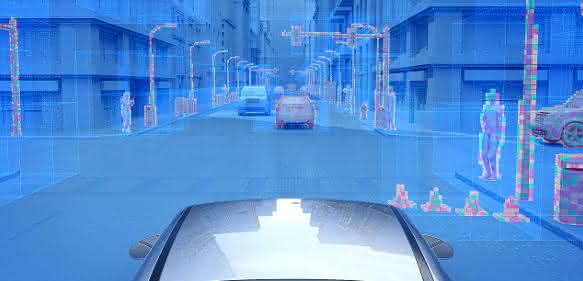
According to a study by the Rand Corporation, the prototypes of autonomous vehicles would have to travel hundreds of millions of kilometers, and in some cases even hundreds of billions of kilometers, over several decades to prove their reliability in terms of fatal accidents and injuries. The authors of the study see this result as incompatible with the imminent market maturity of self-driving cars. As a possible solution to these challenges, the researchers point to innovative test methods such as modern simulation technologies.
Using advanced physical simulations and innovative sensor data processing technologies, the new solution helps automotive manufacturers and their suppliers to meet the challenges in this industry and shorten the development, verification and validation of self-driving vehicles.
The new solution integrates autonomous driving technologies from Siemens' latest acquisitions Mentor Graphics and TASS International. TASS's PreScan environment simulates highly realistic raw physical data from LiDAR, radar and camera sensors from an unlimited number of possible driving scenarios, traffic situations and other parameters. This data is fed into Mentor's DRS360 platform, where it is fused in real time into a high-resolution model of the vehicle environment and driving conditions. Users can test and refine proprietary algorithms for critical tasks such as object detection, driving guidelines, etc. using the high perception and processing power of the DRS360 platform.
"Car manufacturers are quickly realizing that physical prototypes and road tests alone cannot reproduce the multitude of complex driving situations of self-driving cars. In fact, many of the deadly scenarios are impossible to reproduce, while others are so dangerous that ethical considerations preclude preliminary testing," explains Dr. Jan Leuridan, Senior Vice President, Simulation and Test Solutions, Siemens PLM Software. "It is clear that the imminent market readiness of fully autonomous vehicles is highly dependent on advanced physical simulation technologies, where Siemens is setting the pace for the global automotive industry."
To deliver the most comprehensive and accurate solution possible, Siemens PLM Software is working with many of the world's leading manufacturers of LiDAR, radar and vision sensing products to develop physical 3D simulations of specific sensor modules. The simulated sensors are compatible with Siemens' new tool chain. For optimum accuracy, they are matched with detailed design information from sensor suppliers and validated with real measurement data.
One of the most important sensor partners is Cepton Technologies. This is an innovative company based in Silicon Valley that is characterized by its long-range LiDAR sensors with a small footprint. Further sensor partners will be announced later this year.
"Automated vehicle developers are under increasing pressure to accelerate the development, validation and performance of their autonomous driving solutions. That's why simulation technology is becoming increasingly valuable to them," comments Phil Magney, founder and director of AV research center VSI Labs. "Siemens now offers simulation solutions for every stage of the development process, from sensors and processors to subsystems and the entire vehicle. A wider range of simulation solutions gives Siemens the opportunity to play a leading role in the validation and verification of automated vehicles."
According to Siemens PLM Software, the automated driving solution will be available from the third quarter of 2018.


You might also be interested in
Basler acquires 76% of Indian image processor
Basler, supplier of image processing components for computer vision solutions, has acquired 76% of the Indian sales partner Alpha TechSys Automation.
 read more...
Process monitoring and fault detection
Cameras ensure quality during laser melting
Powder bed-based laser melting (PBF-LB/M) opens up new possibilities in additive manufacturing. Modern camera systems provide crucial process data to further increase quality and efficiency.
read more...Vision Sensor is three times faster than its predecessor
The 'CS-62' vision sensor from di-soric is around three times faster than its predecessor, the 'CS-60'. In combination with the 'nVision-i 25.1' software, it enables image processing solutions that were previously reserved for smart cameras.
read more...Thermal imaging cameras for quality control
Automated thermal imaging cameras are often suitable for quality control applications where temperature plays a role. However, while there are various solutions on the market for slow processes, it is challenging to select a camera that reliably...
read more...Easy entry into industrial VGA thermography
Reliable temperature measurement is a prerequisite for the success of many industrial processes. Berlin-based manufacturer Optris presents the Xi 640 infrared camera, a new member of its Compact Line, which enables non-contact temperature...
read more...Powder bed-based laser melting optimized
Aconity3D has set itself the goal of optimizing the stability of the manufacturing method of powder bed-based laser melting and thereby promoting its use in a wide range of industries. By using high-speed industrial cameras from SVS-Vistek, the...
read more...INDUSTRIAL Production Products of the year...
2nd place, category handling, assembly and production logistics: SICK
safeVisionary2 is the first 3D time-of-flight camera with Performance Level c safety certification. It enables safe three-dimensional environmental detection and won 2nd place in the competition for Product of the Year 2024 in the handling, assembly...
read more...Nomination Products of the Year 2024
SICK: Camera systems safeVisionary2
safeVisionary2 is the first 3D time-of-flight camera with Performance Level c safety certification. It enables safe three-dimensional environmental detection and has been nominated in the 2024 Product of the Year competition in the handling,...
read more...AI vision brings additional opportunities
The seamless integration of AI into the consumer sector has helped to improve our quality of life and make interactions with technology more efficient. In industry, AI vision with machine learning opens up new possibilities that are not covered by...
read more...