

Interview with Harald Behnstedt from ICP Germany
Green IT: Making IT products greener
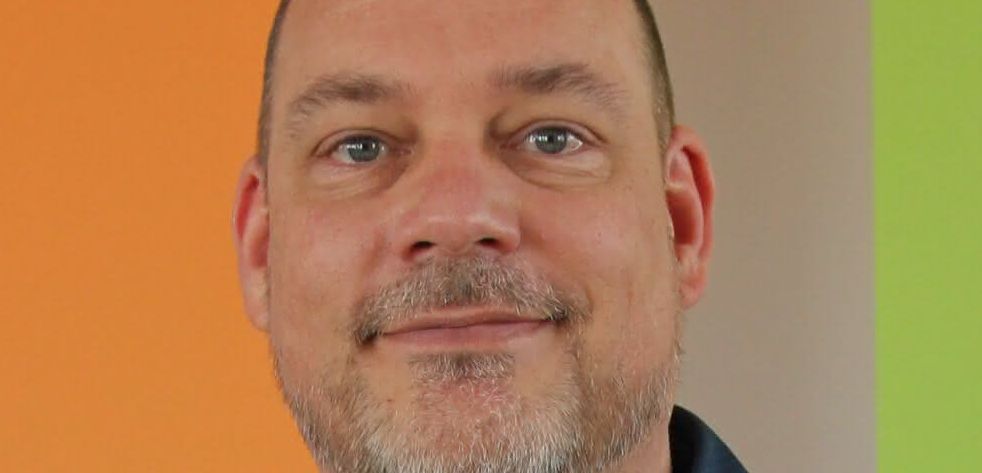
Harald Behnstedt, Managing Director of distributor ICP Germany, talks in an interview about the "Green IT" corporate strategy and what his company is doing to become more sustainable in many areas.
What does ICP mean by "Green IT"?
Green IT extends to energy-saving computer systems as well as environmental products and an awareness of people and nature. Green IT refers not only to our industrial computers, but also to a responsible supply chain, environmental protection and policy. We have to look at the entire process, and it is important for us to constantly change our perspective and keep the interests of our customers, partners and suppliers in mind. We then put everything to the test in order to arrive at new perceptions and draw conclusions.
How are you positioning ICP for the future?
In these volatile times, it is important for us to set our course for the future. We want our company and our IT products and services to be "greener". This also includes a "greener" design of our industrial PCs. Step by step, we want to drive forward and develop new green IT standards. This involves all issues relating to the avoidance of emissions, longer product cycles and recycling, as well as carbon offsetting. One way, for example, is to bundle the procurement of industrial computers rather than procuring them on an order-by-order basis in order to optimize the number of freight transports by air and, if possible, shift these to rail in the future.
What does "going greener" mean for your company?
We have already initiated a number of measures for our internal processes and are in the process of implementing many small steps, such as working as digitally and paperless as possible, promoting mobile working and taking fewer business trips. We also offer leasing services for our team with JobRad.
What do "green" industrial computers look like for you?
Our Green IT products are characterized by many small and large well thought-out features. For example, they have a customized bios and adapted power supplies. Power-saving modes are activated on the software and bios side and power supplies with very high efficiency are used so that the finished computers are particularly energy-efficient. In order to also save carbon dioxide during transportation, we procure our components in large quantities by sea freight, pre-assemble them and store the finished systems. This means they are available quickly.
Climate change has an impact on the global economy, global supply chains and the availability of resources. How are you tackling these issues?
Saving carbon dioxide is our top priority. We have therefore examined which specific adjustments we can make to implement sustainable changes and help protect the climate. Our first priority was the packaging and shipping of our hardware components. We are gradually switching to environmentally friendly, ecological packaging materials from certified manufacturers and shipping in a climate-neutral way.
How do you analyze your company's carbon footprint?
One of the many points we are pursuing is the reduction of our carbon footprint. We record this in order to identify the areas in which we can directly or indirectly save carbon dioxide. It is important to me to implement these measures quickly wherever they make sense and are feasible. We currently know the values that are recorded in Scope 1 and 2. We are currently working on the data in Scope 3, which is more difficult to record.


You might also be interested in
"We are clearly different from the competition"
The IT company 21unity offers a range of hardware and software services, as well as traditional services. Andreas Mühlbauer spoke to Managing Director Anja I. Gondolf about the company's appearance at the Hannover Messe, its services and future...
 read more...
Digital maintenance with AI
Synostik, an IT service provider from Oebisfelde, presented its latest tools for the intelligent maintenance, inspection and repair of industrial production facilities.
read more...The world is unsafe
In its current situation report from October 25, the Federal Office for Information Security (BSI) describes and analyzes the current IT security situation using examples and incidents from practice.
read more...Cyber attack!
The risk of cyber attacks has increased rapidly in recent years. Internal IT employees are often unable to efficiently prevent an attack or respond adequately to an attack.
read more...Commissioning algorithms for industrial production
Synostik, an IT service provider from Oebisfelde, is presenting the further development of commissioning algorithms to complement its diagnostic software tools for IIoT systems.
read more...Seamless product and process traceability
After exploring the market, a plastics processor decided in 2019 to have WSW Software develop a new MES. The web-based ME system called Valeris is now in productive use and is marketed as an industry-neutral standard solution.
read more...How AI brings practical added value
Artificial intelligence automates processes, maintains machines, makes decisions and finds solutions to tricky problems. Companies can benefit enormously from this.
read more...Small, specialized companies respond successfully
The coronavirus pandemic has affected German companies in very different ways. According to a Hays study, small, specialized companies in particular have been successful.
read more...Kuka and T-Systems cooperate
Kuka and T-Systems enter into a partnership. Together, they want to make companies fit for digitalization.
read more...