

3D CAD/CAM software in robot development
The future of robotics
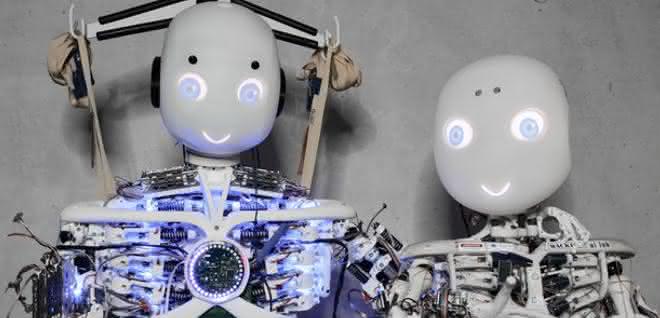
The human body is a masterpiece: agile, dynamic, flexible and yet strong. Wounds heal themselves and it is completely silent when in use. A skeleton that has been perfected over millions of years allows it to walk upright, while the complex interplay of countless muscles, tendons and joints enables it to work skillfully and delicately with its hands.
At present, robots are still a long way from this peak evolutionary achievement. However, a team of developers from the non-profit project Roboy in Munich has set itself the goal of developing a robot that comes as close as possible to humans in its entire appearance.
Roboy 2.0 (pronounced Roboy two-oh) is an interdisciplinary basic research project with a rather ambitious development plan: "Our goal is to construct a humanoid robot that is just as functional as the human body," explains Rafael Hostettler, head of the Roboy project. "It should not only be able to move like a human, but also see, hear and interact like us."
Open source research lays the foundations
With over 100 students, doctoral candidates and graduates from the Technical University of Munich, the team brings together experts from a wide range of disciplines. Together with a network of scientists from all over the world, they have been working for years on the development of the humanoid robot. The Royal Institute of Technology in Stockholm (neuroprosthetics), the Chinese University of Hong Kong (algorithms for controlling the robot), Oxford University (stress on artificial tendons during their growth) and, of course, TUM (robotics & real-time systems, product development methods) are, for example, permanent cooperation partners.
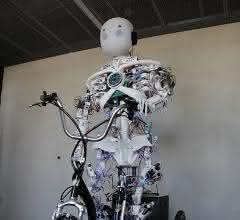
At the current stage of development, Roboy can already pedal on a bike, recognize people and hold simple conversations. By the fall, he should be able to play the xylophone - a particularly complex task for robots due to the dynamics required - and next year he should be able to sell ice cream. By 2020, it should be able to carry out basic medical diagnostics. The entire research is open source and lays the foundations for robotics, artificial intelligence and audiovisual data processing.
3D CAD/CAM software for the design process
The structure, weight and nature of the bone-like components also play an important role in this context. Creating a mechanical replica of the human body is a very complex task. Engineers use innovative methods such as 3D printing, generative design and other state-of-the-art technological processes to replicate bones, muscles and tendons instead of simply replacing joints with motors, as is usually the case in robot construction.
The team is therefore using Autodesk Fusion 360 with generative design to develop Roboy 2.0. This allows the scientists to significantly reduce the weight of important components of the robot in the generative design process while maintaining stability.
"If we save a few grams of weight in the hand, the forces that the hips have to withstand are reduced and we can make them lighter accordingly," says Hostettler. "This in turn allows us to save weight on all other components, which makes Roboy even more agile." This is not an end in itself, as Roboy should learn to walk independently in the long term. For the first steps, a light yet stable stand is essential.
Generative design is currently being applied to the hip in Roboy 2.0. Thanks to the calculations in the cloud, the team only needed three days to develop the first prototype version. The next parts to be reworked are the head shell and the motor housing. In the medium term, the spine with the robot's moving elements is to be optimized.
Agile collaboration as the key to success
Autodesk Fusion 360 not only serves as a design and work platform for researchers, but also enables them to collaborate across locations and countries. The tool was developed as an agile working environment, enabling researchers to work in short development cycles, known as sprints. Old versions can be restored quickly or two options can be tested in parallel. Agile methods help here by establishing hierarchy-free communication and allowing rapid interaction with prototypes. The individual project groups can thus react quickly to changes.
Another advantage of Autodesk Fusion 360 is that designs created in it are suitable for 3D printing. Files created in Fusion therefore do not need to be prepared for printing,
but can be converted directly into 3D-printed objects without any compilation effort.
Almost all parts of Roboy 2.0 are laser-sintered, i.e. 3D-printed in plastic-like materials.
"Traditional milled parts take around six to eight weeks to deliver - an eternity in agile product development," explained Hostettler. "We have already developed three to four new product variants in this period."
Another advantage is that the freedom of geometry offered by 3D printing allows the team to design components as they should be, rather than as they have to be created due to manufacturing constraints.
Music of the future with practical relevance
Roboy 2.0 is an example of the human spirit of development. Even if the robot itself is still primarily used for basic research, the knowledge gained in the course of its development is already having an impact on numerous other sectors. The project is being used in human-robot collaboration. The project is also invaluable for the development of innovative prostheses or exoskeletons. Neuroscientists are using the knowledge gained in the Roboy 2.0 project to better understand how the human body coordinates the interaction of over 600 muscles.
According to documents from Autodesk / ag


You might also be interested in
ESTIA aims to strengthen Europe's cloud
New tech alliance for EU sovereignty
Twelve companies, including Dassault Systèmes, are founding the European Sovereign Tech Industry Alliance (ESTIA). The initiative aims to strengthen Europe's technological independence and define requirements for sovereign cloud services. The start...
 read more...
Deutsche Telekom and Nvidia launch one of Europe's largest AI factories
With the Industrial AI Cloud in Munich, Deutsche Telekom and NVIDIA are creating one of the largest AI factories in Europe. Companies can train AI models, carry out simulations and access 10,000 GPUs.
read more...Leveraging data potential with AI and streaming
Huge data treasures are still lying dormant in many manufacturing companies. And yet it is high time that these treasures were unlocked. There is often a lack of resources and capacity to make data usable in real time. Streaming production data can...
read more...More awareness of noise
Dematic offers solutions that are tailored to different cloud environments and reduce environmental impact through reduced material consumption and improved energy efficiency.
read more...Generative AI in the automation environment
The mechanical engineering and automation industry is undergoing profound change. This transformation is being driven by more volatile global trade, geopolitical crises and increasing market pressure, which demands greater agility, technological...
read more...Rigid data structures have had their day
The traditional data center is no longer the center of data. A hybrid cloud storage approach enables manufacturing companies to both meet the current requirements of data-intensive processes and future-proof their infrastructure.
read more...Software as a service in three stages
CIM Database Cloud is a new out-of-the-box solution from Contact for end-to-end digital product development.
read more...How production can benefit from AI
Together with AI technology, IIoT networking makes it possible to better control machine parameters and optimize quality with predictive quality. Downtimes and set-up times can also be further minimized. Cloud platforms also make these technologies...
read more...More expertise for digital engineering
Altair, a computational science and artificial intelligence (AI) company, has acquired OmniV, a technology from Michigan, USA-based software company XLDyn.
read more...