
Subscribe to industrial machines instead of buying them
Why "servitization" offers OEMs future potential
Machine plus service equals future: the formula for success in the manufacturing industry lies in servitization. In this business model, manufacturers not only sell products, but also an additional value-added service. Customer-friendly service packages and flexible subscriptions for industrial machines are in demand - keyword "Product as a Service". How should OEMs prepare for this change?
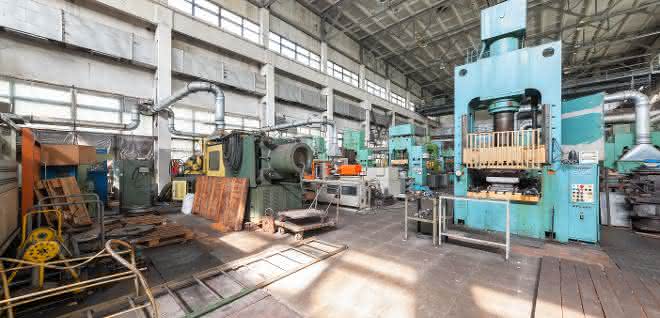
Large, durable goods such as industrial machinery often have a lifespan of several decades - and require high levels of investment. Customers today therefore expect added value that goes beyond the mere purchase of the product. In English-speaking countries, this sales model is known as "product as a service". This means that the customer does not purchase a physical item, but pays a device subscription with a monthly service fee.
Industrial goods on demand
It is hardly surprising that large device users are now also demanding a subscription-based "always on" service. After all, we live in a world where consumers can stream any type of music or movie at the touch of a button via Spotify and Netflix subscriptions. The same should now be possible for industrial machines used on a daily basis. However, there are striking differences between the Spotify and Netflix offerings and a subscription to industrial goods: While today's passionate film fan forgoes an extensive DVD collection and instead digitally accesses hundreds of films and series of their choice, the desire for immediate availability of various industrial goods at a flat rate currently still mostly exceeds the manufacturers' ability to deliver.
As a result, OEMs need to prepare for customer expectations of a subscription service, while also optimizing their current break-fix service operations. In the latter service model, which many manufacturers use today, a machine is sold and delivered to the customer. The following scenario may then play out: The machine is working - a defect occurs - a service call follows - a service part is sold and shipped - a field service technician carries out the repair. Such machine defects lead to immense operational disruptions, resulting in productivity losses, poor parts availability or excess stock. The customer is the one who suffers from all the risks and costs.
Proactive maintenance as a game changer
Instead of the classic break-fix service, the overarching goal of OEMs should be a proactive service in which impending device faults are detected and rectified proactively so that a complete failure cannot occur in the first place. With this proactive maintenance model, which is a further development of the established predictive maintenance model, manufacturers must ensure that they have a sophisticated inventory management system. This is the only way to ensure that spare parts are available anytime and anywhere. As there will always be unforeseen incidents, break-fix services are here to stay, but to remain successful in the future, manufacturers must invest in new technologies to fully optimize the spare parts supply chain.
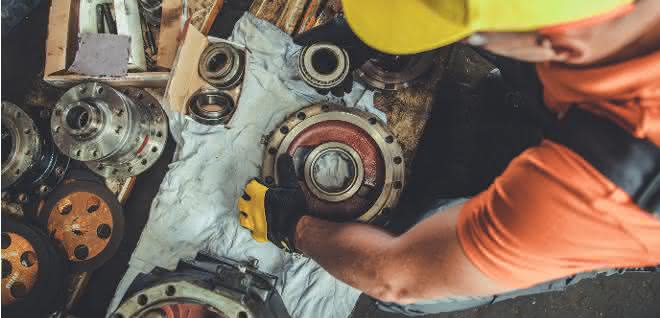
Helpful tools for optimizing product availability include software solutions for tracking supplier performance and for inventory and spare parts management. The use of outdated tools such as Excel spreadsheets is no longer sufficient to meet customers' needs for maximum product availability while keeping manufacturers' costs low. Instead, it is advisable for OEMs to link their existing solutions such as ERP systems with inventory management and supply chain management software in a transparent cloud environment. This enables OEMs to analyze, manage and control their operational resources in real time - even in a global network.
These analysis options allow manufacturers to carry out proactive maintenance, which is the basis of a successful subscription service for industrial goods. Information on service life, machine status and maintenance events can be used by the analysis tools to proactively prevent impending equipment failures. By providing OEMs with real-time insight into their customers' equipment environment and an accurate view of equipment utilization, better decisions can also be made regarding inventory management and service subscription pricing. However, knowing that a part is about to fail is not enough to ensure machine availability. It is crucial to record the relevant part number and individual customers within the supply chain. A centrally available master data management system that reconciles OEM master data with dealer sales figures is used for this purpose.
By expanding a company's data infrastructure, the service representative can gain better insight into what is happening in each region and recognize where there are potential delays in shipping inventory.
Keyword "service staff": To prepare their teams for subscription models, OEMs need to train their existing staff and hire new talented employees. After all, poor service or repair results can be a driving factor for declining customer loyalty. OEMs ensure consistently high service quality through continuous employee training on new products and tools.
Conclusion: Service-centric subscription models need to be prepared

The majority of manufacturers are still in the early stages of planning subscription services for the manufacturing industry - or have not yet started. For them, subscription services mean greater responsibility in terms of equipment uptime, so they need to control critical aspects of the service delivery process. This includes the quality of spare parts and the quality of technicians. OEMs also need to prepare for the changing pricing of subscription models and plan their maintenance proactively. These adjustments to the servitization model are necessary for manufacturers to remain competitive within the manufacturing industry in the future. OEMs are therefore faced with an important decision: either fully embrace servitization or maintain the status quo.
Martin Bilstein, Head of Sales DACH at Syncron / mho


You might also be interested in
ESTIA aims to strengthen Europe's cloud
New tech alliance for EU sovereignty
Twelve companies, including Dassault Systèmes, are founding the European Sovereign Tech Industry Alliance (ESTIA). The initiative aims to strengthen Europe's technological independence and define requirements for sovereign cloud services. The start...
 read more...
Deutsche Telekom and Nvidia launch one of Europe's largest AI factories
With the Industrial AI Cloud in Munich, Deutsche Telekom and NVIDIA are creating one of the largest AI factories in Europe. Companies can train AI models, carry out simulations and access 10,000 GPUs.
read more...Leveraging data potential with AI and streaming
Huge data treasures are still lying dormant in many manufacturing companies. And yet it is high time that these treasures were unlocked. There is often a lack of resources and capacity to make data usable in real time. Streaming production data can...
read more...More awareness of noise
Dematic offers solutions that are tailored to different cloud environments and reduce environmental impact through reduced material consumption and improved energy efficiency.
read more...Generative AI in the automation environment
The mechanical engineering and automation industry is undergoing profound change. This transformation is being driven by more volatile global trade, geopolitical crises and increasing market pressure, which demands greater agility, technological...
read more...Rigid data structures have had their day
The traditional data center is no longer the center of data. A hybrid cloud storage approach enables manufacturing companies to both meet the current requirements of data-intensive processes and future-proof their infrastructure.
read more...Software as a service in three stages
CIM Database Cloud is a new out-of-the-box solution from Contact for end-to-end digital product development.
read more...How production can benefit from AI
Together with AI technology, IIoT networking makes it possible to better control machine parameters and optimize quality with predictive quality. Downtimes and set-up times can also be further minimized. Cloud platforms also make these technologies...
read more...More expertise for digital engineering
Altair, a computational science and artificial intelligence (AI) company, has acquired OmniV, a technology from Michigan, USA-based software company XLDyn.
read more...