
Plant engineering
RLTR method reduces construction time for major projects
The construction of new production and chemical plants is time-consuming and requires structured and efficient planning. The "Radical Lead Time Reduction" method, or RLTR for short, helps: it can be used to reduce lead times in plant construction enormously. By Christian Mannigel
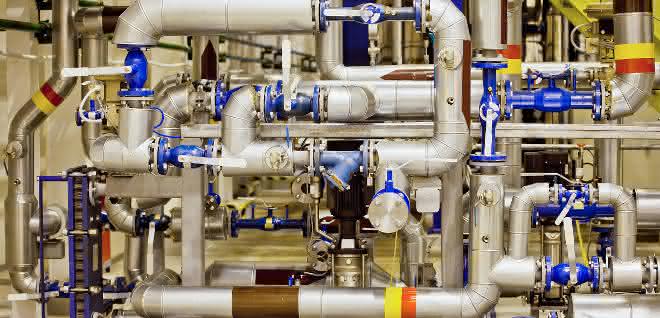
The market situation in the chemical plant construction sector, among others, remains challenging. Despite a favorable economic situation in the sector, EPC (engineering, procurement, construction) companies are increasingly facing the challenge of competing for ever larger projects with increasing risks. At the same time, they need to differentiate themselves by implementing digitalized structures and offering new services. In addition, the lead time for the construction of large-scale projects is a decisive competitive factor for them. Of course, this also applies to the chemical and manufacturing companies themselves. After all, the shorter the time to market, the sooner their investment pays for itself.
A leading supplier in plant construction has opted for the "Radical Lead Time Reduction" (RLTR) method developed by the Düsseldorf-based management consultancy Maexpartners and successfully implemented it with their support. This has made it possible to drastically reduce the installation time of systems and cut costs. "With average lead times of two to three years in large-scale plant construction and project volumes of usually over 100 million euros, this naturally has a significant impact," emphasizes Thorsten Helmich, Partner at Maexpartners. This is because the significantly faster construction and the resulting earlier commissioning improve the profitability calculation enormously.
RLTR method versus push principle

The consultant is familiar with the initial situation of his client, who does not wish to be identified by name, and its previous approach to the construction of plants from many other projects. The company is represented internationally and has a very complex supplier network. It either manufactures the key components for the construction of plants itself or with the support of contractual partners. Other subcontractors are also frequently involved. The coordination of these three parties and the complexity of the interfaces sometimes lead to an unstable implementation process with rework and delays for large, sophisticated and complex components.
Like many other EPC providers, the chemical company has so far practiced traditional forward planning in the construction of its plants: starting with engineering, followed by procurement, component manufacturing and logistics through to assembly and construction of the plant. Even though the parallelization of activities is common practice, each subsequent phase can only be tackled in a stable manner after the preliminary phase has been completed.
This approach based on the push principle takes a lot of time. As a result, traditional planning is either fast, but unstable and therefore prone to errors, or too slow, but stable with low error costs. The throughput time and processing stability are therefore always diametrically opposed in conventional processing. The RLTR method resolves this conflict.
Modularize, plan and control construction phases
RLTR is a planning methodology that can be used for all complex plant projects such as steelworks, mechanical engineering, shipbuilding, etc. It is based on a fundamentally different planning structure that aims to optimize processes holistically at all stages of plant construction. The sequence of the individual phases and activities is reversed.
Project planning begins with the completed system in mind. This means that the intended use of the plant as well as its individual components and process sequences are clearly defined. Further planning is then carried out backwards, i.e. from the built object via logistics, production and procurement back to engineering. To do this, it is first necessary to modularize the construction site and divide it into many smaller construction phases. Maexpartners calls these construction units or installation kits. They make it possible to plan exactly when a component needs to be in the right place and what it needs to look like, as well as which resources and documents are required for installation. The delivery times specified in the component suppliers' offers are taken into account in the planning phases.
The installation kits set the pace for planning. In this respect, each individual construction stage requires the previous step to be completed. In a sense, it 'pulls' the result of the previous work as a basis, as well as all the necessary information. This pull system makes the process fundamentally different from the classic approach. "This means that we determine at the planning stage exactly when which installations are to be carried out, which parts have to be ready on time and how they have to be constructed," explains Helmich. This means that the construction site 'pulls' the required previous work results throughout the entire construction process.
Modularization into individual construction phases also pursues the goal of achieving a high degree of simultaneity and synchronization of the individual work steps. Certain work processes therefore no longer take place one after the other, but overlap in time. This is familiar from concurrent engineering, but differs from RLTR in that it uses the pull principle.
To achieve this, all work packages must be precisely defined. This includes recording all the necessary materials, drawings, technical data and other relevant information. Templates for predefined sequences and schedules, developed on the basis of many years of experience, are used for this detailed planning. These templates are customized depending on the system. This makes it possible to shorten the set-up phases of large projects, which previously often took three months, to two weeks or less - while at the same time increasing planning quality.
Master schedule is the most important management tool
Once all of these installation kits have been fully recorded, they are included in the master schedule. This is the most important planning, controlling and management tool in project implementation. It contains the dates for the start and completion of a work package, the duration of individual measures and the flow of activities. As an all-encompassing and integrated management tool, the master schedule is seamlessly connected to specific IT solutions such as the construction site software "Insite LMS" or the project management program "Primavera", which in turn has an interface to SAP.
The master time schedule (MTS) is now about linking the individual installation kits as planning sequences with all previous activities from engineering, procurement, production and logistics and defining precise interfaces. This makes it possible to optimize the production flow. For example, work sequences that take up too much time can be split up again into smaller packages to ensure even greater parallelism. "Even more effective than this, however, is the fact that we create a real flow between the individual measures," explains Helmich. "This is by far the biggest lever for increasing efficiency."
| Master Time Schedule |
|
The Master Time Schedule (MTS) is one of the most important management tools for project management. The schedule is managed by the Master Time Scheduler, who in turn is responsible for the top project management. Below the Master Time Schedule, which is usually a Level 3 plan, there are Level 4 plans. These are the individual plans of the supplying functions (e.g. detailed plan for engineering, production planning, construction site plan). There are two options here:
|
Shorter lead time and cost reduction
This lever also had an effect on the chemical company's plant construction. After two weeks, the entire project planning was stable and the lead time was reduced by 34 percent. In addition, the structured RLTR planning made it possible to stabilize project implementation.
"When it comes to organizing thousands of work steps and millions of parts, reliable and optimized processing is understandably elementary," emphasizes Helmich. This in turn results in a considerable reduction in non-conformance costs, i.e. the costs that lead to discrepancies between the preliminary and final costing due to errors in development, planning, procurement and implementation. In the chemical company's plant project, it was possible to reduce these costs by 32 percent.
The reduction in overall plant construction time is usually even greater when using the RTLR method. The more complex the project, the greater the effect. Although a single production line in mechanical engineering can also be realized considerably faster, the effect is all the greater with a large plant. In principle, however, implementation requires a great deal of industrial experience and corresponding know-how. In this respect, it pays to have professional support at your side. "We have already demonstrably achieved almost halving the throughput time with the same capacitive framework conditions," states Helmich and sums up: "RLTR is therefore the 'game changer' in plant engineering and will ensure new conditions there."
RLTR - a methodology for planning software
RLTR is first and foremost a planning methodology through which changes are then accommodated in the users' processing systems, for example the work package codes or the codes for the installation kits. Of course, there are several interfaces between the work steps, for example between engineering and procurement processes. With RLTR, these sequences are optimized across functions, so this always has an impact on the interfaces between the different tools. These are adapted as part of the planning projects.
The author: Christian Mannigel is a freelance journalist.


You might also be interested in
"We are clearly different from the competition"
The IT company 21unity offers a range of hardware and software services, as well as traditional services. Andreas Mühlbauer spoke to Managing Director Anja I. Gondolf about the company's appearance at the Hannover Messe, its services and future...
 read more...
Think digital, act local
When it comes to industrial damping technology, on-site advice is often very valuable for engineers and designers.
read more...Plagiarius 2024 negative prize
On January 26, 2024, the Plagiarius campaign awarded its dreaded "Plagiarius" negative prize for the 48th time to manufacturers and retailers of particularly brazen counterfeits and fakes.
read more...Spindel Full Service records second-best...
Maintenance as an economic success factor
Spindel Full Service, the spindle repair specialist from Baden-Württemberg, can look back on its second-best financial year in its history - with 15% growth compared to the previous year. And the further forecast also looks good.
read more...Thyssenkrupp and Novelis cooperate
Platform for the circular economy
With a platform for the circular economy in the automotive industry, the two companies Thyssenkrupp Materials Services and Novelis want to set new standards for the recycling of used materials. The open platform will enable access to larger...
read more...How production can benefit from AI
Together with AI technology, IIoT networking makes it possible to better control machine parameters and optimize quality with predictive quality. Downtimes and set-up times can also be further minimized. Cloud platforms also make these technologies...
read more...Marco Ghirardello takes the lead
Fanuc has appointed Marco Ghirardello (48) as the new President and CEO of Fanuc Europe. Ghirardello succeeds Shinichi Tanzawa, who has led the company since 2016 and will take on a new role at Fanuc's headquarters in Japan.
read more...Efficient robot monitoring
Microchips are installed almost everywhere - whether in smartphones, washing machines or cars. With increasing digitalization, the demand for semiconductors has been growing rapidly in all areas of the economy for years.
read more...Everything on one platform
Functional and powerful tools are essential for professional work on the construction site, in the workshop or when carrying out repairs.
read more...