
Lending
No competitiveness without loans
Companies often need short-term loans to finance their investments in the digital transformation, but also to finance their day-to-day business. However, bureaucracy and heterogeneous IT structures on the banking side make it difficult to grant loans quickly. This can certainly cause SMEs difficulties that threaten their existence.
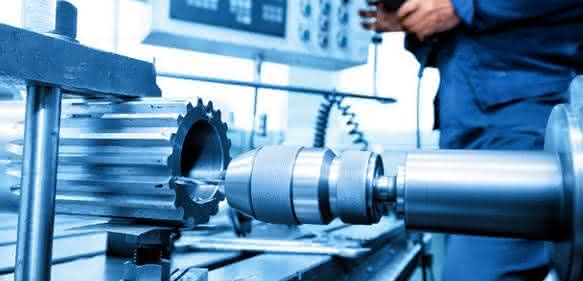
A glance at the investment plans for 2018 shows that production technology is currently undergoing a huge upheaval. According to the "Financing Monitor 2018", digital transformation is at the top of the list for eight out of ten industrial companies. Very few companies are still refusing to invest in Industry 4.0, but technological progress could be thwarted from an unexpected direction. To make factories fit for the future, a lot of money is needed first - and banks are not very generous.
This primarily affects SMEs that are unable to raise the necessary financial resources from their own resources. More than a third require external financing for digitalization projects. However, access to loans from house banks has deteriorated noticeably for around half of companies in the past year, as shown by the "Financing Monitor", which was conducted for the third time by digital SME financier Creditshelf and for which 200 financial decision-makers from the German SME sector were surveyed. And that's not all. For 2018, six out of ten companies expect it to be even more difficult to obtain loans.
However, there is still no talk of investing in Industry 4.0, and the industry is already struggling to finance its day-to-day business with working capital loans. The bureaucracy involved in granting loans is a particular problem for companies. 42 percent see themselves confronted with problems in this area. Banks are admittedly in a quandary here. On the one hand, many house banks in particular are very customer-oriented, if only because of their decades-old relationships of trust. This is also confirmed by the industry, where four-fifths of companies speak of a partnership-based approach. On the other hand, banks are subject to strict legal requirements. Another problem is homemade: while their industrial customers are working flat out on autonomous systems and smart data in indirect areas of the company, many financial institutions are still slowing themselves down with heterogeneous IT systems. This does not exactly contribute to the speed of financing commitments; 30 percent of industrial companies consider them to be too slow.
Companies are running out of time

Working capital loans approved at short notice are precisely what companies need. In each case, 36% of study participants can wait a maximum of four or two weeks for a financing commitment. 15 percent even have less than a week. It is therefore no wonder that a quick decision is a decisive criterion for 92 percent of companies. Especially in the current boom, hesitant lending by banks can even jeopardize the economic success of SMEs. "The order books are full to the brim. However, this also means that companies are increasingly having to make advance payments. SMEs in particular are finding it difficult to rely solely on their own cash flow," says Prof. Dr. Dirk Schiereck from TU Darmstadt, who provided scientific support for the "Financing Monitor 2018", describing the plight of many companies. Without sufficient financing, delivery delays or even complete delivery failures can occur, for example. This not only damages the current business result, but also the company's reputation in the long term.
High interest rates
There is also a certain amount of discontent in the SME sector when it comes to the conditions for working capital loans. Even if all the bureaucratic hurdles have been overcome, favorable financing does not necessarily beckon. Almost 40 percent of companies consider the interest rates to be too high. This applies even more to unsecured loans, which seven out of ten companies cannot afford due to the costs. For many, however, the question does not arise at all, as around 90 percent of industrial SMEs are currently unable to obtain any financing at all without collateral.
Around half of companies would be prepared to accept moderately higher interest rates for this. Most companies have secured up to two thirds of their working capital loans with collateral. This does not leave them much scope for further secured financing. But companies need money right now. The industry not only needs to future-proof its own production, but also drive its products towards digital transformation. This is noticeably reflected, for example, in expenditure on research and development, where 44% of companies want to make use of external financing.
Despite the excellent economic situation, German SMEs are therefore threatened by an investment backlog, which could well damage the technological excellence of the location, especially now in the global race for Industry 4.0 solutions. Companies must therefore look for alternatives to their house bank, which they can find with fintechs. Even now, 75% of industrial companies can imagine using uncomplicated online platforms in the future. More than half of companies also hope that this will result in faster credit decisions. Dr. Daniel Bartsch/am


You might also be interested in
Plagiarius 2024 negative prize
On January 26, 2024, the Plagiarius campaign awarded its dreaded "Plagiarius" negative prize for the 48th time to manufacturers and retailers of particularly brazen counterfeits and fakes.
 read more...
Ivalua honors winners of the Generative AI...
AI-supported "add-ons" for buyers within 48 hours
Ivalua, provider of cloud-based spend management solutions, announced the winners and innovations of the first Generative AI Innovation Cup. The competition took place in December 2023. It was open to all Ivalua partners and employees - more than...
read more...Efaflex celebrates 50 years of high-speed...
The emphasis is on "fast"
Since day one, Efaflex has wanted to use new technologies as early as possible and drive progress in the industry. This year, the family business is celebrating its 50th anniversary under the motto "Fast Forward".
read more...Security of supply even during power outages
In the winter of 2022, Germany was worried about energy shortages. The drugstore retailer dm did not paint any horror scenarios, but nevertheless saw the possibility of controlled, temporary, regional power cuts (brownouts).
read more...Safety technology in mechanical engineering
Modules with new functions
Euchner's product highlights at EMO 2023 include the communication-capable solenoid interlocks.
read more...Transforming the paper industry towards climate neutrality
Together with partners from industry and research, Voith is developing a project for the optimization of energy and material flows in paper production. The aim of the research project is to develop a digital framework that enables effective process...
read more...Up to 95 percent less flue gas thanks to direct extraction
The requirements for occupational safety measures and safety technology are also constantly increasing in welding technology. The Technical Rules for Hazardous Substances (TRGS) stipulate that welding fumes and harmful substances must be extracted...
read more...Competitive advantages with large machines
Whether 3D-printed components for machines and systems, prototypes or aids for design: additive manufacturing is almost indispensable for modern companies in mechanical and plant engineering and automation if they want to play in the premier league.
read more...Transport technology from the modular system
Many transport tasks can be realized with the help of linear technology. Pre-configured solutions are available to simplify the interaction between the linear unit, motor, gearbox and controller. This minimizes the effort required for research and...
read more...