

Image processing and AI
Resolving the dilemma of final quality control
How can AI-based, automated image processing be used to reduce the balancing act between human and machine error in final quality control and save costs?
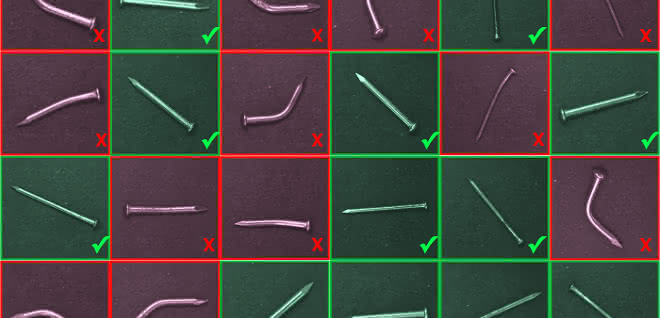
While 2019 ended on a fairly positive note for the mechanical engineering industry in Germany, expectations for 2020 were scaled back considerably in light of the global coronavirus crisis. A number of production slumps were due to the collapse of finely tuned supply chains. As a result, companies are once again focusing on the search for hidden savings potential. At the end of the production chain in particular, final quality control is an area that has a significant impact on the market position, reputation and cost recovery of the entire company. Deevio wants to use AI-based image processing to automate this process, which is often still carried out manually - and also save investments in image processing systems that have already been purchased.
The dilemma of final quality control
The situation to date has been as follows: On the one hand, numerous, otherwise highly automated production companies still rely almost exclusively on the decisions of their comprehensively qualified inspectors when it comes to final quality control. These inspectors have an excellently trained eye, years of experience and the ability to distinguish an actual production error from a supposed defect or tolerable variation.
Nevertheless, even the most attentive and motivated employees sooner or later suffer from fatigue and hunger and can no longer concentrate or are absent for other reasons. However, these factors - which are completely understandable from a human point of view - have a merciless effect on the quality of the products, which then often go straight to the customers. In addition, companies in structurally weak areas in particular are finding it increasingly difficult to find qualified employees who are able and willing to take on this enormous responsibility. The documentation of decisions made by quality inspectors is also often a major problem. If the iO or niO criteria cannot be traced in the required level of detail, no optimization options can be identified and implemented.
On the other hand, many investment managers are finding that the hopes raised by the acquisition of rule-based, automated image processing systems in the area of final quality control are not being fulfilled. In fact, the reject rate has risen to over 20 percent due to pseudo defects. With these results, it is no longer possible to cover costs - quite apart from the amortization of the consistently high acquisition costs, which is at least a medium-term goal. Although these systems have very powerful and high-resolution cameras, their purely rule-based approach means that they cannot keep pace with the range of variants that actually occur. Experience has shown that optics that are set too sharply, for example, sort out parts that are actually free of defects simply because a reflection of light or a color fluctuation has been misinterpreted as a scratch. Nevertheless, rule-based processes do offer some specific advantages that make them more suitable for use during or at the start of production.
The AI-based solution
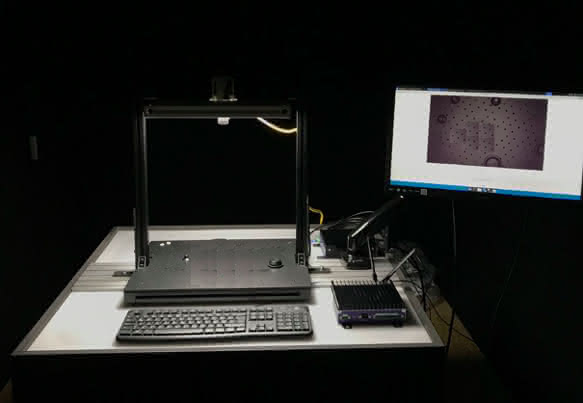
The Deevio approach aims right in the middle of this gaping divide - and also incorporates existing imaging hardware and created image material if required. The deep learning solution combines the advantages of machine automation - consistency, 24/7 availability, etc. - with the fundamental learning ability and flexibility of the human brain. The software integrates into existing settings or is supported by the installation of highly specialized hardware from partner companies. The company supplements existing image material with images of flawless and faulty products, whereby the range of conceivable defects should be covered as well as possible.
Deep learning algorithms now achieve an accuracy of more than 99%, making them ideal for use in the automotive and pharmaceutical sectors. This precision and the exponential increase in computing power in recent years have ensured that the reject rate in the field of automated quality control has fallen from 20 percent to less than 1 percent. These results are convincing more and more companies to move away from manual final inspection and use the freed-up employee capacities more productively.
Increasing the automation rate as a prerequisite for nearshoring
Numerous long, tightly synchronized and correspondingly sensitive on-demand supply chains were brutally disrupted by the global coronavirus lockdowns, leading to chain reactions that significantly affected companies of all sizes and from a wide range of industries.
Focusing solely on reducing labour costs as one of the drivers of globalization proved to be a highly disruptive solution. In order to manufacture more components locally again, or at least in regions that are still within reach even in the event of border closures, and thus bring them closer to the company's own production, a very high degree of automation can mitigate the labor cost factor and increase security of supply.
At the height of the Covid-19 crisis, this causal relationship became apparent even to doubters and will undoubtedly lead to a rethink. At the same time, production times and costs may also fall, while customization options will continue to increase. We are currently making extensive preparations to meet the resulting increase in demand - especially in the area of critical final quality control - and to open up previously untapped potential for the industry.
By Damian Heimel, Co-Founder & COO Deevio


You might also be interested in
Lifting oven grates
Bharat Forge CDP is a supplier of forged chassis and engine components as well as non-automotive systems. Since 2020, the company has been working with Kito-ER2 electric chain hoists to lift furnace grates in the production hall.
 read more...
Mobile and intelligent handling solutions
Scaglia Indeva has been developing and producing industrial manipulators and handling solutions for more than half a century. The company will be presenting its latest products for logistics at LogiMat.
read more...Mink at the Hannover Messe 2023
Transportation on brushes
Technical brushes from Mink are suitable for the gentle transportation of sensitive workpieces. According to the manufacturer, the adaptability of the brushes to different surfaces ensures part quality and avoids rejects.
read more...Partial automation in wood processing
Rescue from the staff shortage
The Schnurr company in Nordrach in the Black Forest has been processing wood for almost 170 years. Today, the company is a sought-after partner when it comes to individual wooden packaging or sawn and planed wood.
read more...Products for better ergonomics
At Intec, Scaglia Indeva will be presenting innovative ergonomic products for intralogistics. The focus is on products for better ergonomics, smoother work processes and protection of employees against overload.
read more...New pallet roller for the warehouse
Conveyor technology specialist Rulmeca is expanding its range of conveyor rollers for pallets and other heavy goods with the XPS series.
read more...Individual energy management
When a Festoon cable carrier system for a crane system with a travel distance of 30 meters was to be replaced, Tsubaki Kabelschlepp designed a complete package consisting of chain and cables, guide channel including substructure and an individual...
read more...Plan and manage maintenance
The health and safety regulations and statutory inspection guidelines for operating equipment in companies are strict and extensive. As a result, it is not easy to keep track of all inspection regulations and periods in day-to-day operations.
read more...Fully automated conveyor system for battery systems
With a fully automated and flexibly expandable conveyor system for truck loading, a manufacturer of battery systems in the electric automotive industry is meeting the increasing demand.
read more...