
Software security
Combining security and new opportunities
Digitalization affects almost all branches of industry equally, as more and more functions are being integrated into software. It determines how a machine, system or intelligent device works and is therefore part of a company's important know-how that is worth protecting. Buyers expect to receive exactly the functions they need and want to buy a product that is tailored to their needs. This also applies to security. By Oliver Winzenried
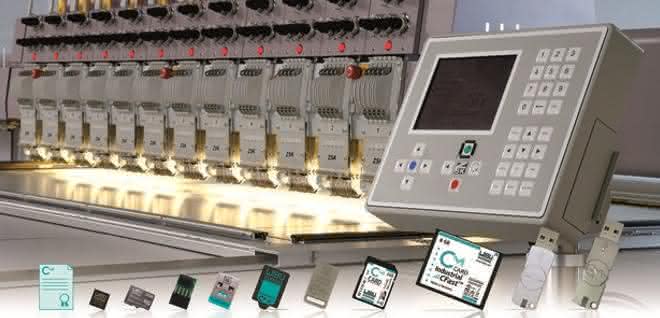
More and more software-driven machines, systems and devices are increasingly exposed to the risk of product piracy and know-how theft. The VDMA's latest "Product Piracy Study 2018" reveals that 71% of machinery and plant manufacturers in Germany are affected by product or brand piracy. The estimated damage amounts to around 7.3 billion euros per year.
The technical-preventive protection CodeMeter from Wibu-Systems offers automation engineers, designers and developers all protection measures and more. CodeMeter uses encryption and digital signatures to provide protection against copying and reverse engineering, licensing, tampering and cyber-attacks. The software is encrypted and remains protected from the eyes of plagiarists. Reverse engineering, i.e. the extraction of valuable processes and algorithms, for example by decompiling, is not possible with encrypted program code. This prevents the reproduction of entire machines or devices, as the necessary knowledge is lacking. The appropriate protection tools are available for the software in microcontrollers, embedded systems and control systems for machines, systems and devices, as well as in standard PCs. This also applies to data and documents such as service documentation. In addition, manufacturers can use licensing to measure and bill the use of their devices securely and flexibly, but also sell further upgrades and thus generate additional revenue.
How the technology works
To protect the know-how in the software, the executable application is encrypted before delivery. The software as a whole or just individual functions can be individually encrypted. All users then receive the same protected software with full functionality. However, each customer receives an individual authorization or license with the necessary keys at the time of purchase, which defines exactly which functions the user can use and according to which model this is billed. It can be a one-off sale that entitles the user to unlimited use, or a pay-per-use model in which the use of individual functions is measured and billed. Subscription models with regular renewals are also possible, as are time-based licenses.
The keys and license parameters required for decryption are securely stored in the CmDongle protection hardware or a CmActLicense activation file, which is linked to the hardware properties of the target system. The CmDongles are available for industrial use in various designs for interfaces such as USB, SD, microSD, CFast, CF or as a chip in a small VQFN housing, whereby each protection hardware contains a SmartCard chip with modern cryptography. Thanks to the various standard interfaces and industrial properties such as extended temperature and humidity range, increased EMC resistance and mechanical robustness, machines, systems and devices can be easily retrofitted. This is important because, for example, machines are often in use for 15 years or more, but protective mechanisms often have to be adapted to the state of the art.
Modern and secure encryption methods such as symmetric encryption AES (Advanced Encryption Standard) and asymmetric encryption ECC (Elliptic Curve Cryptography) or RSA ensure a high level of security with CodeMeter. The CodeMeter protection methods are published so that experts can see for themselves which protection goals are achieved. The "Blurry Box" software protection method, developed by Wibu-Systems, KIT and FZI, won first place in the most highly endowed German IT security prize awarded by the Horst Goertz Foundation at Ruhr University Bochum and was not broken by over 300 participants in a public competition in 2017. CodeMeter uses certificates and digital signatures to prevent tampering. The digital code signatures are verified with the public key before and during runtime so that modified or manipulated code can be reliably detected and only code from authorized issuers is executed.
Licensing integrated into business processes
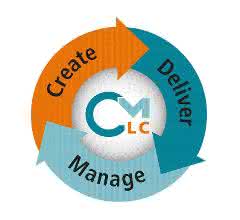
CodeMeter License Central facilitates the creation, management and delivery of authorizations or licenses and supports product management in modeling the products. Orders are created as usual from the leading ERP or CRM system, which automatically triggers the creation of the associated licenses via an interface on the license management system. If users subsequently activate device functions in app store-like portals on the Internet, additional revenue can be generated for the device manufacturer - i.e. through the sale of additional functions, fee-based upgrades, but also time- or quantity-controlled use. This is known as software monetization. The existing CmDongle or CmActLicense protection is used for this purpose by adding the corresponding parameters for additional authorizations or licenses. The more secure, better and more versatile the licensing options are, the more business opportunities arise for the manufacturer. Software monetization will only be efficiently usable, accepted and successful if the logistics for licensing and logistics are transparently integrated into the processes of the manufacturer and the user.
Billing by means of a meter
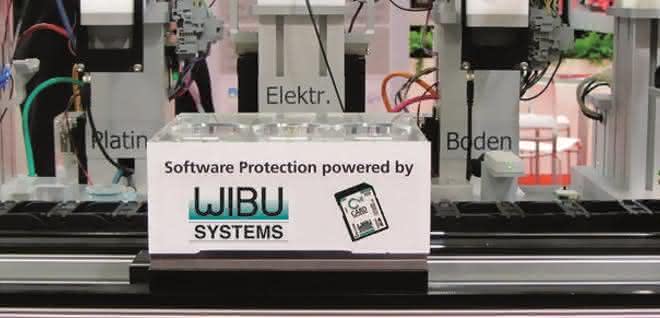
The manufacturer works with a counter in CodeMeter to ensure that billing is based on usage. This counter is set on delivery and counted down during operation depending on usage until it reaches a defined threshold value. When the threshold value is reached, the user is notified that they should purchase additional usage units. Once the purchase is complete, the counter is increased again accordingly. By analyzing the counter, the manufacturer knows the operating hours of his machine or appliance. A high counter, which should not expire, means that usage can also be billed retrospectively by reading it out, similar to a telephone bill.
Assignment of rights for authorized maintenance technicians
The maintenance documents also contain a great deal of company know-how. To ensure that only authorized and appropriately trained personnel have access to maintenance documents and functions, time-limited authorization licenses can be issued. Rights are thus assigned via licenses that can be renewed at fixed intervals.
Due to digitalization, protection requirements have changed. CodeMeter takes these into account, whether for know-how protection or software usage billing. Manufacturers can easily integrate CodeMeter into their machines, systems and devices, even at a later date. By integrating CodeMeter License Central into their business processes, manufacturers can take advantage of the opportunities offered by digitalization and develop new business models. At the same time, they can rest assured that valuable know-how will not fall into the hands of unauthorized persons.
Oliver Winzenried is a member of the Executive Board of Wibu-Systems AG and the Medical Technology Working Group of the VDMA / am


You might also be interested in
Hebotec at the Hannover Messe 2025
Connecting consumers without tools
Additional robots, control cabinets, control panels or other consumers can be easily integrated into the EMC concept of an existing production line using the PAK 25 equipotential bonding terminal from Hebotec.
 read more...
Motion controller for small drives
Medium power range covered
Faulhaber has another housing-less and compact motion controller in its range, which is particularly suitable for integration in device construction and medical technology applications.
read more...Safe solutions for cable installations
From thick power cables to thin sensor lines, cables and lines must be routed safely through systems and machines. A challenge that should not be underestimated, explains Jörg Sokat, Head of Product Management at Pflitsch.
read more...Displacement measuring systems
Economic positioning
The integrated position measuring system IMS from Bosch Rexroth is now also available as IMS-compact for absolute measurement. The non-contact solution with magnetic measuring principle enables robust and economical position detection for linear...
read more...Economic positioning
The integrated position measuring system IMS from Bosch Rexroth is now also available as IMS-compact for absolute measurement. The non-contact solution with magnetic measuring principle enables robust and economical position detection for linear...
read more...Sensors with IO-Link for extruders
The melting pressure always in view
Macchi, a manufacturer of blown film extrusion lines, optimized its extruders for Industry 4.0 by integrating melt pressure transmitters with digital IO-Link output for precise recording of the melt pressure and magnetostrictive displacement...
read more...Vision with good visitor response
6505 visitors and 378 exhibitors attended the machine vision trade fair in Stuttgart.
read more...Würth Elektronik at the embedded world
Würth Elektronik, manufacturer of electronic and electromechanical components, is presenting itself as a partner to developers at embedded world. At stand 110 in hall 2, the company will be presenting its portfolio and the associated services.
read more...Die-cast electronics housing
CTX Thermal Solutions manufactures cost-effective die-cast housings in application-specific geometries.
read more...