
Endpoint security device
Protecting legacy systems in Industry 4.0
Old systems are increasingly being made Industry 4.0-capable. They are often in operation for longer than there are security updates for the antivirus agent. If this support ends and updates are no longer provided, the devices are inadequately protected. An endpoint security device, which is connected in front of the system, provides protection as a "virtual shield".

Automating and optimizing processes through data analysis and intelligent networking of machines, people and systems - that is the goal of Industry 4.0. However, in addition to the new opportunities, there is at least one equally big challenge: IT security, especially of legacy systems. For economic reasons, production systems are usually kept in operation until the end of their maximum service life. However, the cross-industry problem here is that old legacy systems are increasingly being made Industry 4.0-capable or connected to the Internet.
As a rule, antivirus agents protect the system's operating system. If the manufacturer discontinues security updates and support, companies that use networked IoT devices need to think about alternatives. This is because the longer a system is in operation, the greater the risk of it being attacked. One example: Windows XP is very widespread in the production environment. However, hardly any antivirus manufacturers still supply patches for it. For Windows XP, however, there is a very high number of malware that exploits hidden vulnerabilities. One example is the Conficker computer worm. Companies often make the mistake of lulling themselves into a false sense of security because their next-generation firewall still has the latest updates. The problem here, however, is the so-called advanced evasions. If Conficker is disguised or manipulated, it is no longer detected.
If a company has a large number of Windows XP systems in use for which there are no longer any new security patches and therefore the blacklists are no longer updated, it is easy for hackers to access a production system within seconds. There is a high risk in manufacturing, for example in systems that have to produce continuously, or in the development and research sector when critical data and intellectual property are involved. Another example comes from the medical sector, where computer-assisted surgical equipment is used, for example in advanced diagnostics. If these are disrupted by hackers and no longer function properly, this can be life-threatening. In September 2019, research by Bayerischer Rundfunk and the US investment platform ProPublica revealed that millions of highly sensitive patient data had ended up unprotected online. Oleg Pianykh, Professor of Radiology at Harvard Medical School, commented on this in an interview with BR and ProPublica: "We have a huge problem with medical devices that are completely unsecured and unprotected. And anyone, any hacker, can connect to these devices and compromise patient records." So while most industries and companies already have extensive protection in place for other risks such as power outages, many companies still have a lot of catching up to do when it comes to IT-supported machines. If networked machines are not sufficiently protected, it is easy for criminals to gain access to the respective machine via the remote access port and thus penetrate a customer network.
The solution: endpoint security device
The solution is to install an endpoint security device in front of the systems with an old operating system. Behind this is a powerful Next Generation Firewall (NGFW) that is capable of traffic normalization. With such a device, access control to the networked machines can be regulated and precisely scanned to determine whether there is malware among the accessing users. This not only detects known malware that is defined as such on a blacklist. Instead, the endpoint security device also reacts to disguised files using integrated advanced evasion techniques such as traffic normalization. This means that variants of malware can also be recognized as such and blocked. A virtual shield is built around the system.
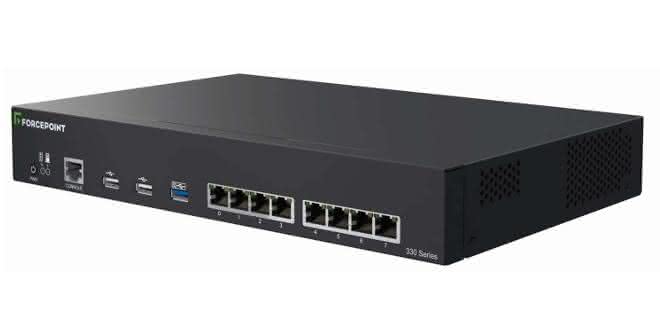
This is also particularly attractive for KRITIS companies (critical infrastructures). At the same time, a separate endpoint security device also increases compliance. Strictly speaking, a security update of the antivirus agent is also an update within a system. If the security is taken down from the system into a virtual shield, daily security updates can be introduced without having to update the system itself. With an endpoint security device, the system is not patched, but the upstream device is updated with the security update.
Intrusion prevention systems as a virtual shield
The endpoint security device from Forcepoint can be used as part of an intrusion prevention system (IPS). The protective effect of an IPS lies like a virtual bell over a machine to be protected. This is also referred to as "virtual shielding". This process is helpful when a machine that has not yet been patched needs to be protected. Operational managers must ultimately ensure that their systems have adequate IT protection until the patch cycle.
However, very few next-generation firewalls and intrusion prevention systems are able to reliably fend off attacks due to their purely pattern-based mode of operation. The number of ways in which malicious code can be concealed is simply too great. This can only be achieved by a system that can perform traffic normalization before database comparison. This makes the actual malicious code visible and the data synchronization can be successful. All malware control takes place in the Forcepoint IPS. And: In contrast to a pure intrusion detection system (IDS), malicious code is not only detected, but also defended against at the same time. This can take the form of various measures, such as blocking traffic from a specific source or to a specific destination.
Making cybersecurity a top priority
In a digitalized industry, cyber security should be a top priority. However, the reality is still the same: Production usually comes before security. But only if cyber security is guaranteed can company data be kept safe and machines work properly. If IT systems have vulnerabilities or networked machines can be hacked by cyber criminals, the consequences can be devastating. Companies therefore need an endpoint security device to ensure that their top priority - production and system availability - is taken care of.
Frank Limberger, Data and Insider Threat Security Specialist, Forcepoint / ag


You might also be interested in
Plagiarius 2024 negative prize
On January 26, 2024, the Plagiarius campaign awarded its dreaded "Plagiarius" negative prize for the 48th time to manufacturers and retailers of particularly brazen counterfeits and fakes.
 read more...
Ivalua honors winners of the Generative AI...
AI-supported "add-ons" for buyers within 48 hours
Ivalua, provider of cloud-based spend management solutions, announced the winners and innovations of the first Generative AI Innovation Cup. The competition took place in December 2023. It was open to all Ivalua partners and employees - more than...
read more...Efaflex celebrates 50 years of high-speed...
The emphasis is on "fast"
Since day one, Efaflex has wanted to use new technologies as early as possible and drive progress in the industry. This year, the family business is celebrating its 50th anniversary under the motto "Fast Forward".
read more...Security of supply even during power outages
In the winter of 2022, Germany was worried about energy shortages. The drugstore retailer dm did not paint any horror scenarios, but nevertheless saw the possibility of controlled, temporary, regional power cuts (brownouts).
read more...Safety technology in mechanical engineering
Modules with new functions
Euchner's product highlights at EMO 2023 include the communication-capable solenoid interlocks.
read more...Transforming the paper industry towards climate neutrality
Together with partners from industry and research, Voith is developing a project for the optimization of energy and material flows in paper production. The aim of the research project is to develop a digital framework that enables effective process...
read more...Up to 95 percent less flue gas thanks to direct extraction
The requirements for occupational safety measures and safety technology are also constantly increasing in welding technology. The Technical Rules for Hazardous Substances (TRGS) stipulate that welding fumes and harmful substances must be extracted...
read more...Competitive advantages with large machines
Whether 3D-printed components for machines and systems, prototypes or aids for design: additive manufacturing is almost indispensable for modern companies in mechanical and plant engineering and automation if they want to play in the premier league.
read more...Transport technology from the modular system
Many transport tasks can be realized with the help of linear technology. Pre-configured solutions are available to simplify the interaction between the linear unit, motor, gearbox and controller. This minimizes the effort required for research and...
read more...