
Production technology
How research is driving e-mobility forward
The further development of production technology is a major challenge for electromobility. The industry's development work is being actively supported by research, including by the Chair of Factory Automation and Production Systems (FAPS) at the University of Erlangen-Nuremberg.
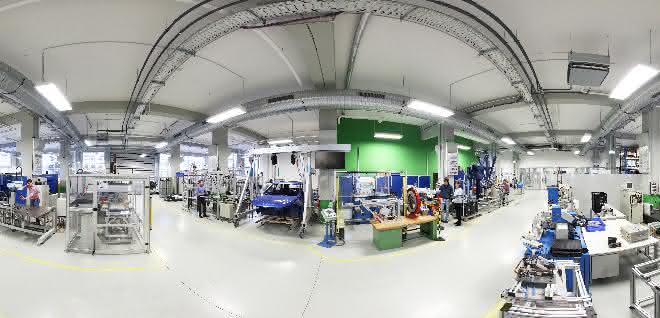
The automotive industry is undergoing radical change and it is clear that electromobility has now arrived at all OEMs. In addition to storage technology, the further development of production technology, from classic industrial drives to high-performance traction drives, is a major challenge. The industry's development efforts are being actively supported by the research community. The Chair of Manufacturing Automation and Production Systems (FAPS) at the University of Erlangen-Nuremberg is one of these institutes, which contributes to this through the research group for electrical engineering. Here, scientists are working on the development and knowledge transfer of future technologies for the manufacture of electrical machines.
The potential of the electric motor as an automotive traction drive was recognized early on, but was initially unable to establish itself 100 years ago. During this time, it developed into a key component of industrial automation technology and is now indispensable in the area of conflict between ambitious climate targets and intelligent automation. In the context of electromobility, the challenges lie in the highest performance density, quality, cost and cycle time targets. The flexibility required with regard to increasing variant diversity could previously only be achieved through manual processes. However, this leads to high costs, particularly in the production of electrical windings and interconnection. In addition, robust automation solutions that can meet the increasing product requirements, such as maximum filling levels and compact installation spaces, are rare.
Today's Electrical Engineering research group emerged from the Bavarian Technology Center for Electric Drive Technology (E|Drive-Center) at the FAPS Chair. Here, drive concepts and associated production technologies are researched with a view to transferring the knowledge gained to industrial applications. This includes the analysis and optimization of the application, the production-related design and the production process design as well as quality assurance of components and systems of electric drive technology.
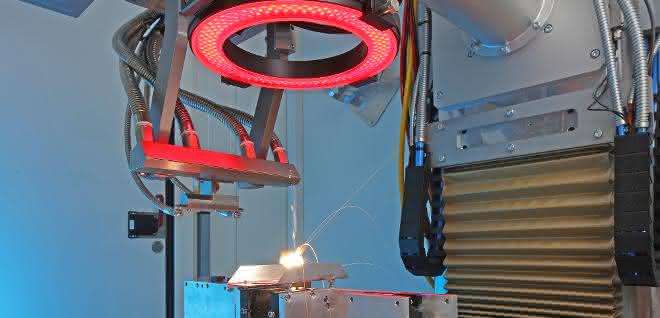
In large laboratory and office spaces on the former AEG site in Nuremberg, technology demonstrators depict all the key production and assembly steps. Starting with the processing of soft magnetic materials, the continuous process of rotary cutting is being investigated as a complementary alternative. Laser-based processes for cutting and joining strip products and copper materials are also being investigated. Various flexible systems are available for the manufacture of winding technology products. Robot-based laying processes for high-frequency stranded wires are also being investigated, which enable the production of complex coil geometries for inductive charging systems. Material properties such as temperature and mechanical stress dependencies of hard and soft magnetic semi-finished products and components are investigated in the in-house magnet laboratory.
In addition to imparting university expertise to young engineers, the Chair of FAPS supports the automotive and aviation industries in the increased use of electric drive technology by participating in various networks, such as the cluster initiatives for mechatronics and automation, automotive and environmental technology or the FVA research association within the VDMA. Since May 2010, a large number of research and industrial projects have already been completed or started. In addition, the chair contributes to the transfer of science in the field of electric drive technology to industry with direct cooperation projects and its own event formats. Numerous workshops, lectures and technology presentations are held. The user-oriented seminar days "Production of Electric Drives" and the IEEE conference "Electric Drives Production Conference (EDPC)" form the established core of the annual exchange of knowledge. The EDPC is a unique international scientific conference in the field of electric drives production and is scheduled to take place in Ludwigsburg on December 8 and 9, 2020. As part of this platform, national and international exhibitors and speakers from industry and research will present the latest approaches in the production of electric motors. In addition to core topics such as winding technology, insulation technology and magnetic materials, the 10th EDPC will focus on electric aviation in 2020.


You might also be interested in
Friction stir welding as a key technology for future industrial joining solutions?
At the DMG MORI in-house exhibition, Hufschmied Zerspanungssysteme presented friction stir welding with process-optimized tools and series production potential for the industry.
 read more...
Tox Pressotechnik at the Blechexpo
Connecting sheet metal and electrically conductive components safely
Joining sheets of different thicknesses easily and reliably without additional elements - Tox Pressotechnik will be demonstrating how this can be achieved at Blechexpo with its clinching and eClinch technology.
read more...Production, machine tools and robots
High-precision welding for perfect sawing
Stihl uses Nimak's portal projection welding systems to manufacture guide rails for chainsaws.
read more...Tox servo press for clean room
The coast is clear here now
In sensitive sectors such as medical technology, the optical industry or electronics, cleanroom-compatible components are required for all processes. This also includes drives. With the servo presses from the Electricdrive Core series, Tox...
read more...Air purity class 5 according to ISO achieved
Tox has servo press certified for the cleanroom
In sensitive sectors such as medical technology, the optical industry or electronics, cleanroom-compatible components are required for all processes. This also includes drives. With the servo presses from the Electricdrive Core series, Tox...
read more...Manufacture of metal bellows couplings
Joining instead of gluing
When manufacturing metal bellows couplings, the connections between the bellows and hub are a critical point. The flared press-fit process can be used here.
read more...ArtiMinds presents automation solutions at automatica
ArtiMinds Robotics is presenting automation solutions from the field of advanced robotics at Automatica in Munich. The applications were programmed using the in-house software solutions ArtiMinds Robot Programming Suite (RPS) and ArtiMinds Learning...
read more...Plug-and-produce with smart subsystem
The mechanical engineering company KMS Automation standardizes pressing and joining applications with the Smart Function Kit from Bosch Rexroth. The mechatronic subsystem simplifies machine design, increases process quality and shortens...
read more...Integrated ERP system for watertight processes
Rubber-based seals are used in window frames and escalators. They are also a must in tunnel projects to prevent water damage. Sealable, a specialist in sealing and insulation solutions, relies on an ERP system from Pro Alpha, which covers everything...
read more...