
Display
The future of production: how laser and video projection is changing the industry
In today's fast-paced world of industrial manufacturing, technological innovations such as laser and video projection are driving the industry forward. Once considered futuristic visions, these technologies are now a reality, revolutionizing the way products are manufactured, inspected and improved. This development signals a significant turning point in the history of industrial manufacturing, with the potential to drive efficiency, accuracy and flexibility to unprecedented heights.
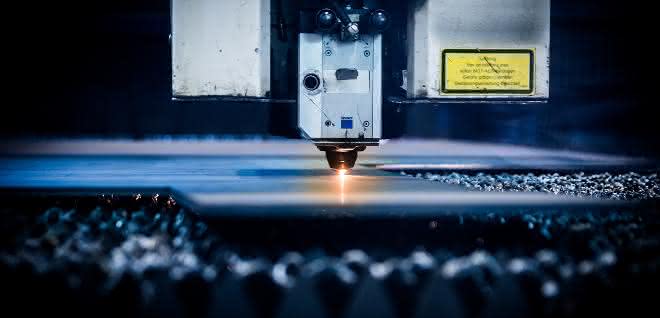
The introduction of laser and video projection in industrial production represents a paradigm shift. It's not just about improving existing processes, but creating new opportunities for innovation and creativity. These technologies allow manufacturers to push the boundaries of traditional manufacturing methods and move into a future characterized by precision, adaptability and efficiency. A visit to EXTEND3D gives a deep insight into the practical application and far-reaching benefits of these technologies.
The basics of laser and video projection in industry
Laser and video projection systems are at the heart of many modern manufacturing processes. They offer precise, efficient and flexible solutions for a wide range of applications. At the heart of these systems is the high-precision projection of images or patterns onto various surfaces or objects. This makes it possible to carry out complex production tasks with high accuracy and speed.
"Laser and video projection technologies are not just tools, but pioneers for innovative manufacturing processes."
These technologies have established themselves as indispensable tools in industrial production. They are used in a wide range of industries, from automotive and aerospace to medical technology. Laser and video projection systems offer countless benefits, including improved accuracy and repeatability, faster production times and a reduced error rate. These technologies play a key role in increasing efficiency while improving product quality.
Laser projection is often used in the alignment and positioning of components in assembly and manufacturing. It provides a visual guide that enables users to place parts precisely and efficiently. Video projection, on the other hand, is often used for inspection and quality control processes. By projecting images or patterns onto a workpiece, deviations and defects can be quickly identified.
Case studies: Successful applications in industry
The application of laser and video projection in industry is far-reaching and diverse. Many companies have successfully implemented these technologies to optimize their production processes and improve the quality of their products. One such case study is that of the automotive industry, where laser projection systems are used to precisely align parts during assembly. This significantly reduces assembly time and increases the overall quality of the end product.
Another example can be found in the aerospace industry. Here, video projection systems are used to perform critical inspections and measurements on aircraft components. This technology allows parts to be inspected quickly and accurately, which is crucial for safety and reliability in the aerospace industry.
Comparison: Traditional production methods vs. modern technologies
The comparison between traditional production methods and modern technologies such as laser and video projection shows clear differences in efficiency, precision and flexibility. Traditional methods are often time-consuming, error-prone and less flexible in terms of changes to the production process. Modern technologies, on the other hand, offer a significant increase in all these areas.
- Efficiency: Laser and video projection enable faster production while reducing the risk of errors.
- Precision: These technologies enable greater accuracy, which is particularly important in industries such as aerospace and medical technology.
- Flexibility: They allow quick adaptation to new designs and changes in the production process.
Implementation challenges and solutions
Although the benefits of laser and video projection are obvious, there are some challenges that companies need to consider when implementing these technologies. Some of the most common challenges include high initial investment, the need for specialized training and integration into existing manufacturing systems.
- Challenge 1: Costs and investments: The introduction of laser and video projection technologies often requires a significant initial investment. Companies need to budget for the cost of purchasing the technology, installation and any necessary adaptations to existing systems.
- Challenge 2: Training and expertise: Operating these advanced systems requires specialized knowledge and skills. Companies need to invest in training their employees to ensure that they can use the new technologies efficiently and effectively.
- Challenge 3: Integration into existing systems: Integrating new technologies into existing manufacturing processes can be a challenge. Companies need to ensure that the new systems work seamlessly with their current operations and systems.
Future prospects and trends in laser and video projection
The future of laser and video projection in industrial manufacturing looks promising. With constant improvements and innovations in these technologies, companies are faced with exciting opportunities. Trends that will shape the future include increased automation, the integration of artificial intelligence and the development of more sustainable manufacturing practices.
- Automation: The further automation of manufacturing processes using laser and video projection will lead to even more efficient and precise production processes.
- Artificial intelligence: The integration of AI into these technologies can help to further optimize production processes by enabling pattern recognition and predictive maintenance.
- Sustainability: With an increasing focus on sustainability, laser and video projection technologies will play a key role in developing more environmentally friendly and efficient manufacturing methods.
Laser and video projection are more than just advanced tools; they are catalysts for a new era in industrial manufacturing. Not only do they enable increased efficiency and quality, but they also open up new avenues for innovation and sustainable manufacturing practices. With the continued development and integration of these technologies, the manufacturing industry is on the brink of an exciting future characterized by precision, adaptability and efficiency.


You might also be interested in
On the road to the future
Clear design, intuitive operation, large data memory and precise measurement results: With the new VD800 series, Thyracont Vacuum Instruments is on the way to the future and consistently focuses on the needs of the user.
 read more...
Conrad at maintenance for the first time
Conrad will be presenting industrial maintenance products at maintenance 2023 on May 24 and 25 in Dortmund.
read more...Energy cost meter with data logger
Measure, analyze and reduce energy consumption
Measuring the actual energy consumption of electrical devices is the first step towards optimizing consumption values and reducing energy costs. The Voltcraft SEM5000 was developed for this purpose and is now available from Conrad Electronic.
read more...Temperature and humidity data logger
Indoor air quality monitoring
The new 42280A series temperature and humidity data logger from Extech offers a number of improvements over its successful predecessor.
read more...Contactless data acquisition and monitoring
In the age of the IoT, simple and standardized communication interfaces are essential. With the NFC-Telid sensors, which are designed for process control in industrial applications, condition monitoring in logistics processes and for use in...
read more...Save energy and optimize processes
Hundreds or even thousands of sensors integrated into a long-range network - these are the most important advantages of LoRaWAN.
read more...Kuka robots sort blood samples in hospitals
LT Automation and Intelligent Systems have developed a system for Aalborg University Hospital consisting of a robot system and transport box that automatically checks and sorts blood samples.
read more...Kuka robot sorts blood samples
A robotic system checks and sorts up to 3,000 blood samples a day at Aalborg University Hospital. This reduces the workload for employees and optimizes processes.
read more...Pressure gauge with data logger
Several mechanical pressure gauges are often required for measurements over a wide pressure range. The ServiceJunior from Parker Hannifin makes it possible to measure, display and store pressure with a single device.
read more...