

Corona pandemic
Safe supply: packaging as a protective factor
During the coronavirus crisis, packaging is playing an important role in the supply of food, medicines and protective equipment. More than ever, its most important characteristic is coming to the fore: its protective function.
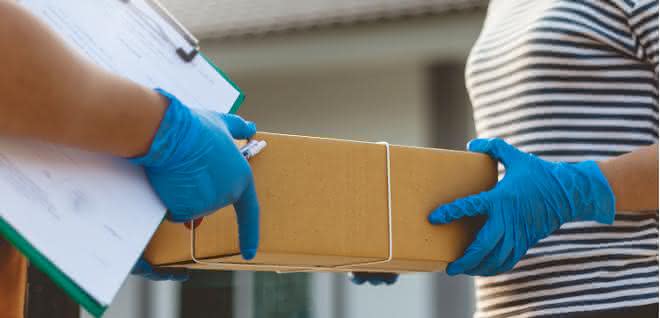
Without suitable packaging, none of the essential supplies will reach the shops or patients. It ensures that the population is supplied with safe medicines, disinfectants, other medical products and food. Product protection itself protects resources, especially in times of crisis, and prevents valuable products from being damaged or spoiled.
Hygiene - the be-all and end-all for medical products
To maintain the shelf life, hygiene and quality of packaged products, they must be protected from environmental influences. Medication and other medical products, for example, can be transported and stored particularly well in plastic packaging. The versatile materials score points here with their good barrier properties and impact resistance during filling and packaging processes or in logistics. In intensive care units, on the other hand, medical products must be ready to hand quickly and hygienically in an emergency. This is ensured by appropriately designed bags or trays, some of which also have antimicrobial surfaces.
Due to the surge in demand for hand sanitizers during the coronavirus pandemic, packaging for disinfectants is also in greater demand than ever before - even chemical giants that do not normally offer small packaging sizes are now filling the coveted product in small sizes for healthcare professionals, tradespeople and end consumers.
The importance of the protective function of packaging is also clear when it comes to food. This prevents viruses and other harmful microorganisms from coming into contact with the food in the first place. But first things first: according to the Federal Institute for Risk Assessment (BfR), the packaging itself poses no risk of infection. However, it goes without saying that general hygiene rules should be observed when preparing food. However, the BfR believes that it is unnecessary to clean food or its packaging with soap or disinfectant.
Changing consumer behavior requires suitable packaging
The corona crisis has also changed people's consumer behavior: products with a longer shelf life are increasingly being purchased and closed restaurants are changing eating habits. In order to reduce losses and continue to serve their guests, many restaurateurs have reacted spontaneously and also offer pick-up and delivery services. For this, they also need appropriate packaging for out-of-home catering.
In times of crisis, retailers are also increasingly switching to online offerings, web stores and mail order. The right packaging for mail order not only serves to protect the shipped product and, if necessary, the return, but is also a marketing tool for an unpacking experience for the customer. Local producers and retailers use online marketplaces to mitigate sales losses in physical stores. Regional food producers, restaurants and direct marketers are experiencing great demand. This would not be possible without the right packaging. The new foothold in e-commerce can pay off for retailers and producers even after the crisis.
Transport packaging ensures security of supply
Packaging is an integral part of ensuring security of supply for the population. The Federal Ministry of Food and Agriculture has listed companies that produce packaging and packaging materials for food industry products as systemically relevant in the "KRITIS Food Guidelines". With this step, the Federal Government has recognized the important role of packaging for the security of supply. Federal Minister of Agriculture Klöckner thus shares the view of the German Association of Paper and Plastics Processing (HPV), for example, that not only agriculture, food production, trade and commerce, but also the supplier sectors, particularly from the packaging sector, are part of the supply-relevant infrastructure.
Supply chains and the supply of the population and the medical sector depend not only on primary packaging, but also on transport packaging. Corrugated board and pallets make an important contribution in this area. In Germany, around two thirds of all goods are packaged in corrugated board and transported on pallets to stores and consumers.
Whether hygienic protective packaging or transport packaging for safe logistics processes: The supply chains for food and medical products depend on the availability of suitable packaging. As a systemically important sector, the packaging industry is making an important contribution to overcoming the coronavirus crisis. as


You might also be interested in
Plagiarius 2024 negative prize
On January 26, 2024, the Plagiarius campaign awarded its dreaded "Plagiarius" negative prize for the 48th time to manufacturers and retailers of particularly brazen counterfeits and fakes.
 read more...
Ivalua honors winners of the Generative AI...
AI-supported "add-ons" for buyers within 48 hours
Ivalua, provider of cloud-based spend management solutions, announced the winners and innovations of the first Generative AI Innovation Cup. The competition took place in December 2023. It was open to all Ivalua partners and employees - more than...
read more...Efaflex celebrates 50 years of high-speed...
The emphasis is on "fast"
Since day one, Efaflex has wanted to use new technologies as early as possible and drive progress in the industry. This year, the family business is celebrating its 50th anniversary under the motto "Fast Forward".
read more...Security of supply even during power outages
In the winter of 2022, Germany was worried about energy shortages. The drugstore retailer dm did not paint any horror scenarios, but nevertheless saw the possibility of controlled, temporary, regional power cuts (brownouts).
read more...Safety technology in mechanical engineering
Modules with new functions
Euchner's product highlights at EMO 2023 include the communication-capable solenoid interlocks.
read more...Transforming the paper industry towards climate neutrality
Together with partners from industry and research, Voith is developing a project for the optimization of energy and material flows in paper production. The aim of the research project is to develop a digital framework that enables effective process...
read more...Up to 95 percent less flue gas thanks to direct extraction
The requirements for occupational safety measures and safety technology are also constantly increasing in welding technology. The Technical Rules for Hazardous Substances (TRGS) stipulate that welding fumes and harmful substances must be extracted...
read more...Competitive advantages with large machines
Whether 3D-printed components for machines and systems, prototypes or aids for design: additive manufacturing is almost indispensable for modern companies in mechanical and plant engineering and automation if they want to play in the premier league.
read more...Transport technology from the modular system
Many transport tasks can be realized with the help of linear technology. Pre-configured solutions are available to simplify the interaction between the linear unit, motor, gearbox and controller. This minimizes the effort required for research and...
read more...