
Still doubles capacities
More trainees to combat skills shortage
The intralogistics provider is doubling the training capacity at its branches across Germany at the start of 2018: 40 new apprentices will start their training in mechatronics every year.
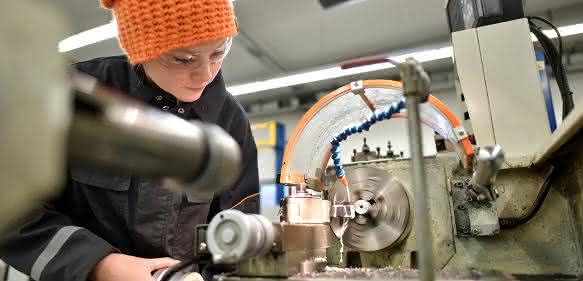
"You are the deciding factor!" - This is the motto under which Still intends to increase its nationwide training capacity in the field of mechatronics to 160 trainees over the next few years. With the capacities at its Hamburg headquarters, the company is training a total of more than 260 young specialists in twelve professions, making it one of the largest training companies in the dual vocational training system in Germany.
"By expanding our training capacities, we want to counteract the increasing shortage of skilled workers and demographic change," says Still CFO and Labor Director Thorsten Hofmann. "With our high-quality training, we will support, guide and develop our youngest employees in the best possible way. After all, as co-creators of a major international technology brand, young talent is crucial for our common future! Investing in our vocational training is therefore a top priority for us."
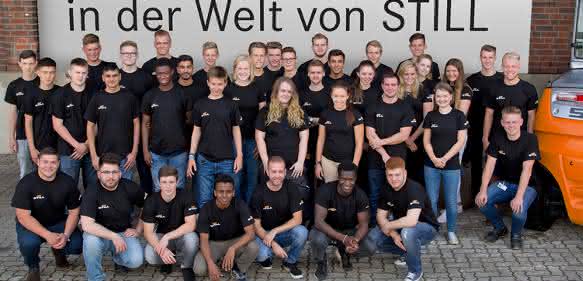
In line with the larger number of trainees, Still is also adapting the structural and procedural organization of its group training: In future - in addition to the training center at the Hamburg headquarters - there will be another central training center in Nuremberg/Fürth, where trainees in the advanced training years will attend modular intralogistics-specific practical seminars together. The vocational training team will also be strengthened with new full-time trainers for its 14 branches across Germany from summer 2018.
And what can future matchmakers expect after their training? "The high quality of our dual training means that we have had almost no terminations of training contracts in recent years. Even failing exams is an absolute exception for us," Hofmann continues. "We currently take on all mechatronics trainees seamlessly as permanent service technicians paid according to collective wage agreements." as


You might also be interested in
Conrad continues to grow
Conrad Electronic now generates 80% of its sales with business customers and has successfully developed from a traditional technology retailer into a B2B procurement platform. The company aims to become Europe's leading procurement platform for...
 read more...
AI finds its way into automotive customer service
In addition to computer solutions for vehicle diagnostics, Getac now also offers AI-based digital tools that support customer contact in service operations.
read more...SMC: "Preferred Supplier" from Bosch
The technology and service company Bosch has recognized SMC for the performance of its automation technology in factory and process automation and awarded it the status of "Preferred Supplier" in the material group "Standardized Pneumatic Devices".
read more...Combined ERP forces
The medium-sized ERP providers Step Ahead Software, Godesys and Informing merge to form the Step Ahead Group.
read more...Cybersecurity for asset-intensive companies
Forge Cybersecurity Platform, the new software platform from Honeywell, has been developed for the cybersecurity of asset-intensive companies and critical infrastructures. The platform is available in three versions.
read more...Automated machine tool as a success factor
Industry 4.0 is the hot topic of the moment. For small and medium-sized companies and contract manufacturers, it holds great potential for increasing production efficiency step by step. The focus here is on efficient and user-specific automation...
read more...Nemo hand vacuum lifts all materials
A new addition to the Eurotech portfolio is the battery-operated Nemo vacuum cleaner, which is suitable for handling almost all surfaces.
read more...Future-oriented cobot projects
Three pillars of successful cobot initiatives
What is important if cobot projects are to be future-oriented? Automation and robotics expert Omron has identified three aspects for human-machine collaboration.
read more...Short-stroke linear actuator instead of pneumatic cylinders
The new short-stroke linear actuator from Ketterer Antriebe and halstrup-walcher is characterized by high dynamics and a large stroke in a compact size. Thanks to the integrated electronics, the drive is easy to control compared to pneumatic...
read more...