
Interview with Moritz Meißner, Vinci Energies Germany
"Leading the way instead of running behind"
Digitalization is primarily about people. This is often forgotten. We spoke to Moritz Meißner, Head of Digital Learning and Deputy Head of the Digitalization & Innovation Academy at Vinci Energies, about how a company can take its employees along on the journey and train them properly.

Mr Meißner, everyone is talking about digitalization. However, people often only see the technology. What does digitalization do to people, i.e. employees?
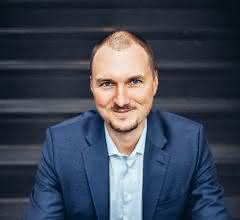
Moritz Meißner: To answer this question, I would like to quote two of our top managers. Firstly, the following statement by Frank Westphal, Managing Director of Vinci Energies Germany and CEO of Actemium Germany: "Digitalization will come and we will continue to focus on people." Dr Reinhard Schlemmer, Deputy General Manager of Vinci Energies Europe, added: "Digitalization will affect all areas. Even where we provide a high proportion of blue-collar services. Let's shape it together instead of reworking it. Act instead of react."
Both statements get to the heart of the current development, which is unfortunately still too often overlooked. After all, digital transformation is not an end in itself; it has always been and will continue to be about people. So the question we should always ask ourselves is: How can technology help us improve our working conditions? This may mean that certain tasks are eliminated because they are automated, simplified or made redundant. At the same time, however, new tasks are constantly being added which, in the best case, are more fun because boring and monotonous activities are no longer required. Our aim is therefore to move forward together with our colleagues instead of sleeping through developments and chasing after them.
What are employees' biggest fears when they hear "digitalization"?
Meißner: The fears are as varied as the employees. That's why there's no one-size-fits-all answer. Instead, you have to respond to each employee individually. This is the only way we can find out whether someone is actually afraid and, if so, what they are afraid of. Often, existing worries are rather diffuse. This means that employees don't know exactly what they are actually afraid of. For many, it's more of a strange feeling in their stomach because a lot is changing at the moment and contradictory information is being spread in the media. Sometimes digitalization destroys jobs; sometimes it creates jobs. But it's rarely really explained and when it is, it's so complicated that nobody wants to deal with it.
So employees generally don't even know what exactly digitalization is all about?
Meißner: No. And that's no wonder. First and foremost, digitalization is simply a buzzword that everyone defines differently. In Germany in particular, the word digitalization overwhelms almost everything. Some people consider themselves digital if they can convert a Word document into a PDF. Others see it as the automation of processes and still others primarily see the opportunities and risks of the so-called platform economy.
It is therefore extremely important as a first step to find a common language within the company - but also beyond. What does digitalization mean to us? If this doesn't happen, many conversations and meetings come to nothing because everyone talks about digitalization and yet means something different. To make matters worse, many people are afraid to ask because they fear it could be perceived as a weakness if they are not familiar with such a prominent topic. But this is a mistake. Asking openly is always the better solution. This applies to employees and managers alike.
Sirkka Freigang from Bosch describes it as a triad: environment, people and technology. Do the spaces in which people work meet the requirements? Do people know what to expect and do they have the opportunity to develop independently? Do we provide the right tools and are we prepared to accept mistakes?
How does a company ensure that all employees have the same level of knowledge about digitalization?
Meißner: Through communication, communication and more communication. At Vinci Energies Deutschland, with our many companies and brands such as Actemium, we take every opportunity to inform employees about what is happening and invite them to get involved. We use a whole range of different channels to do this: Employee magazine, Enterprise Social Network (Yammer), in almost every training session and at all kinds of events such as roadshows, conventions, BU leader meetings, works council meetings, welcome days for new employees and much more.
One measure that I would particularly like to highlight is our Digital Readiness Days (DRD). Here, selected target groups are taken on a journey over two to four days to find out what is currently happening around us. We started this in January 2018 with our Group Works Council. Since then, our HR managers and the managers of the Actemium and Omexom brands have also gone on the trip. We will continue with the Vinci Facilities brand in mid-June. This is not about teaching IT skills or technical abilities. Nor do we want every participant to sing the praises of digitalization afterwards. The participants' backgrounds are too heterogeneous for that. Instead, the DRD aims to allay fears, provide guidance through the dense buzzword jungle thanks to clear content and offer practical examples.
In concrete terms, this means on the one hand developing a uniform picture of what is happening around us. On the other hand, we want to actively work with the newly acquired knowledge and experience - the participants should commit to concrete measures. The individual goals are not defined in advance. So there is no attempt to put anyone on a certain path through clever tricks. The participants can decide for themselves what is important to them, based on their inner need. If we can support them, we are happy to do so.
Train employees properly
How and in which areas do employees need to be trained?
Meißner: How do you prepare existing structures that have evolved over decades for a "new world"? A new world in which the only constant is change.
It is not easy to find a practicable way that both helps individuals with their daily challenges and contributes to the success of the company as a whole. Only those who have a holistic concept, communicate it clearly and take a long-term approach can hope that things will actually improve. I am convinced that the foundation for this is above all an open collaboration culture.
At Vinci Energies, for example, our French colleagues have set up the Change Lab. The team's mission is to identify, support and promote digital talent. Neither the team nor the digital talents are traditional IT specialists. Rather, they are colleagues of all ages who are open to new ideas, resilient and strong communicators. In Germany, colleagues from different areas of the company came together and visited the Change Lab. This enabled us to find out what already works well in France and, building on this, implement best practices in Germany. Our shared vision is: Promote solidarity & trust to empower co-workers.
How is employee training changing in times of digitalization?
Meißner : One measure that works well is "reverse mentoring". Senior managers can take part in workshops with their team and get a brief but concise overview of what is possible with tools that are available to every employee. It is important that the focus is not on the tools, but on the daily challenges faced by employees. Only in the second step is a short, concise and easy-to-understand explanation given of how a problem can be solved: for example, creating meeting minutes with OneNote; sending surveys via Forms; working together on documents in MS Teams. In addition, we are gradually enriching each of our regular training courses with new methods and tools. Of course, this also means that we have to take the trainer from our Best Partner network with us on the journey first.
Virtual reality (VR) and augmented reality (AR) training will be another key topic in the future. Although there is still a long way to go, their widespread use is only a question of "when" and not "if". For those companies that already offer VR training, the current focus is usually still too much on the technology and too little on the methodology and didactics required for each training course. In contrast, we carried out a pilot on the topic of employee appraisals in October 2018. In addition to the VR technology, the training was led by an experienced trainer with psychological training. The course consists of a one-day classroom training, three weeks of self-learning and a final Skype call. Each participant receives VR glasses, which they can use to practice employee meetings with different characters at any time and any place. The user can also obtain feedback from the trainer several times. VR can also be used to increase occupational safety: Our brands Actemium and Axians have developed a "Smart Safety" solution for this purpose, for example, which employees can use to practise the maintenance of industrial plant.
Promoting cooperation
What are the advantages and disadvantages of new training concepts such as e-learning and digital learning?
Meißner: Unfortunately, digital learning is often used in the same breath as e-learning. For us, the former encompasses all measures that help to shape the digital transformation. E-learning is only a very small part of this.
I see the main advantage of e-learning in giving employees the opportunity to learn independently. Exactly what they want, when they want and where they want. There are now many providers who make their content available free of charge as well as those who charge a fee. That sounds good at first. However, there are topics that can only be taught to a limited extent using e-learning methods or where they only make sense as a supplementary offer. For example, to prepare for and follow up on classroom training. Overall, a lot still needs to be done here. Unfortunately, in-house e-learning courses often fail to meet actual needs and merely convey topics that need to be ticked off. In addition, some employees are unaccustomed to it and, especially in the case of free e-learning, questions arise from managers and employees such as: Am I allowed to do this during working hours? Does this affect my current job? Such questions need to be clarified in advance.
In your opinion, which training measures are essential?
Meißner:First and foremost, we need to clarify whether the way we work together necessarily needs to change. Of course, everyone has found a system that works for them and has been successful in the past. But at a time when innovation cycles are getting shorter and people are increasingly working in comprehensive networks, old ways of working and means of communication are often reaching their limits. Something that used to work now leads to long search times, misunderstandings and errors.
However, new ways of working are not always suitable for the task at hand. Therefore, not everything new should be adopted without reflection. However, if it helps to make fewer mistakes and improve collaboration, there is nothing wrong with giving it a try. Even if it doesn't go smoothly straight away and mistakes are made at the beginning. But that is normal and should not be a deterrent. If you continue to cut down trees without sharpening the saw, at some point you will no longer be able to keep up. That's why we should start with topics that improve cooperation. There is now a wide range of offers for this.
At Vinci Energies, we work with Office 365, but it is not enough just to provide the tools. We need to use practical, real-life examples to show how each employee benefits from a particular solution. And that's exactly what we do in training courses, workshops and reverse mentoring sessions. In the future, it would be great if we could build up a network of digital talents who are available as local contacts in each business unit.
Our interview partner
Moritz Meißner is a former officer in the German Armed Forces, holds a degree in business administration and an M.A. in business psychology. He has been working at Vinci Energies Deutschland since 2015 and is Head of Digital Learning and Deputy Head of the Vinci Energies Academy in Germany. His key topics are digital transformation and new work. His main focus here is on preparing employees for the challenges of tomorrow in the best possible way. He also works in national and international working groups on the conception and implementation of strategic topics.


You might also be interested in
From risk to resilience
NIS2 significantly increases the requirements for industrial security concepts. In addition to cyber resilience, physical access protection is becoming increasingly important.
 read more...
Security Operations Center module
When cyber attacks reach production
Adlon is further developing its Security Operations Center and adding another module to the existing Managed SOC for Microsoft 365 environments (based on Managed XDR): Managed SOC Advanced.
read more...Lifecycle management and safe IO-Link communication
At SPS, Pilz will be presenting solutions that combine safety and security in production. The focus is on the digital Myzel Lifecycle Platform, a SaaS offering for the management of machinery and personnel over the entire lifecycle.
read more...The basics of warehouse safety
Safety in the warehouse primarily relates to the employees. However, goods must also be transported safely and transport equipment must not be damaged.
read more...Environmental containers and fire protection
Companies can choose from a wide range of environmental containers for storing chemicals and other hazardous substances.
read more...Secure focus on access
To ensure comprehensive safety, holistic safety concepts for safety and industrial security on machines are required. Authorizations and access must be clearly regulated.
read more...Added value through safety and productivity
Machine malfunctions can have serious consequences and put people's health at risk. Functional safety therefore plays a central role in industry. With control and inverter technology including integrated safety functions from ABB, plant operators...
read more...Protect Ethernet interfaces
Pilz is expanding its portfolio of operating and signaling devices with the control element PIT oe ETH. It is equipped with an Ethernet port that can be activated and protects freely accessible Ethernet interfaces in industry against unauthorized...
read more...Protective tool in everyday life
Cybershield is a company founded in 2021 with a focus on operational technologies and has set itself the goal of significantly advancing IT security in the OT sector and supporting customers.
read more...