
Shortened time-to-market
Faster to market with digital technologies
Efficient product development is crucial to increasing a company's profits. This is because time-to-market has a direct impact on a company's profitability. The increasing maturity of digital technologies now gives manufacturing companies the opportunity to significantly shorten this time. By Marcel Buchner
One of the most effective levers for keeping product development costs under control and getting the most out of investments is time to market. Market share and therefore the profitability of a product depend on it: the company that is first to market with a new product can take up to 40% of the market share. This leaves a maximum of 24% for the second and 14% for the third, as Al Ries and Jack Trout explain in their book "The 22 Immutable Laws of Marketing". A six-month delay in market entry costs a third of revenues over the life of the product.
Nevertheless, product development in most companies is not as efficient as it could be. This is because various standards, methods, procedures and processes accumulate over time that complicate and lengthen the path to market launch, e.g. late design freezes and supplier onboarding, different systems at OEMs and suppliers, no access to lessons learned, overly complex design without corresponding customer benefits or suboptimal distribution and utilization of product development resources. Many companies use methods such as lean management, VA/NVA (Value Added/Non Value Added) analyses, platform standardization or quality audits to streamline their processes. However, the limits of what is possible have often been reached. A range of digital technologies are now available at a high level of maturity that push this limit, make the development process more efficient and thus accelerate time to market.
Promising digital tools
In the product conception phase, customer orientation is the decisive factor - after all, the customer is supposed to buy the product. However, this is not possible without knowing who your customers actually are. Until now, they have been identified via target groups. The disadvantage of this method is that a target group is an anonymous mass, making it difficult to get an idea of the customer. Buyer personas, on the other hand, draw a clear, comprehensive picture of a typical customer with a specific appearance, age, life story, hobbies and behavior. These aspects can be obtained from buyer and usage data as well as external analyses using data analytics. Persona mapping tools offer helpful support when creating the buyer persona and its distribution within the company. They provide templates and relevant questions for persona development as well as visualization tools. This makes it easier and more realistic to answer questions such as "Why should the person buy the new product?", "Does the additional feature really add value for them?", "Which design do they like better?" when designing the product.
Once the product concept is in place, 3D printing can be used to create high-quality prototypes without costly and time-consuming toolmaking. At the same time, 3D printing opens up a great deal of freedom in design, not only in prototyping, but also in the production of products in small series down to batch size 1.
Digital twin - key component for fast time-to-market
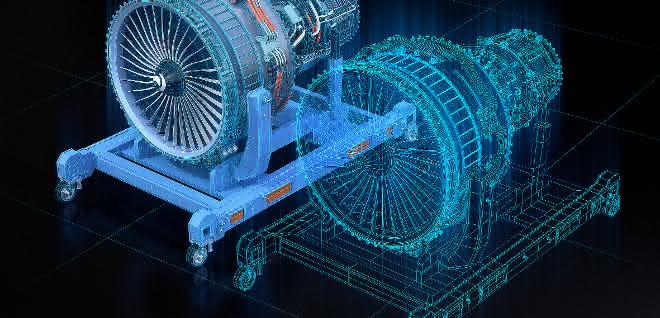
The digital twin is a powerful tool for product development. This allows simulations to be carried out in parallel, even without a prototype, in order to analyze the behavior of components and materials in real time. Co-innovation across departmental and company boundaries makes development easier and faster. Better coordination options and access to analyses also reduce the number of planning errors, especially in complex projects. To create a digital twin, 3D design data, product master data and measured values from sensors are linked on the prototype, analysed and visualized as a digital image of the product.
This 3D data can also be used for virtual reality (VR) applications. This means that products can be experienced realistically before they are manufactured and defects or weaknesses can be rectified at a very early stage. Tech Mahindra has set up a virtual showroom for one of the largest car manufacturers in the USA, in which customers can experience the vehicles without being physically present.
A digital twin can be created not only for products; processes and services can also be mapped digitally in real time. This simplifies communication and coordination between departments, but also between companies in an ecosystem, thus helping to significantly shorten time-to-market. Similarly in production: if all production steps are digitally simulated and optimized on this basis, production can start immediately with the ideal process - right down to the machine settings. Companies that monitor and analyze machine conditions in real time during production can use predictive maintenance to ensure the quality of production processes and prevent machine failures or reduced product quality due to machine damage. Tech Mahindra, for example, has significantly reduced machine downtimes and stoppages at the world's largest manufacturer of industrial motors.
Blockchain with great potential for the manufacturing industry
Blockchain technology has already proven to be an effective tool for improving collaboration, particularly in the banking and legal sectors. In the manufacturing industry in particular, it also opens up enormous added value, above all transparency across all areas of the company, from supplier management to strategic purchasing, order placement and production processes down to machine level, as well as collaboration within an ecosystem. In component verification, the blockchain is the one reliable source that establishes a basis of trust between OEMs, suppliers and other partners and enables traceability. Orders are placed much faster via smart contracts. And as redundant documents are no longer created, the resulting processes are also eliminated.
An interesting use case combines the digital twin with lifecycle management based on blockchain technology. All contributions, services and information from all (sub)suppliers and other companies along the supply chain are recorded here as a digital twin in the digital ledger (smart ledger). Throughout the entire product life cycle, data on its use, warranty cases, location, ownership, etc. is collected in the blockchain. This enables companies to monitor all of these processes and gain significant insights into the after-market, where there is still enormous potential.
Introduction of digital technologies
Companies that want to use digital technologies should first gain transparency on how far their various areas have already progressed in terms of digitalization. They can do this with a self-assessment. This gives them a solid basis for defining a target maturity level for each area and prioritizing projects accordingly. It has proven useful to provide each project with a time frame including milestones. This also ensures that the digitalization strategy is as efficient as possible.
Leading companies are already on the path to a comprehensive digital transformation and are therefore also accelerating their product development. Time is of the essence if they are not to fall behind and tap into new potential. A partner who not only has expertise in all digital technologies, but also has experience in implementing them in manufacturing companies, can offer valuable support here. This is because they can identify the first quick-win projects based on the implementations already carried out and implement them promptly. By providing quick added value and serving as internal beacons, they often act as triggers for the implementation of a comprehensive concept that is supported and actively backed by the entire company.



You might also be interested in
Protection against electrostatic discharge
StoFloor ESD KU 614 from StoCretec: dissipative flooring with the latest technology meets all ESD standards, is economical, extremely durable, mechanically and chemically resistant. The surface can be adjusted to be slip-resistant. The system is...
 read more...
Cables and wires from Helukabel
Food cultivation on a new level
Vertical farming - cultivation in multi-storey greenhouses - is considered one of the most exciting trends in food production. One of the pioneers in this field is the Romanian start-up Ultragreens. The company relies on solutions from Helukabel to...
read more...Further training for specialists to become security experts
With the "CESA - Certified Expert for Security in Automation" qualification, automation expert Pilz offers a two-day expert course designed to provide participants with compact security knowledge in line with the latest standards.
read more...Meaningful data on the service life of the seal
Seals prevent substances from penetrating or entering technical components. The intelligent seals from Freudenberg Sealing Technologies can significantly expand this core task in the future: the seal itself is also a sensor and becomes a "smart...
read more...Online stud configurator according to drawing
For standard bolts, with head, thread or hole
For standard bolts, with head, thread, bore or as a version with recess, mbo Osswald configurators map the standard specifications, are very easy to use, take a lot of work off the user's hands and save a lot of time.
read more...Safe palletizing with the Cobot
Verla-Pharm's medicinal products and food supplements have been available for decades. Ever-increasing throughputs result in ever-increasing logistics costs, whereby optimum utilization of the available production space is necessary.
read more...The tiger among processors
Since the move towards the Industrial Internet of Things (IIoT) and Industry 4.0 has picked up speed, processor boards and modules must be able to process exponentially growing amounts of data.
read more...VDWF publishes "Sustainability Compendium"
Nowadays, nobody can avoid "sustainability": In addition to a far-reaching presence in the media, it is also becoming increasingly important for companies in the tool and mold making industry to develop and implement appropriate concepts.
read more...More transparency and synergies with QM software
Weber, manufacturer of wood and metal sanding machines and extruders, has reorganized its quality management with ConSense IMS Professional. The software solution enables transparent documentation and more efficient processes.
read more...