
Master data management in digitization
The hidden value driver
Data is crucial to the success of industry. In the course of digitalization, efficient master data management is therefore becoming a competitive advantage. How companies are creating a solid foundation for the data-driven economy.
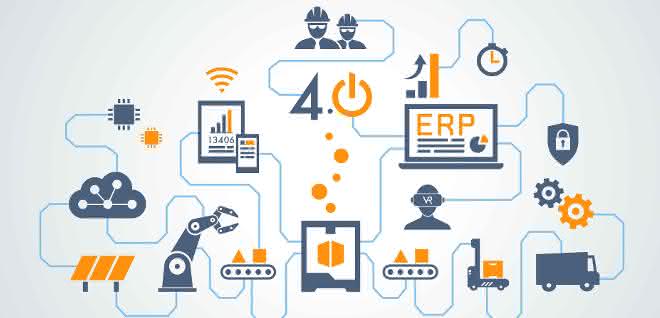
Master data forms the foundation of the data-driven economy. Its management is a basic prerequisite for coordination and decision-making in the context of Industry 4.0 or Supply Chain 4.0 to be possible at all. Nevertheless, many companies only recognize the importance of the topic when errors in master data management become a serious threat to the core business. How do such frictions arise?
Due to the increasingly global orientation of companies and the integration of value chains, the understanding of what master data is within a network can differ significantly. This is a particular issue in purchasing. Which input fields are maintained? Is the data in kilograms or in other units of measurement? Do you calculate in meters or millimeters? Such seemingly trivial problems are magnified when orders are placed from a region where the metric system is not or not exclusively used. Another example is the different keyboards used in different countries. This becomes a challenge, for example, when defining address fields and article descriptions - or when forwarding data to the warehouse and processing it correctly. The result of these deviations, which at first glance do not appear spectacular, can be the incorrect calculation of maximum loads for trucks, for example. And thus in serious delays, delivery failures and high costs.
Strategic relevance and complexity management
But of course, it's not just about the operational and tactical problems that bad data causes in a data-driven supply chain. Companies today have to make decisions in ever shorter timeframes - based on data that should be available quickly and accurately. If master data is not well maintained, the result is a distorted picture: wrong priorities for the wrong customers, inaccurate sales figures, incorrect service levels, replenishment times and quantities. This not only results in a loss of speed and savings potential, but above all a loss of trustworthiness, which is essential in a highly integrated supply chain.
In order to keep these challenges firmly under control, a consistent reduction in complexity is required. With regard to master data management, this primarily means harmonizing and standardizing the entire data flow from procurement, warehousing and production to the customer interface, so that valid and up-to-date data is available at all times and for every authorized user across all departments.
Our project experience shows that this process is repeatedly "corrupted" by comma and format errors, text entries in number fields or similar inaccuracies. It is therefore critical to define and systematically apply global guidelines for the structure and quality of master data.
Guidelines for master data management
The development of guidelines for master data management usually begins with the definition of standardized and binding processes. Based on this, specific roles and rules are derived. This is because the implementation of consistent and cross-divisional data fields is only possible if tasks and responsibilities are clearly and bindingly defined. In the next step, the relevant master data is precisely defined and described in order to rule out the errors described above from the outset or at least significantly reduce them. Once these definitions have been made - and in such a way that the process is lean, logical and user-friendly - the master data must be brought together in an integrated IT architecture, usually an ERP system. This is the only way to ensure that the proliferation of storage and systems - from Excel spreadsheets to warehouse management systems and personal notes of individual employees - comes to an end.
Holistic view from different perspectives
Despite the business-critical relevance of up-to-date, valid and integrated master data, the overall process should never be viewed from a purely strategic perspective. This is because it ignores the essential, concrete steps and repetition loops that are the lifeblood of a well-functioning master data management system. The aim is to use effective tools and methods to evaluate and weight the master data, make the process transparent and develop pragmatic and scalable solutions: from master data maintenance and process optimization through to a comprehensive solution.
This also includes defining the position of a master data officer and equipping this body with the necessary resources, expertise and skills. In practice, the interplay of clear structures, clean, integrated and governance-based processes, an optimal IT structure and a process owner is particularly important. This is the only way to ensure that the improvements achieved are maintained. Otherwise, once data quality has been achieved, it can gradually fray again. For example, because master data is no longer maintained and becomes outdated. Master data management must therefore be conceived as a continuous, integral process - not as a limited strategic initiative!
Artificial intelligence as a master data manager
Systems with artificial intelligence (AI) now also offer effective support in this process. For example, a paper invoice can be read in such a way that the information in the invoice text (but also in the document footer) is automatically compared with the data stored in the company's own systems and inconsistencies are identified and communicated. Another important function can be the plausibility check of the information. Here, the AI often works with corridors to allow for certain fluctuations and at the same time avoid gross misstatements, which can have massively damaging effects: It may be within the tolerance range to enter an 11 instead of a 10. But not a 100 instead of a 10.
Eliminate sources of error
Another example is the management of email orders, which still very often have to be transferred manually to ordering systems - a highly neuralgic source of potential errors and inefficiencies. The AI system comes into action at this interface. It intercepts the emails, reads them according to relevant criteria such as customer data or order quantity and automatically enters them into the system, which is also connected to the ERP (enterprise resource planning) system. On this basis, each order is compared with the company-wide master database and automatically corrected if any discrepancies are detected.
Legal framework: Master data, data protection and traceability
With a holistically designed master data management system, it is of course not only important to keep an eye on the technical and process-related factors, but also on the overarching legal framework.
Data protection regulations, currently the EU GDPR in particular, play a key role here, as can be illustrated using an example: In many warehouses, shipping labels must be printed that contain address data and other customer data. According to the regulations of the EU GDPR, however, the corresponding data may only be viewed and managed selectively and by a clearly defined group of people.
Another complicating factor is that with a global system architecture, master data that was previously stored on a server somewhere in the world and made available via a cloud application must now be stored in a legally defined location. Under certain circumstances, this can mean a "data relocation" from abroad to Europe. Such developments therefore require completely new processes and sets of rules that previously played no de facto role in IT.
Master data as a hygiene factor
Master data management is therefore not a bureaucratic matter, but above all a business-critical process. And precisely because of its apparent triviality, it requires active management backing. It requires significant resources and relies on its value being communicated clearly and transparently within the company. Experience shows that master data initiatives often fail because the strategic benefits of valid, up-to-date and legally compliant master data are not recognized. Master data is essentially a hygiene factor - its value is usually only recognized when difficulties arise.

Master data is becoming both more complex and more important, particularly in the context of digitalization and digital transformation, cross-company networking and the implementation of Industry 4.0. After all, a data economy cannot function without reliable data, nor can AI solutions that are based on the wrong data. In the end, it's more than just a comma error.

Daniel Fathmann, Lead Business Consultant at MSG Industry Advisors, Peter Stieffenhofer, Lead Business Consultant at MSG Industry Advisors


You might also be interested in
ESTIA aims to strengthen Europe's cloud
New tech alliance for EU sovereignty
Twelve companies, including Dassault Systèmes, are founding the European Sovereign Tech Industry Alliance (ESTIA). The initiative aims to strengthen Europe's technological independence and define requirements for sovereign cloud services. The start...
 read more...
Deutsche Telekom and Nvidia launch one of Europe's largest AI factories
With the Industrial AI Cloud in Munich, Deutsche Telekom and NVIDIA are creating one of the largest AI factories in Europe. Companies can train AI models, carry out simulations and access 10,000 GPUs.
read more...Leveraging data potential with AI and streaming
Huge data treasures are still lying dormant in many manufacturing companies. And yet it is high time that these treasures were unlocked. There is often a lack of resources and capacity to make data usable in real time. Streaming production data can...
read more...More awareness of noise
Dematic offers solutions that are tailored to different cloud environments and reduce environmental impact through reduced material consumption and improved energy efficiency.
read more...Generative AI in the automation environment
The mechanical engineering and automation industry is undergoing profound change. This transformation is being driven by more volatile global trade, geopolitical crises and increasing market pressure, which demands greater agility, technological...
read more...Rigid data structures have had their day
The traditional data center is no longer the center of data. A hybrid cloud storage approach enables manufacturing companies to both meet the current requirements of data-intensive processes and future-proof their infrastructure.
read more...Software as a service in three stages
CIM Database Cloud is a new out-of-the-box solution from Contact for end-to-end digital product development.
read more...How production can benefit from AI
Together with AI technology, IIoT networking makes it possible to better control machine parameters and optimize quality with predictive quality. Downtimes and set-up times can also be further minimized. Cloud platforms also make these technologies...
read more...More expertise for digital engineering
Altair, a computational science and artificial intelligence (AI) company, has acquired OmniV, a technology from Michigan, USA-based software company XLDyn.
read more...