
Talk about management and smart factory
"Smart Factory is much more than digitalization"
In specialist media, digitalization and the smart factory are examined from a technical perspective. We now know that a holistic view is important. Heiko Weber, Partner Strategy& Germany (PwC), and Marcel Derakhchan, Managing Partner of DLA Digital Leaders Advisory, on leadership and culture in the smart factory.

SCOPE: Mr. Weber, Mr. Derakhchan, the smart factory is much more open and externally networked than a traditional factory. What does this mean for traditional management tools? Do they need an update?
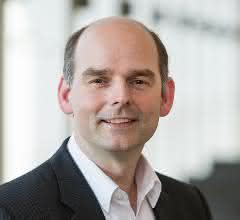
Weber: Definitely. Structures will change, they will become more agile. Traditional hierarchical pyramids will die out in the long term. As a result, resources and qualifications will have to be allocated more flexibly. The forms of work will change - for example, we will work in "squads" for the individual links in the value chain.
Derakhchan: I think we should start beforehand - not with the tools and not with specific skills. Rather, it's a question of how the idea of what role you actually play as a manager, what opportunities you have to shape things under these changed conditions, needs to change. This is a question of personal philosophy and management style. I am convinced that we are facing a very profound change here
SCOPE: In extreme cases, will the smart factory dissolve completely into the supply chain?
Weber: Although this is an extreme scenario, we will probably see the same thing happen in some areas. In these cases, the boundaries between supplier and OEM will become blurred. Such systems can then no longer be controlled using traditional leadership and management methods.
SCOPE: A central management topic in the factory is store floor management, which not only serves operational management and coordination, but also the creation of community. Does this topic still have a place in the smart factory?
Weber: Shop floor management will continue to exist in the future, but the tools and focus will change. Of course, the classic control loop - recognizing deviations, defining measures, implementing them and checking their effect - will have to be managed differently in the future. The issues will become more complex, the systems to be controlled more comprehensive and interventions will increasingly have to take place in real time. The logical consequence is that artificial intelligence will take over digital store floor management and these control mechanisms in the future. However, as people will continue to work in the smart factory in the future, community building will have to be carried out using different methods and from a different perspective.

Derakhchan: Exactly. In the coming years, we will go through a phase of transformation. Which generally demands more from managers than normal operations. Up to now, operational management has largely been about the "how" of the work. Optimization, increasing efficiency... The constitution of community was rather unconscious, as a side effect. This is completely different in phases of change. At every management level, it's about explaining the "why?". That has a lot to do with creating meaning. But it also has to do with addressing framework conditions that are otherwise not questioned, with actively dealing with fears and worries, with conscious community management. The special thing about this is that the previous leadership and management skills will still be needed - the tasks and roles of managers will become much more demanding, and their mental and emotional resilience will be put to a new test. It will not be easy to find people who meet this greatly expanded requirement profile.
SCOPE: With the advances in robotics and AI, we will probably soon see mixed teams - i.e. humans and robots. Does this development have implications for culture and leadership?
Weber: Have you seen the movie "Number 5 lives"? The emotional connection between man and machine will probably not go quite that far. But of course we won't just see the cobots as a better screwdriver. After all, humans tend to be anthropomorphic. For this reason, the close cooperation between man and machine must also be reflected in management. The first step is to create a culture of openness that supports the development so that employees accept the new collaboration.
SCOPE: What do managers need to be able to do?
Derakhchan: They need new skills and a deep understanding of digitalization. The introduction of new technologies always requires 'reverse mentoring': managers can and should have the new, young employees explain the new technologies to them. This is certainly a change and demands a lot from today's management class.
Weber: In terms of culture, the question of who is responsible for the function of the co-robots becomes interesting. In today's silos, it's simple: if the machine doesn't work, the employee first calls a jumper, then the plant engineer. The latter blames maintenance or planning for the problem. If we really think in terms of "co-laboration", the employee will be responsible for his electronic colleague. That is already a serious change.
SCOPE: In the Smart Factory, there is a high level of transparency with regard to every movement sequence. Does this mean that management can be completely algorithmic in the extreme?
Weber: The smart factory can be a highly automated factory in which large quantities of very similar products are produced. In the future, the direct production process will indeed be controlled by algorithms that can be controlled by AI. However, there will still be human teams that need guidance - maintenance staff, engineers and many others. However, the smart factory can also be a flexible factory that is able to manage extreme complexity and individualization through digitalization. These production processes will also be largely supported and controlled by AI, but the proportion of people in this system will be significantly higher.
Derakhchan: In both cases, people remain in the factory. And people need leadership - that is not a question of algorithms or mathematical optima, neither today nor tomorrow. You can outsource work organization to algorithms. But not leadership.
SCOPE: When data analysis, intelligent assistants, AR tools and smart exoskeletons become standard: Do intuition and experience still have any relevance at all?
Weber: Human experience will always remain a differentiating factor, but not in all areas. In the future, experience will no longer be needed to determine what caused the error in an engine assembly after a failed cold test, for example. In future, this will be done automatically using machine learning. Instead, however, experience will be needed to understand how the algorithms work and their limits and to know when to intervene. For the management of digital and semi-autonomous production systems, we need more digital and algorithmic experience and understanding.
SCOPE: It is no longer surprising that the confident handling of data will become a key management skill in the future. But surely it can't be everything that makes up leadership in the smart factory?
Weber: No, of course not. The smart factory goes beyond digitalization. We are also talking about increasingly internationally networked global networks. And that's why cultural understanding will play an even greater role than it does today. There is also the need to work with significantly more partners, or at least in completely new constellations. With cloud providers, platform operators, software suppliers and many more. Balancing different interests and cultures is becoming more important. The more intensive involvement of customers in the early phases of the development and production process also requires new skills and social competencies.
Derakhchan: We've been talking about the "borderless company", integrated supply chains and collaboration for decades. But if you ask decision-makers today where the most frequent problems, disruptions and inefficiencies are, you will always hear that this is the case at the interfaces between departments, companies or cultural groups. The management of relationships that extend beyond one's own cluster is still not a matter of course. This is a problem that is inherent to people in general. But it is also a question of training and professional socialization.
The critical point now is that we cannot afford these problems if the smart factory is to become a reality. We need to create cultures of border-crossing and systematically seek out and promote people who can do this. In a few years' time, we will probably have systems that translate perfectly simultaneously. But they will not replace the people who can make "cultural translations" possible.


You might also be interested in
ESTIA aims to strengthen Europe's cloud
New tech alliance for EU sovereignty
Twelve companies, including Dassault Systèmes, are founding the European Sovereign Tech Industry Alliance (ESTIA). The initiative aims to strengthen Europe's technological independence and define requirements for sovereign cloud services. The start...
 read more...
Deutsche Telekom and Nvidia launch one of Europe's largest AI factories
With the Industrial AI Cloud in Munich, Deutsche Telekom and NVIDIA are creating one of the largest AI factories in Europe. Companies can train AI models, carry out simulations and access 10,000 GPUs.
read more...Leveraging data potential with AI and streaming
Huge data treasures are still lying dormant in many manufacturing companies. And yet it is high time that these treasures were unlocked. There is often a lack of resources and capacity to make data usable in real time. Streaming production data can...
read more...More awareness of noise
Dematic offers solutions that are tailored to different cloud environments and reduce environmental impact through reduced material consumption and improved energy efficiency.
read more...Generative AI in the automation environment
The mechanical engineering and automation industry is undergoing profound change. This transformation is being driven by more volatile global trade, geopolitical crises and increasing market pressure, which demands greater agility, technological...
read more...Rigid data structures have had their day
The traditional data center is no longer the center of data. A hybrid cloud storage approach enables manufacturing companies to both meet the current requirements of data-intensive processes and future-proof their infrastructure.
read more...Software as a service in three stages
CIM Database Cloud is a new out-of-the-box solution from Contact for end-to-end digital product development.
read more...How production can benefit from AI
Together with AI technology, IIoT networking makes it possible to better control machine parameters and optimize quality with predictive quality. Downtimes and set-up times can also be further minimized. Cloud platforms also make these technologies...
read more...More expertise for digital engineering
Altair, a computational science and artificial intelligence (AI) company, has acquired OmniV, a technology from Michigan, USA-based software company XLDyn.
read more...